
AI Smart Parking in 2026: How Cities Find Spots Faster
AI Smart Parking in 2026: Finding Spots Faster
AI smart parking has moved from a handful of showcase smart-city pilots into standard infrastructure in a growing number of mid-sized cities in 2026, addressing a problem that's been quietly contributing to urban congestion for decades: a meaningful share of downtown traffic in dense areas is drivers circling, looking for an open spot. AI systems that combine camera and sensor data with predictive models now estimate available parking in real time and, in more advanced deployments, adjust pricing dynamically to keep a target share of spots open at any given time.
That last part matters more than it sounds — a parking system that's always full doesn't actually help anyone find a spot faster, and one that's priced too high sits empty while drivers circle for cheaper options elsewhere.
Why "Just Add Sensors" Was Never the Whole Solution
Cities have installed parking occupancy sensors for years, but raw occupancy data alone doesn't solve the circling problem if drivers can't act on it before they've already passed the open spot, or if the system doesn't account for how quickly spots are likely to turn over. AI models trained on historical occupancy patterns, time of day, nearby events, and weather now predict not just current availability but how long a given spot is likely to stay open, which is the information a driver actually needs before committing to a specific block.
This predictive layer is what separates current systems from the static "spot is open or not" maps that earlier smart parking pilots offered.
Dynamic Pricing Is Where the Real Behavior Change Happens
The most effective deployments pair availability prediction with dynamic, demand-based pricing, raising rates in high-demand zones during peak hours and lowering them in underused areas to redistribute demand rather than just reporting where spots happen to be. San Francisco's long-running SFpark program pioneered this approach years before AI made the prediction layer this precise, and several cities have since built more sophisticated AI-driven versions of the same core idea.
- Predictive occupancy models, estimating not just current availability but expected turnover time for a given block
- Dynamic, zone-based pricing, adjusted by time of day and real-time demand rather than fixed by location alone
- Routing integration, feeding predicted availability directly into navigation apps so drivers get routed toward likely-open areas rather than just told a destination is "full"
- Enforcement prioritization, flagging zones with high overstay rates for parking enforcement rather than patrolling uniformly across a city
The Congestion and Emissions Case
Reduced circling time has a direct emissions benefit, since idling and slow-speed circling driving is disproportionately inefficient compared to normal traffic flow. The US Department of Transportation has highlighted reduced search-for-parking time as a measurable lever for urban congestion and emissions reduction, distinct from the broader traffic-flow optimization that gets most of the attention in smart-city transportation planning.
This connects to the broader traffic management work covered in AI Traffic Management in 2026, where parking availability prediction is increasingly integrated into the same traffic-flow systems that manage signal timing and congestion routing, rather than operating as a separate standalone tool.
Where Adoption Has Been Slower Than Expected
Smaller cities and towns have been slower to adopt AI parking systems, largely because the upfront sensor and camera infrastructure cost is hard to justify without the dense downtown congestion problem that makes the case obvious in larger cities. Retrofitting existing parking infrastructure with the camera and sensor network needed for accurate prediction is also a meaningfully larger project than it sounds, particularly in older downtown areas without existing conduit or power infrastructure to support new sensors.
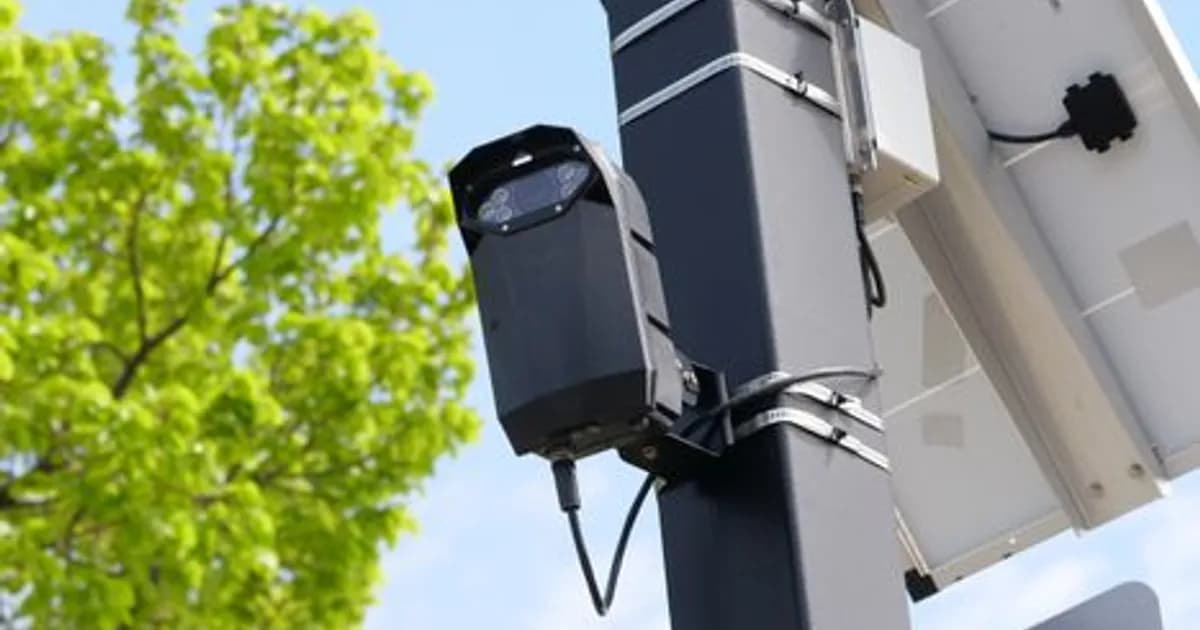
Several vendors have responded with lower-cost camera-only systems that skip individual spot sensors in favor of wide-angle cameras analyzing entire blocks at once, trading some precision for a substantially lower installation cost.
How This Intersects With Autonomous Vehicles
As robotaxi and autonomous vehicle fleets expand in more cities, parking demand patterns are starting to shift in ways that smart parking systems have had to adapt to, since autonomous vehicles can be directed to relocate or return to a depot rather than parking near a destination at all. This dynamic is explored further in AI Robotaxis in 2026, where reduced parking demand from autonomous fleets is becoming a real variable that city parking planners are starting to model into longer-term infrastructure decisions.
Privacy Questions Around Camera-Based Systems
Wide-angle camera systems that monitor entire blocks raise different privacy considerations than individual spot sensors, since cameras capable of identifying open parking spaces are often technically capable of much more, including license plate recognition and tracking individual vehicle movement over time. Cities deploying these systems have faced pointed questions from residents and civil liberties groups about data retention policies and whether footage collected for parking availability is being repurposed for other surveillance uses without separate public disclosure.
Cities that have handled this transition well have generally published clear, specific policies upfront about what data is collected, how long it's retained, and what it can and can't be used for beyond the stated parking purpose, rather than waiting for the question to come up after a system is already deployed.
What Cities Are Weighing Before Investing
Municipal planners considering an AI parking system in 2026 are generally working through a few core questions:
- Whether to prioritize predictive availability, dynamic pricing, or both, since pricing requires more political buy-in than availability data alone
- Sensor versus camera-based infrastructure, trading installation cost against prediction precision
- Integration with existing navigation and transit apps, since a parking system that isn't visible where drivers already look has limited practical impact
- Equity considerations around dynamic pricing, since demand-based rates can disproportionately affect lower-income drivers without transit alternatives
Conclusion
AI smart parking in 2026 has turned a genuinely measurable urban problem — drivers circling for open spots — into something cities can actually model and manage with real data, rather than relying on static maps or guesswork. The dynamic pricing piece is where most of the behavioral change happens, even though it's also the part that requires the most political will to implement well. If your city is weighing a smart parking investment, the prediction-only version is the easier sell, but the pricing layer is where the actual congestion reduction tends to come from.
Comments
Loading comments...