
AI Policy and Regulation: Key Updates from August 2026
AI Policy and Regulation: Key Updates from August 2026
AI regulation August 2026 is no longer a regulatory horizon — it is operational reality for organizations deploying AI in most major markets. This month brought enforcement actions, new guidance, proposed legislation, and international coordination moves that collectively define the compliance environment for the rest of 2026. Here is the policy and regulatory picture that matters for organizations deploying AI systems right now.
EU AI Act: First Enforcement Wave
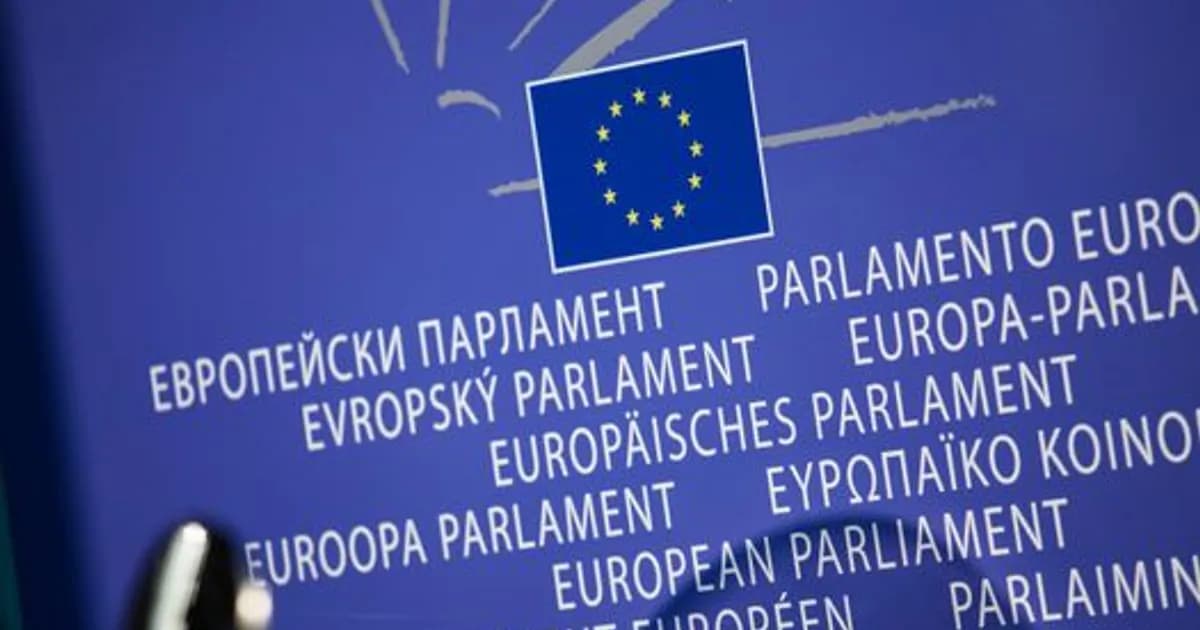
The most significant AI regulation development of August is the EU AI Office's issuance of formal enforcement penalties against three companies, totaling €47 million — the first significant enforcement actions under the EU AI Act since its full implementation earlier this year.
The three cases are revealing:
Case 1 — Hiring AI system: A pan-European HR technology company was fined €18M for deploying a resume screening AI without the required conformity assessment. The system was used across eleven EU member states and fell squarely into the high-risk category under Annex III (AI systems used in employment decisions). The fine reflects not just the lack of conformity assessment but the company's failure to maintain required documentation after the AI Office's initial inquiry.
Case 2 — Credit scoring AI: A mid-market lender was fined €14M for using an AI-based credit scoring tool that lacked transparency documentation and did not provide affected individuals with meaningful explanations of adverse decisions. The AI Act's requirements for human oversight and explainability in credit decisions are among the most stringent in the high-risk category.
Case 3 — Emotion recognition in retail: A European retail chain was fined €15M for deploying a real-time emotion recognition system in stores across four member states. Emotion recognition is explicitly listed as a prohibited use case in specific contexts under the EU AI Act, and the company's legal team had apparently misread the consumer retail exception narrowly enough to believe they were compliant.
The AI Office made clear in its press statement that Q4 2026 enforcement will expand in scope, targeting consumer-facing high-risk systems in healthcare, financial services, and transportation. Organizations still treating EU AI Act compliance as aspirational rather than operational are running real risk. For a comprehensive overview of the EU AI Act framework, AI Regulation in 2026: What New Laws Mean for Your Business covers the full compliance obligations.
United States: Federal AI Policy Moves
The US federal AI governance picture in August 2026 remains more fragmented than the EU's but is consolidating.
AI Liability Executive Order: The Biden-Harris administration issued an executive order in late July (now in implementation) establishing that federal agencies must conduct AI impact assessments before deploying AI systems in benefits administration, law enforcement, and regulatory functions. The order also clarifies that existing federal anti-discrimination statutes apply to AI systems with full force — AI vendors operating in federal contexts face liability under Title VII, the Fair Housing Act, and the Equal Credit Opportunity Act if their systems produce discriminatory outcomes.
NIST AI Safety Framework v1.1: NIST released an update to its AI Risk Management Framework, adding specific guidance for agentic AI systems that was absent from the original version. The v1.1 guidance addresses multi-agent orchestration risks, long-running autonomous task governance, and the documentation requirements for AI systems that take consequential actions without per-action human review. For organizations that adopted v1.0 as their governance baseline, the agentic AI guidance requires a meaningful update to their AI risk documentation.
State-Level Activity: California, New York, and Texas have all advanced AI transparency bills this month, with California's AB 2013 now passing the Assembly and heading to the Senate. The bill would require companies deploying AI systems in consequential decision contexts to disclose the training data sources, performance metrics, and human oversight mechanisms for those systems. If signed into law, California AB 2013 would effectively become a national standard given the state's economic significance.
UK: Post-Brexit AI Regulation Strategy
The UK published its formal AI Regulation Strategy update this month, confirming that it will maintain its sector-by-sector regulatory approach rather than pursuing a horizontal AI Act equivalent. The approach assigns AI regulatory authority to existing sector regulators — the FCA for financial services AI, the MHRA for healthcare AI, the ICO for privacy-related AI — rather than creating a new AI-specific authority.
The UK strategy has been criticized by some as too fragmented to be effective and praised by others as more flexible and less burdensome than the EU approach. What is clear is that UK-based organizations need to navigate multiple sector regulators rather than a single AI Act framework, which creates compliance complexity for companies operating across multiple sectors.
The Financial Conduct Authority simultaneously published its AI in Financial Services guidance, which represents the most detailed regulatory guidance yet on AI model explainability for credit and investment decisions. Financial services organizations operating in the UK have a six-month implementation timeline.
China: AI Governance Tightens
China's AI governance framework has been expanding rapidly through 2026, and August brought another significant development: updated guidance from the Cyberspace Administration of China (CAC) on generative AI content labeling requirements.
The updated guidance tightens requirements for AI-generated content disclosure across social media, news aggregation platforms, and short video applications. It also extends labeling requirements to AI-generated audio for the first time, reflecting the rapid proliferation of AI voice synthesis tools.
For Western companies operating in China, the practical implication is that any AI-generated content distributed on Chinese platforms must comply with the CAC labeling framework. For AI companies operating globally, China's governance approach is increasingly influencing how major multilateral AI governance discussions are framed — particularly on content provenance and watermarking standards.
International: UN AI Advisory Body Recommendations
The United Nations AI Advisory Body released its second set of governance recommendations this month, focused specifically on AI in humanitarian contexts — disaster response, refugee assistance, and global health emergency management.
The recommendations include:
- Mandatory human-in-the-loop requirements for AI systems making resource allocation decisions in humanitarian emergencies
- Open data standards for AI-generated humanitarian intelligence
- International inspection protocols for AI systems used by UN agencies and their partner organizations
- Funding mechanisms for low- and middle-income countries to build AI governance capacity
The recommendations are advisory, not binding, but they reflect the international consensus direction on AI governance in high-stakes contexts and will likely inform subsequent binding frameworks. For broader context on global AI governance dynamics, US-China AI Race 2026 covers the geopolitical dimension that shapes international governance negotiations.
Sector-Specific Regulatory Developments
Healthcare: The FDA's AI in Medical Devices guidance, finalized in Q2, is now in active implementation. August brought the first FDA enforcement letters related to AI medical device compliance, targeting software companies whose AI diagnostic tools were updated in ways that required new clearances but did not receive them. The FDA has made clear that AI software updates are not exempt from the standard device clearance process when they materially change intended use or performance characteristics.
Financial Services: The Basel Committee on Banking Supervision published guidance on AI risk in bank credit models, adding AI-specific provisions to existing model risk management frameworks. Banks using AI for credit scoring, fraud detection, or market risk modeling now have explicit Basel-aligned requirements for model documentation, validation, and ongoing performance monitoring.
Education: The EU released draft guidance on AI in educational settings, proposing significant restrictions on affective AI systems (systems that assess student emotional states) and requirements for data minimization in AI-powered learning platforms. The guidance will be open for comment through October before finalization.
What Compliance Looks Like Right Now
For organizations managing AI compliance obligations across multiple jurisdictions in August 2026, several practical observations:
- The EU AI Act's risk classification is the most important single framework to understand, even for non-EU companies, because EU-market access requirements effectively set global standards for many AI applications
- US companies with EU exposure need to have conformity assessments underway for any high-risk applications — starting this process now gives the minimum timeline needed to avoid enforcement risk in Q4
- Documentation requirements are being applied retroactively in enforcement actions — companies that deployed AI systems before the Act's full implementation are not exempt if those systems remain in operation
- The NIST AI RMF v1.1 agentic AI guidance is the most practically urgent US update for organizations that have deployed or are deploying autonomous AI agents
Conclusion
AI regulation August 2026 has crossed the threshold from policy-making to enforcement. The EU AI Office's first penalty decisions, the FDA's enforcement letters, and the alignment of US federal policy on AI liability all signal that the era of compliance as aspiration is over. Organizations deploying AI in consequential contexts need governance infrastructure now, not in another year. For the most comprehensive current analysis of what that infrastructure needs to include, Responsible AI Frameworks 2026 covers the governance structures that are proving effective in early-adoption enterprises.
Comments
Loading comments...