
AI Robotaxis in 2026: Waymo, Tesla, and the Ride Revolution
AI Robotaxis in 2026: Waymo, Tesla, and the Ride Revolution
AI robotaxis arrived as a real commercial service in 2026—not everywhere, not without friction, but real. If you've been watching autonomous vehicle news cycle through the same "five years away" predictions for a decade, the current landscape is genuinely different. Operational fleets are running, passengers are paying, and the economics are improving. Here's the full picture.
What Counts as a Robotaxi?
A robotaxi is a fully autonomous vehicle operating as a commercial ride-hailing service with no human driver present in the vehicle. The AI system handles navigation, obstacle avoidance, passenger pickup and drop-off, and route optimization without any in-car human intervention.
This is distinct from:
- Driver-assist systems (Tesla Autopilot, Ford BlueCruise) that require an attentive human driver
- Remote-operated vehicles where a human operator can intervene from a control center
- Supervised FSD where a driver is legally required to remain ready to take control
The key performance metrics for any robotaxi service are safety record per million miles, disengagement rate, geographic coverage area, operational hours, fleet density, and ride cost relative to conventional rideshare.
Waymo: The Operational Benchmark
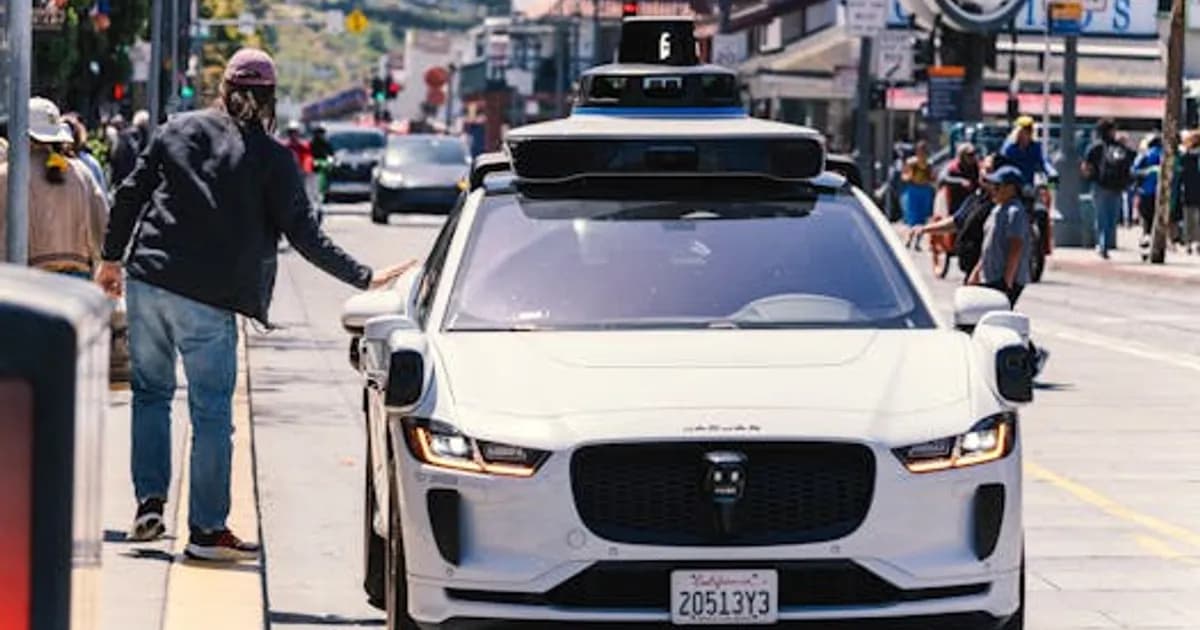
Waymo remains the most mature commercial robotaxi service in 2026. Its fleet covers San Francisco, Phoenix, and Los Angeles, with expansion into additional metros underway. In San Francisco, Waymo operates 24 hours a day across a growing portion of the city with no safety driver in the vehicle.
The company has now accumulated tens of millions of commercially operated autonomous miles. Its published safety research shows significantly fewer injury-causing crashes per mile than human drivers in the same markets—a claim that has held up under independent scrutiny and regulatory review.
From a passenger perspective, using Waymo feels much like Uber or Lyft. You request a ride through the app, a Waymo vehicle arrives, you get in and travel. The vehicle includes an interior screen, an ambient speaker system that narrates the route, and a button to reach remote support if needed. There is no driver to tip or rate.
Waymo is a subsidiary of Alphabet, which means it benefits from Google Maps data quality, AI research infrastructure, and a parent company with very long capital horizons. That combination has been a significant factor in its operational lead over competitors.
Tesla's Robotaxi Push
Tesla launched its commercial robotaxi service in Austin, Texas in mid-2025 using the Cybercab—a purpose-built vehicle without a steering wheel or pedals—alongside a parallel software deployment on existing Model 3 and Model Y vehicles running Full Self-Driving (Supervised). By mid-2026, the Tesla robotaxi network has expanded to several Texas markets and parts of California.
Tesla's approach differs from Waymo in one critical way: it uses cameras only, without lidar. Elon Musk has argued consistently that lidar is unnecessary and that a vision-based system trained on data from millions of customer vehicles will ultimately outperform sensor-heavy approaches. Safety researchers continue to debate whether camera-only is adequate for all edge cases.
Tesla's structural advantages are real. It manufactures the vehicles, develops the AI, operates the service, and has a global fleet of customer-owned cars continuously generating training data. No other company in the autonomous vehicle space controls as much of the stack.
The trade-off is that Tesla started commercial robotaxi operations later than Waymo with less regulatory coverage in dense, complex urban markets. Catching up in cities like San Francisco—where Waymo has spent years accumulating miles and regulatory trust—is a multi-year project.
Other Players in the Market
Zoox (owned by Amazon) is operating a bidirectional vehicle in Las Vegas and San Francisco that was designed from scratch as a robotaxi rather than adapted from a consumer platform. Passengers sit facing each other in a cabin optimized for the ride experience. Zoox has been slow to scale but represents a genuinely differentiated approach.
Cruise (majority GM-owned) had serious regulatory setbacks in late 2023 that set the company back years. It has been rebuilding trust with California regulators through 2025 and 2026, with limited commercial operations resuming. Its recovery trajectory remains uncertain.
WeRide and Baidu Apollo are operating commercially in China at meaningful scale. China's regulatory approach has been more permissive in certain high-tech zones, allowing robotaxi services to operate in Chinese cities ahead of equivalent Western deployments. These companies are significant globally even if they receive less English-language coverage.
For a broader view of how autonomous vehicle technology has developed across the industry, Self-Driving Cars in 2026: Where Autonomous Vehicle AI Stands covers the full technical picture.
The Regulatory Map
Regulation is the single most important variable in robotaxi deployment. In the United States, states set primary rules and cities often add requirements on top. The result is a patchwork of approvals that creates a deployment map rather than a national rollout.
California has been the most watched market. The CPUC expanded commercial permits for Waymo in 2025 and 2026, allowing it to charge fares across a larger San Francisco service area. The state's regulatory framework, while slow, is increasingly well-defined.
Texas has been the most permissive large state, which directly enabled Tesla's commercial launch in Austin and explains why Texas continues to serve as the primary expansion market for several operators.
Arizona, particularly the Phoenix metro area, has been Waymo's most expansive market by geographic size. The suburban layout and relatively simple road geometry made it an early proving ground.
The EU is in the process of harmonizing autonomous vehicle standards across member states, which will eventually open up a large potential market—but European deployment lags the US by at least several years.
Economics: Where Do the Numbers Stand?
The long-term economic case for robotaxis is straightforward: eliminate driver costs, which represent 70-80% of gross bookings in conventional rideshare. The challenge is getting there.
Current cost structure challenges include:
- Capital cost per vehicle: Robotaxi platforms cost more to manufacture than conventional cars, particularly those using lidar
- Maintenance: Sensor systems require regular calibration, and hardware failures are more expensive to fix
- Operations overhead: Even without drivers, robotaxi fleets require remote support teams, vehicle maintenance crews, and map update operations
- Insurance: Pricing for autonomous commercial vehicles remains elevated due to limited actuarial history
Against those costs, the unit economics improve non-linearly with scale. A larger fleet in a given market produces more revenue, amortizes fixed operational costs over more rides, and generates more training data to improve the AI system.
Current pricing for Waymo and Tesla robotaxi rides is broadly comparable to Uber or Lyft in the same markets—operators aren't yet charging a premium, and they're not yet passing through the full cost advantage to passengers either.
Public Perception Has Shifted
The narrative around robotaxis changed measurably in 2025 and 2026. After several years where the story was dominated by edge-case failures and timeline skepticism, the combination of Waymo's growing safety record and Tesla's successful commercial launch shifted the conversation toward "when does this scale" rather than "will this ever work."
Passenger reviews of Waymo in San Francisco are overwhelmingly positive on safety and ride quality. The novelty has worn off for regular users, which is itself a sign of normalization. First-time riders frequently post videos of smooth, apparently effortless navigation through complex urban traffic.
Remaining concerns are real but increasingly specific: system behavior in unusual weather, handling of emergency vehicle interactions, and liability allocation when incidents occur. These are solvable problems, not fundamental obstacles.
For perspective on how AI safety is being addressed across autonomous systems more broadly, AI Safety and Alignment in 2026: Where the Research Stands provides useful context.
What the Next 18 Months Looks Like
The 2026-2027 trajectory points toward:
- Geographic expansion: Waymo expanding permit coverage in existing cities and entering new metros; Tesla expanding its network in Texas and California
- Fleet scaling: More vehicles per market means shorter wait times and better unit economics
- Broader vehicle types: Purpose-built robotaxi platforms like the Cybercab and Zoox vehicle becoming more common relative to converted consumer vehicles
- International deployment: European and additional Asian markets opening as regulation catches up
- Pricing evolution: As economics improve, expect either lower prices to gain market share or premium positioning for specific use cases
The question for the robotaxi industry is no longer whether the technology works. It's how fast the operational and regulatory machinery can keep pace with what the AI can already do.
The Bottom Line
AI robotaxis are not a future technology in 2026—they are an operational present in select markets. Waymo is running a commercial service at scale in multiple major US cities. Tesla has a functioning commercial deployment in Texas and California. Multiple other operators are building out fleets in various stages of approval and deployment.
The ride-hailing industry is in the early stages of a structural transition. The timeline to broad availability in major cities has compressed dramatically. Businesses that depend on transportation logistics, last-mile delivery, or employee mobility should be paying close attention to how fast this scales.
For more on how AI is reshaping physical industries, explore AI in Logistics 2026: How Last-Mile Delivery Gets Smart.
Comments
Loading comments...