
AI Traffic Management in 2026: Smarter Signals, Less Wait
AI Traffic Management in 2026: Smarter Signals, Less Wait
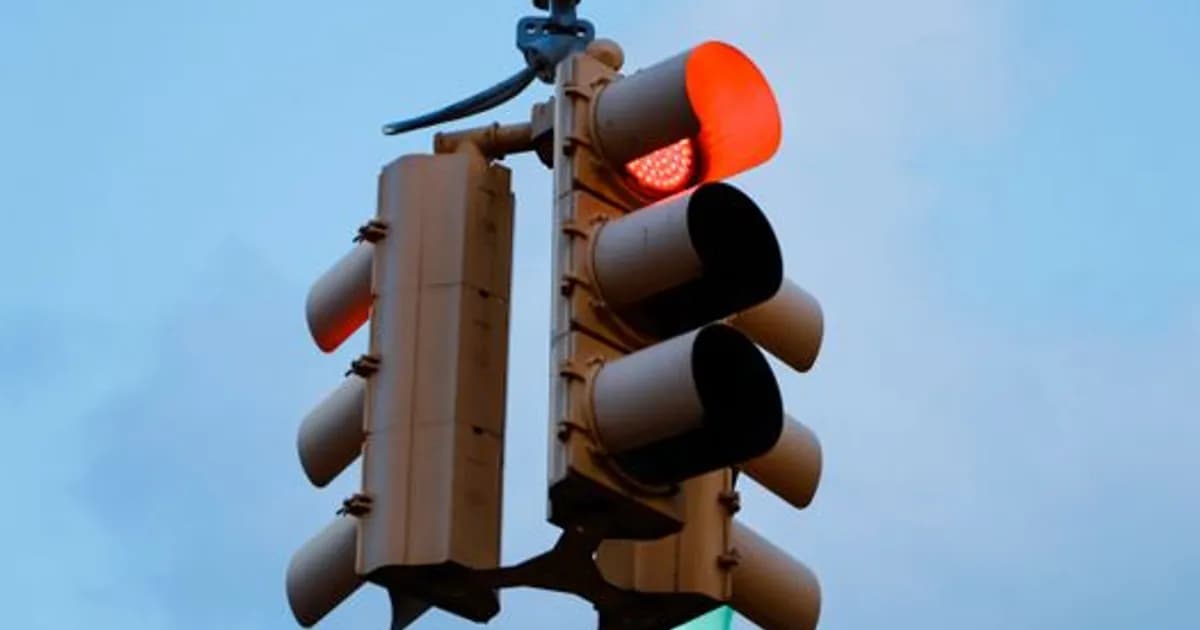
Most traffic signals still run on fixed timing plans that were set once, based on traffic patterns measured years ago, and then left alone unless someone files a complaint. AI traffic management in 2026 is steadily replacing that approach with systems that watch real-time traffic flow and adjust signal timing continuously, instead of waiting months for a formal signal timing study to catch up with how a road actually behaves today.
The change matters because traffic patterns shift constantly — a new development opens, a school schedule changes, a nearby road closes for construction — and fixed-timing systems have no way to notice any of it until someone manually re-times the intersection.
From Fixed Timing to Continuous Feedback
The technology behind this shift is generally known as automated traffic signal performance measures, or ATSPM, developed through collaboration between the Federal Highway Administration, state transportation departments, and academic researchers. Rather than replacing failing signal timing only after problems become visible, ATSPM systems continuously monitor signal performance, giving agencies an ongoing, data-driven view of how intersections are actually performing.
That continuous monitoring changes how transportation agencies respond to problems:
- Faster complaint response — instead of waiting months for a scheduled signal timing study, agencies can investigate a citizen complaint using existing performance data within days
- Objective performance tracking — metrics like arrivals on green and vehicle throughput give a measurable basis for adjusting timing, rather than relying on visual observation alone
- Proactive maintenance — performance data can reveal a malfunctioning sensor or a signal that's drifted out of an optimal timing pattern before it causes a visible backup
- Coordinated corridor management — adjusting a sequence of signals together based on real-time flow, rather than tuning each intersection in isolation
Why This Took So Long to Roll Out Broadly
Adaptive signal control isn't a new idea — agencies have experimented with it for over a decade. What changed recently is the cost and complexity of deploying it at scale. Earlier adaptive systems required expensive, intersection-specific hardware and extensive custom configuration, which limited rollouts to a handful of high-priority corridors in well-funded cities.
The current generation of AI-driven traffic management software works more often as an analytics layer on top of existing signal infrastructure and sensors, rather than requiring a full hardware replacement. That's made broader rollouts financially realistic for mid-sized cities and counties that couldn't previously justify the cost of an adaptive signal network.
This pattern — AI software making capabilities cheaper to deploy on existing infrastructure rather than requiring entirely new hardware — shows up across other public-sector AI applications too, including the broader smart-city efforts covered in AI in Government 2026: Smart Cities and Public Services.
Where It Connects to Self-Driving Vehicles
Smarter traffic signals are also becoming part of the infrastructure that autonomous vehicles increasingly rely on. A self-driving car navigating a busy intersection benefits from signal systems that communicate timing information directly rather than relying purely on visual signal detection, and some pilot programs are testing exactly that kind of vehicle-to-infrastructure communication.
That overlap connects directly to the broader rollout of autonomous vehicles and robotaxis, covered in Self-Driving Cars in 2026: Where Autonomous Vehicle AI Stands, where infrastructure readiness is increasingly recognized as just as important as the vehicles' own onboard AI.
The Limits: Funding, Maintenance, and Equity
AI-driven traffic management isn't a universal fix, and the limitations are mostly practical rather than technical.
Funding remains uneven. Wealthier metro areas and state-level transportation departments have generally led adoption, while smaller municipalities with tighter budgets are slower to upgrade, even when the software itself has gotten cheaper to deploy. That creates a real equity gap — congestion relief tends to concentrate in places that could already afford some traffic management investment.
There's also an ongoing maintenance burden that doesn't disappear once a system is deployed. Sensors degrade, get knocked out of alignment, or fail outright, and a system that quietly stops receiving good data can keep producing seemingly confident — but wrong — timing recommendations if nobody notices the sensor failure.
A few practices have emerged among agencies getting the most value from these systems:
- Pair automated performance monitoring with a regular schedule of manual sensor checks, rather than assuming the system will flag its own hardware failures
- Use complaint-driven investigation as a supplement to proactive monitoring, not a replacement for it
- Prioritize corridor-level coordination over single-intersection optimization, since most congestion problems span multiple connected signals
- Track equity in deployment, ensuring lower-income or historically underserved areas aren't the last to receive signal upgrades
Emergency Vehicles Get a Direct Benefit Too
One of the more immediately tangible applications of AI-driven traffic management is emergency vehicle preemption — automatically clearing a green light path ahead of an ambulance, fire truck, or police vehicle responding to a call. Older preemption systems relied on simple proximity triggers that cleared one intersection at a time, often with little coordination across a route.
AI-based systems can plan and adjust signal timing across an entire response route in real time, accounting for current traffic conditions rather than a fixed assumption about how long it takes to clear an intersection. That's a meaningful difference for response times in dense urban traffic, where a few seconds saved at each of several intersections along a route can add up to a genuinely faster arrival.
This capability has also proven useful for measuring impact in terms agencies and city officials care about directly. Rather than reporting an abstract "congestion reduced" metric, departments can point to measurable reductions in emergency response times on specific corridors after a signal coordination upgrade, which has made it one of the easier AI traffic investments to justify politically and budget-wise, even in municipalities otherwise cautious about new technology spending.
Transit agencies have started requesting similar treatment for buses on high-frequency routes, extending the same logic — predictable, AI-coordinated signal priority — beyond emergency response into everyday public transit reliability.
Measuring Whether It Actually Reduces Congestion
Agencies adopting AI traffic management increasingly insist on measuring real outcomes rather than trusting vendor projections alone. The most useful metrics tend to be ones drivers would actually notice: average travel time along a corridor, the number of stops required to traverse it, and how consistently those numbers hold up during peak versus off-peak hours rather than just an average across the whole day.
This kind of before-and-after measurement matters because not every intersection benefits equally from adaptive control. A corridor with naturally fluctuating demand — near a school, a stadium, or a shopping district with variable traffic by time of day — tends to show much larger improvements than a corridor with already-predictable, steady traffic flow. Agencies that track results at this level of granularity can prioritize future investment toward the corridors most likely to benefit, rather than rolling out upgrades uniformly across an entire city regardless of where the real congestion problems live.
Conclusion
AI traffic management in 2026 has moved adaptive signal control from an expensive, niche capability into something far more agencies can realistically deploy on infrastructure they already have. The continuous, data-driven approach behind systems like ATSPM gives transportation departments a genuinely faster way to find and fix problems than the old cycle of periodic manual studies. If your city is still running signals on timing plans set years ago, the case for a performance-measure-based upgrade is stronger now than it's ever been — and considerably more affordable than it used to be.
Comments
Loading comments...