
Self-Driving Cars in 2026: Where Autonomous Vehicle AI Stands
Self-Driving Cars in 2026: Where Autonomous Vehicle AI Actually Stands
Autonomous vehicles have been "five years away" for over a decade. In 2026, the honest answer is more nuanced: limited autonomy is working well in specific conditions, full autonomy at scale remains unsolved, and the gap between those two realities shapes everything about this industry.
Self-driving car AI has made genuine progress—but so has our understanding of how hard the remaining problems are. This is a status update without the hype.
Where Autonomous Vehicles Are Actually Working
The most reliable autonomous vehicle deployments in 2026 are geofenced robotaxi services in carefully mapped urban environments.
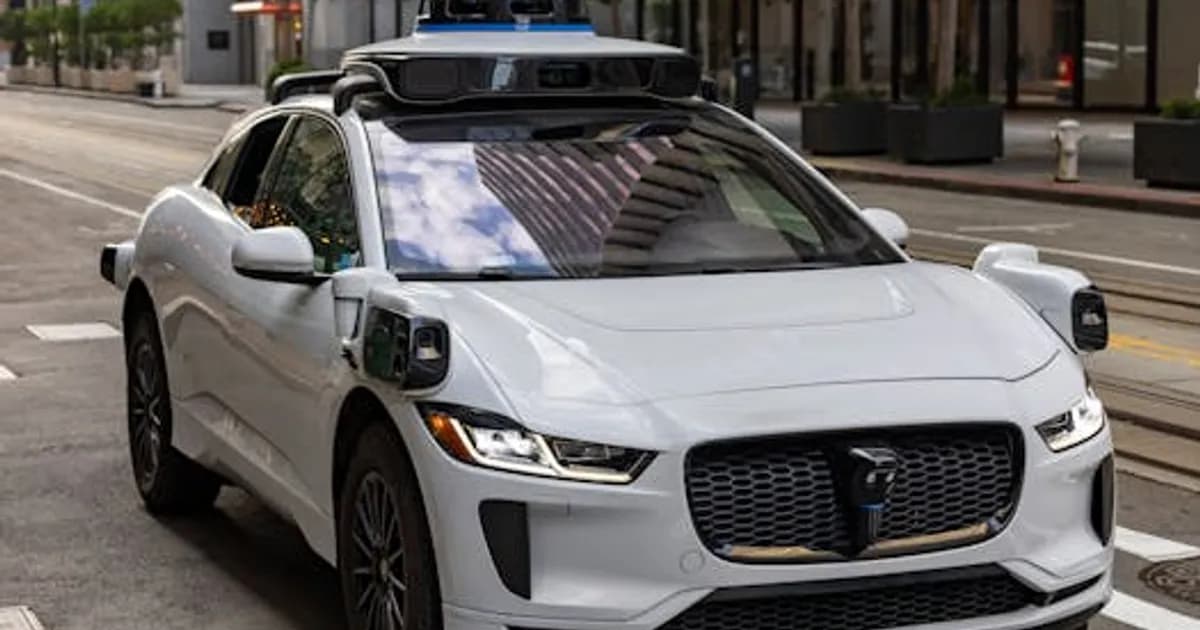
Waymo is the clearest success story. Its driverless robotaxi service operates in San Francisco, Phoenix, Austin, and several other U.S. cities without safety drivers. Millions of miles have been driven without serious incidents attributable to automation. Waymo's approach—high-definition maps, multiple sensor types, and a conservatively tuned AI that yields rather than guesses—has proven out in real-world commercial operation.
Cruise returned to limited operations after its 2023 safety incident, with a more constrained operating envelope and restructured safety oversight.
Baidu's Apollo Go is operating at significant scale in China, particularly in Wuhan and Chengdu, where city partnerships and regulatory frameworks have moved faster than in most Western markets.
Tesla remains a distinct case. Its Full Self-Driving (FSD) system operates as a Level 2 driver assistance tool, not a fully autonomous system—the driver must remain attentive at all times. Tesla has accumulated billions of miles of training data, which gives it a unique dataset advantage, but its camera-only sensor approach remains controversial among autonomous vehicle researchers. The NHTSA has opened multiple investigations into FSD incidents, and the technology's regulatory status continues to evolve.
The Technology Powering Today's Autonomous AI
Modern autonomous vehicle AI is a layered system rather than a single model. The key components:
Perception: Converting sensor data (cameras, lidar, radar) into an understanding of the environment—where are the cars, pedestrians, cyclists, road markings, and obstacles?
Prediction: What will other road users do in the next few seconds? This is one of the hardest problems. Humans are unpredictable, and the AI must make probabilistic forecasts to plan safely.
Planning: Given the current state and predictions, what should the vehicle do? This involves route planning at multiple time scales—from long-horizon navigation to millisecond control decisions.
Control: Translating the plan into steering, braking, and acceleration commands that the vehicle's actuators execute.
The 2026 generation of models applies transformer architectures to perception and prediction, which has improved performance on the "edge cases" that plagued earlier rule-based systems. The shift from handcrafted rules to learned representations is the fundamental technical advance of the last three years.
The Remaining Hard Problems
Understanding why full autonomy is still unsolved requires understanding what makes driving hard.
Long-tail edge cases: The vast majority of driving is routine. The challenge is the rare situation—an unusual construction zone, an unexpected obstacle, a driver behaving unpredictably—that a human handles with common sense but an AI hasn't encountered in training. These long-tail events are extremely hard to solve with more data alone.
Sensor reliability in adverse conditions: Rain, snow, fog, and direct sunlight all degrade sensor performance. Systems that work excellently in dry, sunny conditions may perform poorly in weather that humans handle comfortably. This is a significant barrier to geographic expansion.
Map dependency: Most reliable autonomous systems depend on pre-built high-definition maps of the operating area. Driving somewhere the map doesn't cover is risky. Building and maintaining maps at scale for every road everywhere is an enormous ongoing cost.
Regulatory fragmentation: Autonomous vehicle regulations vary dramatically by country, state, and city. A system approved in one jurisdiction may not be permitted in another. The patchwork of regulations slows commercial deployment far more than the technology itself.
Trucking: The Commercial AV Story Getting Less Coverage
While robotaxi services get headlines, autonomous trucking may be the bigger near-term commercial opportunity.
Highways are more structured and predictable than urban environments, making Level 4 autonomy more achievable. Trucks that drive themselves on interstates with human drivers handling terminal approaches—often called a "hub-to-hub" model—are already in limited commercial operation.
Aurora Innovation launched the first fully driverless commercial trucking routes in Texas in late 2024 and has been expanding since. Torc Robotics (backed by Daimler Truck) and Plus are also operating commercial pilots.
The economics are compelling: trucking faces a persistent driver shortage, and highway miles are the highest-value, most automatable portion of the route. Expect autonomous trucking to hit meaningful commercial scale before robotaxis do.
Personal Vehicles: The Gap Between Marketing and Reality
For consumers buying cars in 2026, the marketing around "autonomous" and "self-driving" features remains confusing and sometimes misleading.
Level 2 systems—where the car handles steering and acceleration but the human must monitor and intervene—are now standard on most new vehicles from mainstream manufacturers. Honda, Ford, GM, Hyundai, and others all offer highway assist systems that can follow traffic and stay in lane.
Level 3, where the car can handle some scenarios without active human monitoring, has arrived in limited form. Mercedes received regulatory approval for a Level 3 system in California in 2024, and other manufacturers are pursuing similar approvals.
Level 4—where the car drives itself in a defined domain and you genuinely don't need to pay attention—is what most consumers imagine when they hear "self-driving." That remains limited to specific commercial deployments, not the vehicle in your driveway.
The National Highway Traffic Safety Administration maintains an evolving taxonomy of automation levels and associated safety requirements that's worth understanding before trusting marketing language.
How AI Advances Are Changing the Outlook
Several AI advances are shifting the outlook for autonomous vehicles in ways that weren't anticipated two years ago.
Foundation models trained on video data from millions of hours of driving are improving generalization. Rather than learning from only the vehicles' own sensors, companies are using large vision-language models to encode richer contextual understanding of the world.
Simulation quality has improved dramatically. AI-generated synthetic driving scenarios can now train models on edge cases that are dangerous or impossible to create in the real world. This dramatically expands the effective training dataset.
Multi-modal sensor fusion is getting better. Systems that tightly integrate lidar, radar, and camera data at the feature level—rather than treating them as separate inputs—are more robust to individual sensor failures.
The connection between advances in general AI capability and autonomous vehicle performance is real and growing. For context on how AI hardware is enabling these advances, see our article on AI Chip Wars 2026: NVIDIA, AMD, and Intel Battle for Dominance.
What to Expect Through 2027
The autonomous vehicle industry in 2026 is consolidating. Companies with sustainable unit economics—primarily Waymo, Aurora, and a handful of others—are pulling away from those that burned capital without achieving reliable operations.
Geographic expansion of robotaxi services will continue in sunbelt cities with favorable weather and regulatory environments. Autonomous trucking will hit commercial inflection points in the next 12 to 18 months. The private vehicle market will see continued improvement in Level 2 and limited Level 3 systems.
True consumer autonomy—where you buy a car and it drives itself everywhere in all conditions—remains a decade away or more. But the commercial and fleet use cases that are working now represent real progress and real economic value.
The story of autonomous vehicles in 2026 is not "self-driving cars are here." It's "self-driving works well in defined conditions, and the business of building around those conditions is starting to work."
Comments
Loading comments...