
AI and Nuclear Fusion in 2026: Accelerating Clean Energy
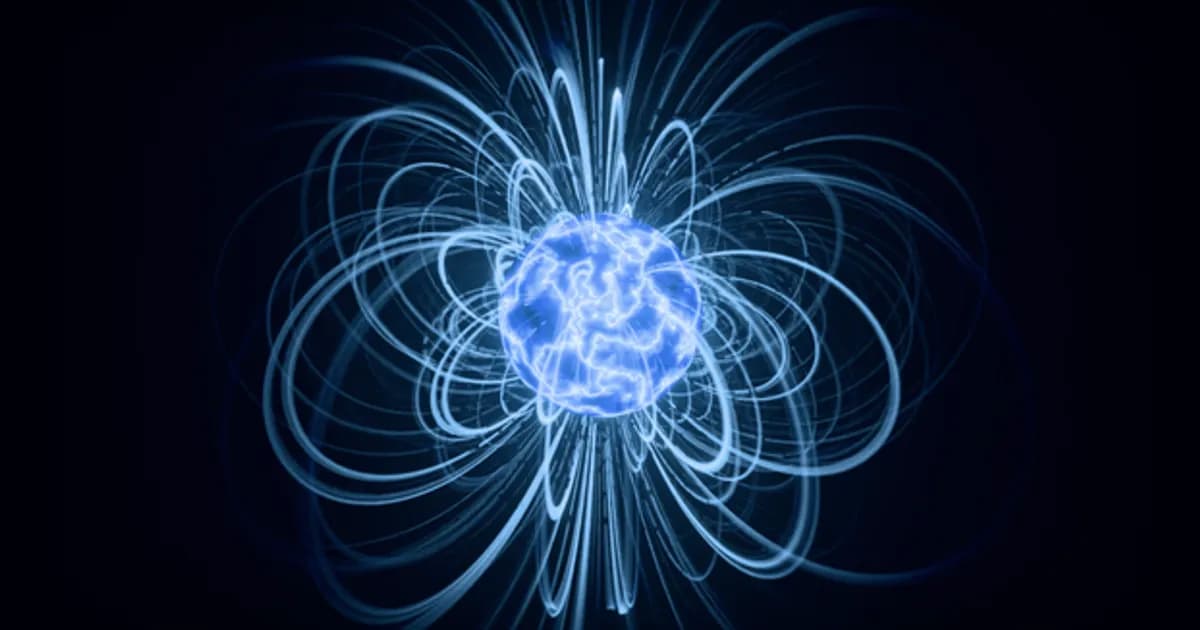
AI and Nuclear Fusion in 2026: Accelerating Clean Energy
AI nuclear fusion research has become one of the most compelling intersections of two transformative technologies. For decades, fusion — the process that powers the sun — has been "30 years away" from becoming a practical energy source. In 2026, that timeline is compressing, and AI is a significant reason why.
The core challenge in nuclear fusion is sustaining a plasma hot enough to enable fusion reactions without the plasma becoming unstable and collapsing. Controlling plasma behavior requires managing millions of variables simultaneously. That's exactly the kind of problem where machine learning excels.
Why Fusion Research Needs AI
Traditional fusion experiments rely on physics-based models that took years to build and require significant computing resources to run. They're good at predicting known behaviors but slow to adapt when experiments reveal unexpected plasma dynamics.
AI nuclear fusion models operate differently. Instead of simulating physics from first principles, they learn the relationship between control inputs and plasma behavior from experimental data. Once trained, they can predict instabilities milliseconds before they occur — fast enough to adjust magnetic confinement fields and prevent disruptions.
This matters because plasma disruptions are expensive. A disruption in a large fusion device can damage the inner wall and set back experiments by weeks. Reducing disruption frequency through AI-assisted control is directly accelerating the research cycle.
The International Atomic Energy Agency tracks progress across global fusion programs and has noted that AI integration is now standard practice at leading facilities rather than an experimental add-on.
How Machine Learning Models Plasma Behavior
The plasma inside a tokamak reactor — the most common fusion device design — is controlled by electromagnetic fields generated by superconducting magnets. Getting the plasma shape, pressure, and temperature right requires continuous real-time adjustments.
Google DeepMind published research showing that reinforcement learning could control plasma configuration in a tokamak with greater precision than traditional control systems. Their model, trained on simulation data, learned to manipulate dozens of magnetic coils simultaneously to achieve target plasma shapes that had previously been difficult to sustain.
This approach transfers to real experimental settings. When the AI-trained control policy is tested on actual tokamaks, it maintains plasma stability longer than conventional algorithms and achieves configurations that expand what's physically possible to study.
Beyond control, AI is being applied to:
- Disruption prediction — classifying plasma states milliseconds before a disruptive event, giving time to take corrective action
- Diagnostic analysis — processing the massive data output from fusion diagnostics faster than human analysts
- Material science — predicting how reactor wall materials will behave under neutron bombardment over years of operation
- Design optimization — using AI to explore novel reactor geometries that physics intuition alone might not generate
Real Projects Using AI for Nuclear Fusion Research
Several active programs are combining AI with nuclear fusion research in ways that are producing measurable results.
Commonwealth Fusion Systems (CFS) is building SPARC, a compact tokamak using high-temperature superconducting magnets. Their approach relies on AI-assisted design and control systems throughout, with a target of achieving net energy gain — more energy out than in — in the late 2020s.
TAE Technologies uses machine learning to optimize their field-reversed configuration plasma, a different approach to confinement that allows for a more modular reactor design. Their AI systems process diagnostic data in real time to adjust plasma parameters.
ITER, the international fusion project in southern France, is integrating AI control systems developed by member institutions. The US Department of Energy funds several of these AI fusion control research programs through its Office of Science.
Helion Energy, backed by significant investment from major technology companies, is using AI extensively in their pulsed fusion approach, which operates on a faster cycle than continuous-plasma devices and generates more data per unit time for AI training.
Timeline: When Could Fusion Power Be Real?
The honest answer is that fusion timelines remain uncertain, but AI nuclear fusion research is compressing them. Here's a reasonable current-state view:
- 2026-2028: Multiple private fusion companies targeting first demonstrations of net energy gain
- 2028-2032: First pilot plants connecting to electrical grids in limited capacity
- 2035+: Commercial-scale fusion power plants, if pilot demonstrations succeed
The key variable is whether AI-assisted control and design optimization can solve plasma stability challenges fast enough to keep these timelines intact. Early 2026 results from several private programs are cautiously encouraging.
What's changed from previous decades is that AI nuclear fusion research has shortened the experimental loop. Problems that previously required months of human analysis can be characterized in days. New hypotheses can be tested computationally before committing to physical experiments.
Challenges AI Can't Solve Alone
AI acceleration of fusion research is real, but it's important to be clear about what it can and can't do.
Materials engineering remains a hard physical problem. The materials that face a fusion plasma must withstand enormous particle flux and temperature cycles. AI can suggest material compositions and predict degradation, but physical testing and development still takes years.
Tritium breeding — producing the fuel that fusion reactors will need — is an engineering challenge involving lithium blanket systems that require physical development alongside AI modeling.
Grid integration — eventually connecting fusion power plants to electrical infrastructure — involves regulatory, economic, and engineering challenges that AI optimization tools only partially address.
And the economic equation still has to work. Building and operating fusion plants must eventually be cheaper than alternative clean energy sources. AI can help optimize design costs, but capital markets will ultimately determine the pace of commercialization.
Related reading: AI and Renewable Energy in 2026: Solving the Power Crisis covers how AI is being applied across the broader clean energy landscape, including the existing technologies that fusion will eventually need to compete with.
What 2026 Means for the Field
The most significant development in AI nuclear fusion research in 2026 is that the field has moved from proof-of-concept to production integration. AI control systems are no longer research curiosities — they are being relied upon in active fusion experiments.
Private investment has followed. Fusion startups collectively raised billions in capital over the past three years, with AI-integrated approaches commanding premium valuations because they demonstrate faster experimental cycles and more credible timelines.
The broader scientific community, covered in more depth in AI in Scientific Research 2026: Discovery at Speed, is watching fusion closely as a model for AI-accelerated hard science.
If the current trajectory holds, AI nuclear fusion research in the late 2020s may look like the AlphaFold moment did for protein biology — a step change that made previously intractable problems suddenly addressable. The stakes are higher: reliable, carbon-free energy at scale would reshape the entire 21st century energy economy.
That outcome isn't guaranteed. But for the first time in the history of fusion research, "30 years away" is being replaced with something that sounds more like a credible roadmap.
Comments
Loading comments...