
AI Surgical Robots in 2026: How Automation Enters the OR
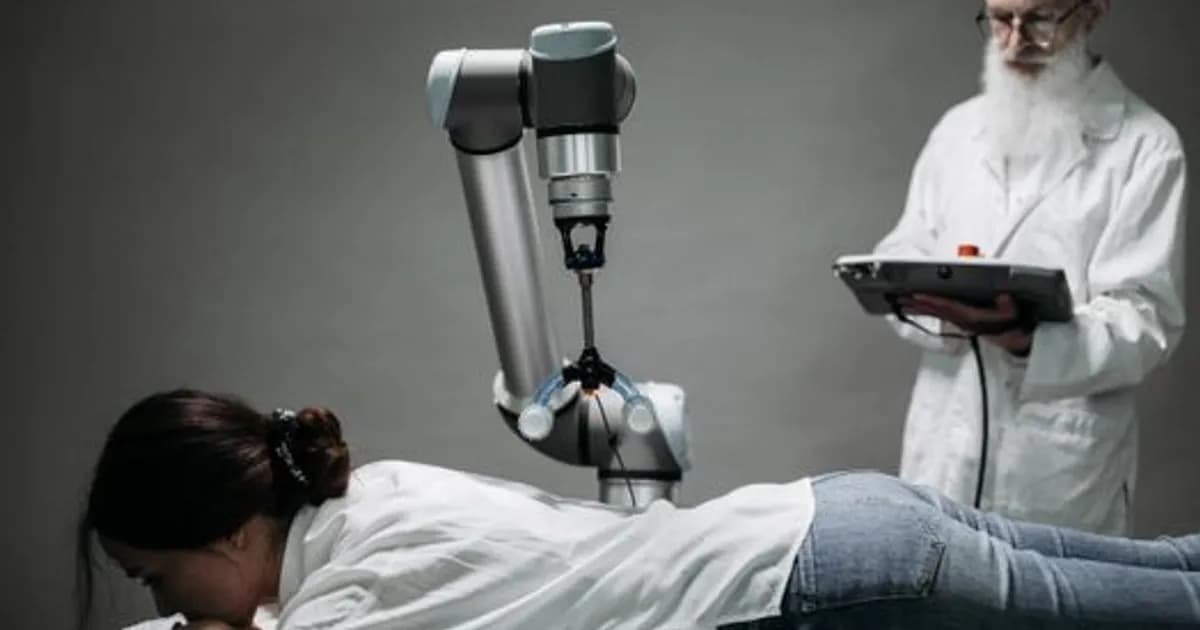
AI Surgical Robots in 2026: How Automation Is Entering the Operating Room
Surgical robots have been in operating rooms since the late 1990s. What's changed in 2026 is that they've moved from sophisticated tools that extend surgeon capability to AI-augmented systems that actively participate in the procedure — identifying anatomy, flagging deviations from safe margins, and in limited contexts, executing pre-planned maneuvers autonomously.
The shift is significant, and not just for patients. It's redefining the role of the surgeon, reshaping surgical training, and introducing new questions about accountability in the operating room.
From Remote Control to AI Assistance
The original surgical robot paradigm was simple: the surgeon controls, the robot executes. Systems like the da Vinci platform let surgeons perform minimally invasive procedures through small incisions using robotic arms they control from a console. The benefits — reduced blood loss, smaller incisions, faster recovery — were real, but the intelligence in the system was entirely the surgeon's.
AI surgical robots in 2026 add a layer of machine intelligence that was absent in earlier generations. The system doesn't just translate hand movements into robotic action; it analyzes the surgical field in real time, identifies anatomical structures from imaging and camera feeds, and provides the surgeon with information they might not have had access to in earlier eras.
Key AI capabilities in current surgical systems include:
- Real-time tissue identification — distinguishing tumor from healthy tissue, identifying nerves and blood vessels
- Instrument tracking and tremor filtering — eliminating human hand tremor from fine movements
- Procedural guidance overlays — displaying planned surgical paths on live video feeds
- Complication detection — alerting surgeons to bleeding, inadvertent tissue contact, or deviations from safe zones
- Outcomes prediction — forecasting complication probability based on intraoperative data
The Systems Shaping 2026
Intuitive Surgical's da Vinci 5
Intuitive's fifth-generation da Vinci system incorporates AI-assisted tissue identification and force sensing that earlier versions lacked. The system tracks cumulative forces applied during surgery — helping prevent over-tightening of sutures and excessive tissue pressure — and overlays imaging data on the live surgical view.
Medtronic's Hugo RAS
Hugo offers AI-assisted analytics and real-time performance metrics that help hospitals benchmark surgical outcomes and identify areas for improvement. Its open-platform approach has attracted partnerships with imaging AI companies that extend its capabilities.
CMR Surgical's Versius
The Versius system emphasizes modular, portable design with embedded AI that helps surgeons maintain optimal instrument positioning throughout procedures. Its learning capabilities allow it to develop personalized recommendations for individual surgeons based on their procedural patterns.
Johnson & Johnson's Ottava
Still in advanced development stages, Ottava represents J&J's effort to build a next-generation AI-native surgical platform from the ground up. Early clinical data from controlled trials is promising, with particular strength in colorectal and urological procedures.
Where AI Surgery Is Already Standard
Robotic surgery has achieved standard-of-care status in several procedure categories in leading health systems.
Prostatectomy — AI-assisted robot-assisted radical prostatectomy is now the dominant approach at major cancer centers, with consistently lower margin-positive rates and better functional outcomes than open surgery for appropriate candidates.
Hysterectomy and gynecological oncology — Robotic approaches have become routine for complex gynecological procedures, particularly when oncological precision is required.
Colorectal surgery — AI surgical systems have shown meaningful benefits in total mesorectal excision, where precise dissection around the rectum is critical and the consequences of deviation are severe.
Kidney surgery — Partial nephrectomy using robotic systems with AI-assisted tumor identification has improved organ-sparing rates in kidney cancer treatment.
The Patient Experience
For patients, the most tangible benefits of AI-assisted robotic surgery are operational rather than technical:
- Shorter hospital stays (often same-day or next-day discharge for procedures that previously required 3-5 day stays)
- Smaller incisions and reduced postoperative pain
- Lower blood transfusion requirements
- Faster return to normal activities
The clinical outcomes data across multiple meta-analyses is positive: AI-assisted surgical robots are associated with fewer complications in complex procedures, particularly those requiring dissection near critical structures like nerves, major vessels, and ureters.
AI drug discovery and surgical robotics share a common driver: the desire to improve outcomes at scale by applying machine pattern recognition to domains where human expert capacity is the bottleneck.
Questions the Surgical Community Is Still Working Through
Accountability when AI contributes to errors. Current regulatory frameworks and medical liability systems were designed for procedures where a human surgeon makes every decision. When an AI system provides anatomical identification that a surgeon relies upon, and that identification is incorrect, the liability questions are genuinely unsettled.
Training and deskilling. There is legitimate concern that surgeons trained primarily on AI-assisted robotic platforms may have weaker fundamentals than those trained on manual technique. What happens when the AI system fails, or when a surgeon operates in a facility without robotic capabilities? Surgical training programs are actively debating how to balance technological advantage with foundational skill development.
Access and equity. AI surgical robots are expensive — a single da Vinci system costs $1-2 million, with ongoing service contracts and consumable costs. Access is heavily concentrated in wealthy health systems in developed countries. For the global majority, these tools remain inaccessible. AI in medical imaging faces the same access disparity, with the most sophisticated diagnostic tools concentrated in well-resourced settings.
Credentialing and competency standards. As AI surgical platforms differ meaningfully from one another, surgical communities are debating whether credentialing should be platform-specific, procedure-specific, or some combination. Standardized competency frameworks are still emerging.
Fully Autonomous Surgery: How Far Off?
The most frequently asked question about AI surgical robots is when they'll operate independently of surgeon control. The honest answer in 2026 is: not soon in most surgical categories, and not without significant unresolved regulatory and ethical questions.
Researchers at Johns Hopkins and elsewhere have demonstrated autonomous soft tissue surgery in controlled laboratory conditions, with AI systems performing specific tasks — suturing, dissection — with accuracy comparable to experienced surgeons. But laboratory conditions are not operating rooms, and the variability of real patient anatomy, unexpected bleeding, and intraoperative complications create a problem space that current AI cannot fully navigate.
The realistic near-term trajectory is expanding supervised autonomy — AI systems that execute pre-planned maneuvers for specific, well-defined procedural elements under continuous surgeon oversight and with immediate override capability. Think of it as autopilot rather than self-driving: the system handles defined tasks while a qualified human monitors and remains ready to intervene.
What This Means for Surgical Careers
Surgeons entering training in 2026 will spend their careers working alongside increasingly capable AI systems. The surgeons who thrive will be those who develop strong intuition for how to effectively collaborate with AI — understanding what the system sees well, where its predictions are reliable, and when to override automated recommendations.
The analogy to other high-stakes professions is instructive. Commercial pilots now manage highly automated systems for most of a flight while maintaining manual proficiency for situations where automation fails or is inappropriate. The skills required are different from those of an era of fully manual flying, but no less demanding — just different.
AI surgical robots in 2026 are producing better patient outcomes in the procedures where they're applied. The questions ahead are about how quickly these benefits can be made universally accessible, and how surgical medicine will evolve as the machine's contribution to each procedure continues to grow.
Comments
Loading comments...