
AI Skin Cancer Detection in 2026: What It Really Catches
AI Skin Cancer Detection in 2026: What It Really Catches
AI skin cancer detection in 2026 has reached a point where, on controlled benchmark datasets, the best models match or exceed average dermatologist accuracy at classifying suspicious skin lesions. That headline has been technically true for a few years now. What's changed in 2026 is how that capability is actually being deployed — and the gap between lab performance and real clinical and consumer use remains the part worth understanding carefully.
Skin cancer is one of the most common cancers worldwide, and melanoma in particular has outcomes that depend heavily on how early it's caught. That's exactly the kind of problem AI image analysis is well suited to — and exactly the kind of problem where overstating AI's readiness can cause real harm.
How the Clinical Tools Work
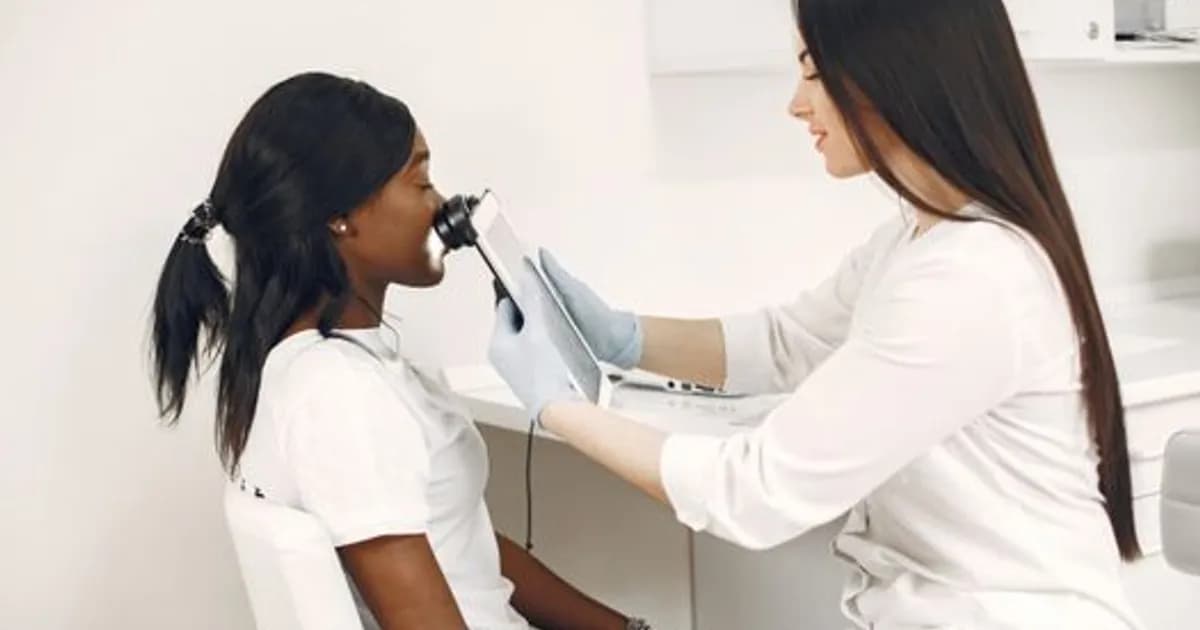
AI dermatology tools used in clinical settings analyze dermoscopic images — taken with a specialized magnifying device dermatologists use — looking for the visual patterns associated with malignant versus benign lesions. These models are trained on large databases of biopsy-confirmed cases, giving them a ground truth that's hard to replicate outside formal clinical research.
In dermatology practices using these tools in 2026, the AI typically functions as a second reader: a dermatologist examines a lesion and forms a judgment, then checks it against the AI's assessment. Discordant cases — where the AI and dermatologist disagree — get flagged for closer review, often including biopsy that might otherwise have been deferred. Several published studies tracking this workflow show modest but real improvements in early detection rates when AI is used this way, compared to dermatologist judgment alone.
Where Smartphone Apps Diverge Sharply
Consumer-facing skin-check apps are a different category entirely, and the accuracy gap between these apps and clinical-grade tools is significant. Regular smartphone cameras lack the standardized lighting, magnification, and resolution of dermoscopic equipment, which materially limits how reliable any AI analysis of the resulting image can be.
Several consumer apps have FDA clearance, but that clearance typically covers a narrower claim than people assume — flagging lesions for professional evaluation, not diagnosing cancer. The practical risk with consumer apps runs in both directions:
- False reassurance: a benign-looking result from a phone photo might delay someone with an actual malignancy from seeking a dermatologist visit
- False alarm overload: overly cautious apps that flag a high percentage of ordinary moles can drive unnecessary anxiety and clinical visits, straining an already limited dermatology workforce
Dermatology professional groups have been consistent in their public guidance: these apps are appropriate for tracking changes in a mole over time and prompting a decision to see a doctor, not for replacing a clinical opinion.
What a Realistic App Workflow Looks Like
The more carefully built consumer apps in 2026 have converged on a similar pattern: rather than producing a single binary "cancer or not" verdict from one photo, they ask users to photograph the same mole repeatedly over weeks or months, then apply AI analysis to the change over time rather than a static snapshot. This plays to a strength dermatologists have long relied on — that a mole changing in size, shape, or color is often a more reliable warning sign than its appearance in any single moment.
This longitudinal approach also sidesteps some of the lighting and resolution problems that plague single-photo analysis, since the AI is comparing a user's own photos against each other under reasonably similar conditions, rather than trying to match an absolute standard calibrated against clinical dermoscopic images taken with professional equipment.
The Access Problem AI Is Genuinely Helping
Where AI dermatology tools are making a clearer, less ambiguous difference is in regions with severe dermatologist shortages. Primary care physicians and nurse practitioners in underserved areas are increasingly using AI-assisted triage tools to decide which patients need urgent dermatology referral versus routine follow-up — effectively extending dermatologic expertise into settings that have never had reliable access to it.
This mirrors a pattern seen across AI in Healthcare 2026: Transforming Medical Diagnosis, where AI's clearest value isn't outperforming the best specialists in top hospitals, but raising the floor of care available where specialists simply aren't present.
Bias and Dataset Gaps That Still Need Fixing
A well-documented and still unresolved problem is that many AI dermatology training datasets historically skewed toward lighter skin tones, leading to measurably lower accuracy on darker skin where certain cancers can also present differently and are already diagnosed later on average. Several research groups and companies have made deliberate efforts in recent years to diversify training data, and accuracy gaps have narrowed — but independent audits in 2026 still find meaningful disparities in some commercial tools. Anyone evaluating an AI dermatology product, clinical or consumer, should ask directly what skin tones its training and validation data actually covered.
The American Academy of Dermatology publishes consumer guidance on skin self-exams and when to seek professional evaluation at aad.org, which remains a more reliable starting point than any app for understanding warning signs.
Regulators evaluating new AI dermatology tools have started requiring demographic breakdowns of validation accuracy as a condition of clearance in some jurisdictions, rather than accepting an aggregate accuracy number alone. That shift, still uneven across regulators globally, is a direct response to years of products reaching market with strong headline accuracy that masked much weaker performance for specific skin tones.
The Bottom Line
AI skin cancer detection in 2026 is a real clinical advance when deployed inside a dermatology practice as a second-reader tool, and a genuinely useful access expansion in underserved regions through primary care triage. It is a much shakier proposition as a standalone consumer app meant to replace a doctor's visit.
The technology earns trust by being paired with — not substituted for — a clinician's judgment, and the places it's failing are mostly the places that skip that pairing.
Comments
Loading comments...