
AI in Healthcare 2026: Transforming Medical Diagnosis
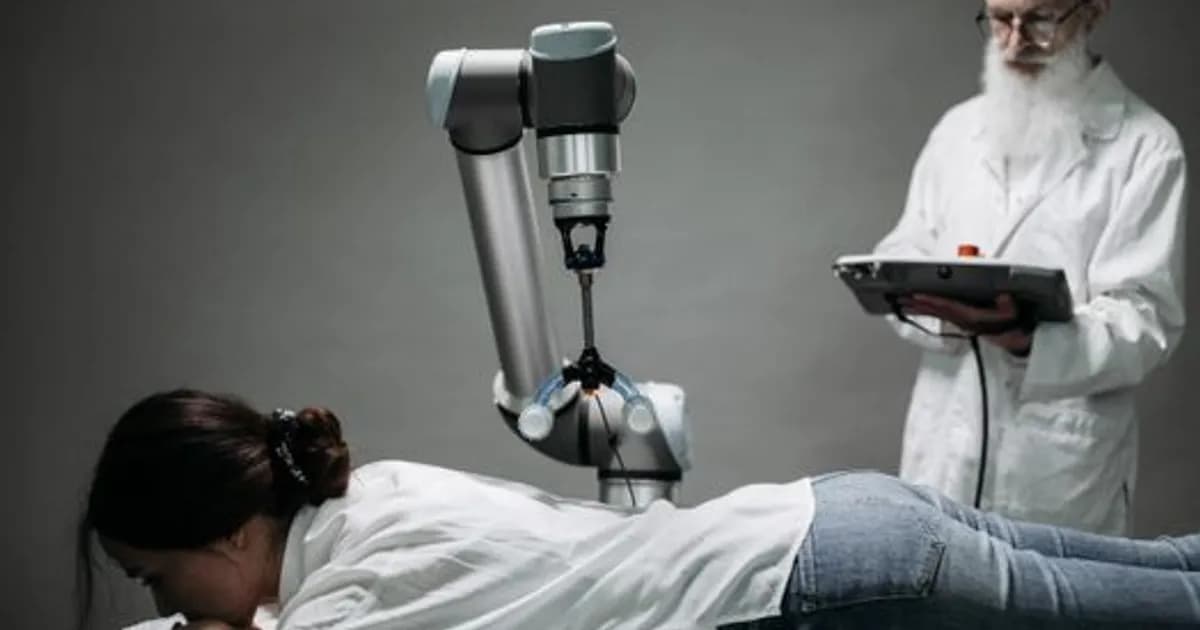
AI in Healthcare 2026: Transforming Medical Diagnosis
AI in healthcare has moved from pilot programs to mainstream clinical deployment in 2026. What was a research curiosity five years ago is now part of standard diagnostic workflows at major hospital systems across the United States, Europe, and parts of Asia. Radiologists use AI to flag anomalies in scans before they read them. Pathologists use it to identify cancer cells at scale. Emergency departments use it to predict patient deterioration before the clinical signs are obvious.
The change is real, it's happening at speed, and it raises important questions about accuracy, liability, and the future of the physician's role. This article covers where AI diagnostic tools actually stand today, which systems have cleared regulatory hurdles, and what the evidence says about patient outcomes.
Why 2026 Is a Turning Point for Healthcare AI
Two factors have accelerated AI adoption in healthcare over the past 18 months: regulatory clarity and clinical evidence.
On the regulatory side, the FDA has now approved over 600 AI-enabled medical devices — a number that doubled between 2023 and 2025. Many of these are narrow, task-specific tools (detecting diabetic retinopathy in eye scans, flagging critical findings in chest X-rays) rather than general diagnostic AI. But the volume of approvals has created a clearer pathway for developers and a larger body of devices that clinicians can actually deploy.
On the evidence side, multiple large-scale studies have now compared AI-assisted diagnosis to standard care with enough statistical power to draw real conclusions. The consistent finding is that AI assistance reduces false negatives in radiology and pathology — the cases where a problem is missed. Reducing false positives has been harder, which is why the tools are positioned as augmentation rather than replacement.
AI Diagnostic Tools Making an Impact Now
Several systems have crossed from promising to genuinely useful in clinical settings.
Google's AMIE — a conversational diagnostic AI — has been deployed in clinical settings to take structured patient histories and flag potential diagnoses for physician review. In controlled studies, its differential diagnosis accuracy matched or exceeded that of general practitioners on a range of primary care presentations.
Microsoft's Nuance DAX Copilot has been widely adopted for ambient clinical documentation. It listens to physician-patient conversations, generates structured clinical notes, and pre-fills EHR fields. The time savings are substantial — physicians report saving 30 to 60 minutes of documentation time per day, which gets redirected to patient care.
Paige AI is the leading FDA-cleared pathology AI. It analyzes whole-slide images of cancer biopsies at a scale no human pathologist can match, flagging slides with detected malignant cells for priority review. Studies show it increases cancer detection rates in prostate pathology by 7.3% when used alongside a pathologist.
Aidoc operates across radiology, with FDA clearance for triage tools covering intracranial hemorrhage, pulmonary embolism, and stroke. It sits in the background of a radiology workflow, routing critical findings to the front of the read queue so life-threatening cases get reviewed first.
The regulatory framework shaping these procurement decisions is covered in AI Regulation in 2026: What New Laws Mean for Your Business, including the compliance documentation hospitals and health systems now need before deploying AI in clinical workflows.
FDA-Approved AI Medical Devices: What Clinicians Should Know
The FDA approval landscape for AI medical devices is more nuanced than it might appear. Most cleared AI tools fall under the 510(k) pathway, which establishes substantial equivalence to a predicate device — a faster route to market than the Pre-market Approval (PMA) process used for high-risk devices.
For clinicians and hospital procurement teams, this means the approval threshold varies significantly by risk level. An AI tool that triage-flags imaging abnormalities for human review carries a different risk profile than one that operates autonomously in a clinical pathway.
Key considerations when evaluating FDA-cleared AI tools:
- Indication specificity: Most approvals cover a specific imaging modality, body region, and clinical condition. A tool approved for chest X-ray pneumonia detection is not validated for CT pulmonary embolism, even if the underlying architecture is similar.
- Performance on local populations: Clinical AI tools are typically validated on the population represented in their training data. Performance may differ on patient populations with different demographics or disease prevalence.
- Post-market surveillance obligations: The FDA now requires algorithmic change protocols for AI/ML-based devices. Understand how the vendor manages model updates and what re-validation is required when they occur.
AI in Drug Discovery: The Quieter Revolution
While diagnostic AI gets most of the headlines, AI in drug discovery is arguably producing larger near-term impact on healthcare outcomes.
AlphaFold 3 from DeepMind, released in 2024, has fundamentally changed structural biology by accurately predicting the structures of proteins, DNA, RNA, and their interactions. Drug developers are using these predictions to identify binding sites and screen candidate molecules at a speed that was previously impossible.
Several FDA-approved drugs in 2025 and 2026 were discovered using AI-guided processes, reducing the average pre-clinical phase length by an estimated 40%. The full impact on patient outcomes will take years to measure — drug development timelines are long — but the structural change in how molecules are identified and screened is already visible in how biotech companies staff and operate.
What This Means for Healthcare Workers
The concern that AI will replace physicians is understandable but, based on current evidence, overstated for most clinical roles. What AI is replacing is specific, bounded tasks within clinical workflows — reading a screening mammogram for a recalled abnormality, transcribing a clinical note, checking a medication list for interactions — rather than the judgment-intensive work of diagnosis and treatment planning.
What is changing is the distribution of cognitive work. Physicians who use AI documentation tools spend less time on EHR data entry and more on direct patient interaction. Radiologists using AI triage spend less time on routine normal reads and more attention on complex or ambiguous cases. The workload doesn't shrink; it shifts.
The roles at highest risk of displacement are those that are narrowly defined and consist of highly repetitive, pattern-recognition tasks. Screening radiologists reading high volumes of routine cases, pathologists doing first-pass slide review, and administrative staff doing prior authorization work are all facing genuine role compression.
Challenges and Ethical Questions
The deployment of AI in healthcare at scale raises real concerns that aren't solved by technical performance.
Algorithmic bias remains a significant issue. AI systems trained predominantly on data from large academic medical centers may perform less accurately on patients from rural areas, lower-income populations, or ethnic groups underrepresented in training data. Several high-profile failures — including a widely deployed sepsis prediction tool that performed worse on Black patients — have made this a central concern in procurement evaluation.
Liability frameworks haven't fully caught up. When an AI system misses a finding and a patient is harmed, the legal question of who bears responsibility — the developer, the hospital, or the physician who relied on the tool — is still being worked out in courts and regulatory guidance.
Informed consent is an emerging issue. Patients are often unaware when AI systems are involved in reviewing their diagnostic data. Clear disclosure standards are still developing.
Conclusion
AI in healthcare in 2026 is delivering measurable value in specific, well-defined clinical applications. Radiology triage, pathology screening, clinical documentation, and drug discovery are areas where the evidence is strong and deployment is accelerating.
The tools are not infallible, the regulatory and ethical frameworks are still developing, and the long-term impact on clinical roles is uncertain. But the trajectory is clear: AI is becoming a standard component of clinical infrastructure, and healthcare organizations that aren't evaluating these tools are falling behind the ones that are.
For clinicians and healthcare administrators, the practical step is identifying which repetitive, high-volume tasks in your workflow could benefit most from AI augmentation. Start there, measure rigorously, and build from evidence rather than hype.
Want to learn more? Read our analysis of how health systems are building AI governance frameworks, or explore which AI documentation tools are seeing the fastest adoption in primary care.
Comments
Loading comments...