
AI in Scientific Research 2026: Discovery at Speed
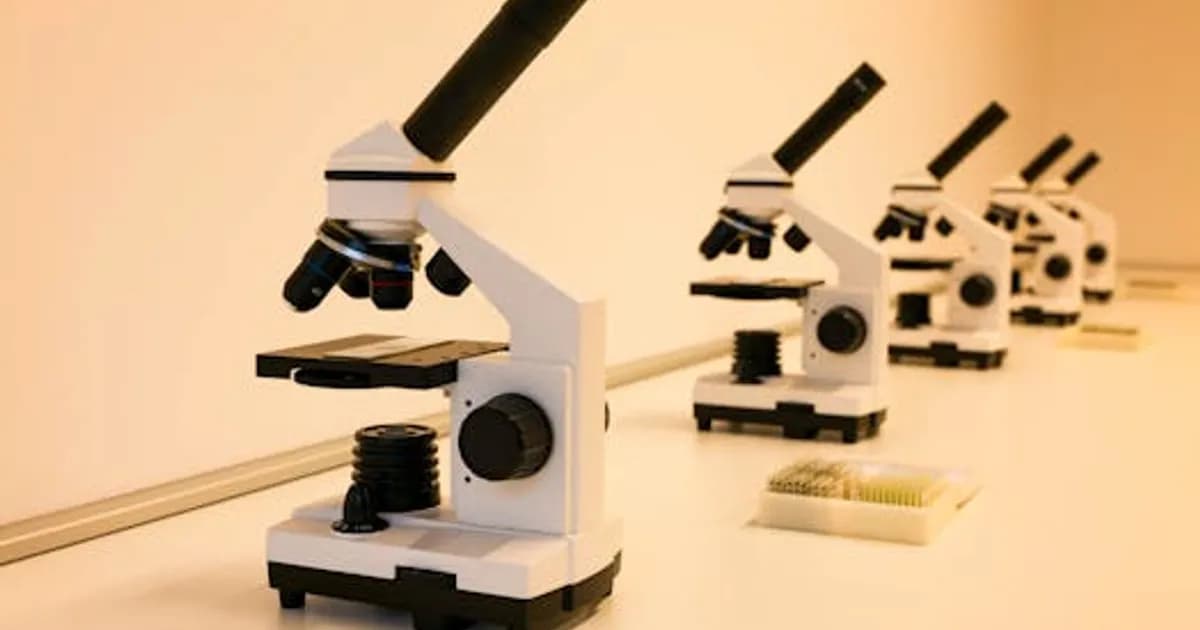
AI in Scientific Research 2026: Discovery at Speed
AI in scientific research has crossed a threshold. It's no longer primarily a tool for finding patterns in existing data or automating literature searches — it's now contributing to experimental design, hypothesis generation, and in some fields, producing discoveries that human researchers then verify and extend. The pace of this transformation is accelerating, and the fields being affected are diverse enough that almost no area of research remains untouched.
AI and Protein Structure: Beyond AlphaFold
The release of AlphaFold 2 in 2020 was the moment many researchers describe as their first encounter with genuinely transformative AI in scientific research. By 2026, what AlphaFold started has expanded substantially.
AlphaFold 3, released by DeepMind in 2024, extended predictions beyond proteins to nucleic acids, small molecules, and protein-DNA and protein-RNA complexes — dramatically expanding the range of biological structures that can be predicted computationally. The AlphaFold Protein Structure Database now contains over 200 million protein structure predictions, covering most known proteins across virtually all species.
What's changed in 2026 is the downstream use of these predictions. Early AI protein structure predictions were used primarily for hypothesis generation and target identification. Researchers are now using AI-predicted structures directly in drug design workflows, with AI models suggesting binding site geometries and predicting how candidate molecules will interact with protein targets. This accelerates the early stages of drug discovery by months.
Antimicrobial resistance is one area where AI in scientific research is producing urgent practical results. Researchers are using AI models to identify new classes of antibiotics by screening billions of molecular candidates against predicted bacterial protein structures — finding compounds that human-designed search strategies would never have generated.
AI in Physics and Materials Science
AI in scientific research is transforming materials discovery in ways that parallel its impact on biology. The core challenge in materials science is that the space of possible materials — varying composition, structure, temperature, and processing conditions — is so enormous that conventional experimental exploration covers only a tiny fraction.
AI models trained on existing materials databases can predict physical properties — electrical conductivity, thermal behavior, mechanical strength, catalytic activity — for materials that have never been synthesized. Researchers use these predictions to prioritize which candidates are worth the significant cost and time of physical synthesis and testing.
Progress in AI-driven materials discovery has accelerated work on:
- Battery materials — finding cathode and electrolyte compositions with higher energy density and longer cycle life for electric vehicles and grid storage.
- Solar cell materials — identifying perovskite compositions with better stability and efficiency.
- Hydrogen catalysts — finding cheaper alternatives to platinum-group catalysts for hydrogen production and fuel cells.
- Superconductors — AI models have identified candidate materials for room-temperature superconductivity, though experimental verification remains challenging.
The AI in scientific research workflow in materials science typically runs faster than biological applications because computational validation is more tractable — physics simulations can test many AI-generated predictions before expensive physical experiments are required.
AI Climate Modeling and Environmental Research
Climate science has always been computationally intensive — Earth system models require enormous compute to simulate ocean-atmosphere interactions, ice sheet dynamics, and carbon cycles at useful resolution. AI in scientific research is changing this in two distinct ways.
AI as model emulator: Training neural networks to approximate the behavior of expensive physics-based climate models allows researchers to run thousands of scenario simulations that would be prohibitively expensive with traditional methods. This is transforming climate impact assessment and adaptation planning.
AI for observational data analysis: The volume of satellite, sensor, and monitoring data available to climate researchers has grown faster than human capacity to analyze it. AI systems now process continuous data streams from ocean buoys, atmospheric sensors, glacier monitoring satellites, and forest cover observation to detect trends and anomalies in near-real-time.
AI-assisted climate research is being applied to carbon accounting, wildfire prediction, extreme weather forecasting, and marine ecosystem monitoring. The scientific institutions producing this work — including NASA, NOAA, and the European Centre for Medium-Range Weather Forecasts — publish findings regularly at nature.com and partner journals.
AI in Astronomy and Space Science
Astronomy generates data volumes that dwarf most other scientific fields. The Vera C. Rubin Observatory, once fully operational, will produce approximately 20 terabytes of imaging data per night. No human team can analyze that volume — AI in scientific research isn't just helpful in astronomy, it's now necessary.
AI systems are being used to:
- Classify astronomical objects — distinguishing galaxies, stars, asteroids, and transient events automatically across millions of detections per night.
- Identify gravitational lensing — finding subtle distortions in background galaxy images that indicate the presence of dark matter concentrations.
- Detect exoplanet candidates — processing light curves from space telescopes to identify the tiny brightness dips that indicate a planet transiting its host star.
- Signal processing in radio astronomy — separating weak astrophysical signals from human-made radio frequency interference.
AI in scientific research has also contributed to gravitational wave astronomy, helping LIGO and Virgo detectors identify weak signals in noisy data streams that conventional signal processing approaches would miss.
The Challenges of AI-Driven Science
AI in scientific research is not without serious challenges that the scientific community is actively grappling with.
Reproducibility is complicated when AI models are used in the discovery process. If results depend on a specific model version, training dataset, or hyperparameter configuration, replicating findings requires access to those exact components — a requirement that doesn't map easily onto how scientific research has traditionally been shared.
Interpretability gaps create trust problems. When an AI model suggests a new drug candidate or materials composition, understanding why the model made that suggestion is often opaque. Researchers can validate the prediction experimentally, but the lack of mechanistic explanation makes it harder to build on results or identify where the AI reasoning is likely to fail.
Bias in training data affects AI in scientific research just as it affects AI in other domains. Models trained predominantly on human proteins, common chemical families, or well-studied physical systems may perform poorly outside those distributions — precisely the regions where novel discoveries are most valuable.
Publication pressure creates incentives to report AI-assisted findings without adequate validation. Several high-profile cases of AI-generated scientific claims that didn't replicate have prompted journals to strengthen requirements for computational methods disclosure.
AI Drug Discovery in 2026: How Pharma Is Using AI to Find Cures covers the pharmaceutical applications of AI in scientific research in greater depth, including clinical translation challenges.
What the Next Five Years Could Bring
The trajectory of AI in scientific research points toward several developments that are already beginning:
Autonomous laboratory systems that use AI to design experiments, execute them using robotic platforms, analyze results, and generate the next experimental round with minimal human intervention are operating in early-adopter labs. Scaling these systems will dramatically accelerate the experimental cycle in fields where synthesis and testing can be automated.
Cross-domain AI models trained simultaneously on biological, chemical, and physical data may discover relationships between domains that field-specific training misses. Early results suggest these multimodal scientific AI models find candidate compounds and materials that domain-specific models don't surface.
AI scientific assistants that function as knowledgeable collaborators — summarizing relevant literature, identifying methodological concerns, suggesting experimental controls, and connecting findings to related work across fields — are already being used by early adopter research groups and will likely become standard research infrastructure.
AI Is Reshaping the Pace of Discovery
AI in scientific research in 2026 is producing real results across biology, materials science, climate science, and astronomy. The tools are imperfect and the challenges are real, but the trajectory is clear: scientific research that would take decades is being compressed into years, and questions that were computationally intractable are becoming approachable.
Researcher or organization interested in AI scientific research tools? Start by identifying the specific data bottleneck in your research workflow — the place where you have more data than human capacity to analyze — and evaluate whether an AI tool designed for your domain already exists before considering custom development.
Comments
Loading comments...