
AI Military Technology in 2026: Defense, Drones, Ethics
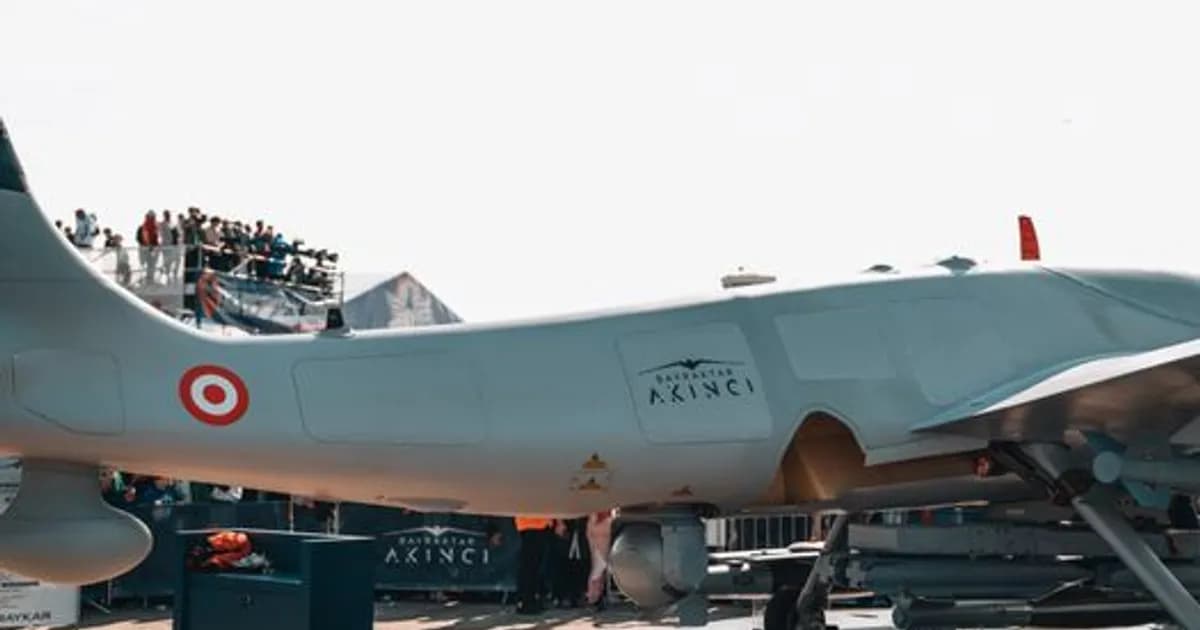
AI Military Technology in 2026: Defense, Drones, and Ethics
AI military technology has moved from theoretical to operational faster than most analysts expected. The deployment of AI systems across defense functions — from autonomous drones to intelligence analysis to cybersecurity — is reshaping how militaries operate, and raising questions that governments and international organizations are still working to answer.
This article covers what's actually deployed, where the debates are most contested, and what the trajectory looks like.
The Current State of Military AI
Military AI in 2026 spans a wide range of applications, with very different levels of maturity and controversy across each.
At one end, AI applications that are operational and relatively uncontroversial: logistics optimization, supply chain management, predictive maintenance, administrative workflow automation. These applications use AI the same way large enterprises do — to operate more efficiently.
At the other end, applications that are either in development or limited deployment and subject to significant debate: autonomous weapons systems capable of selecting and engaging targets without direct human involvement.
Between these poles sit a range of applications — intelligence analysis, surveillance, cyber operations, tactical decision support — where AI is playing an increasing role but human oversight remains central.
The United States, China, Russia, the United Kingdom, Israel, and several other nations are all investing heavily in military AI. The pace of development varies, and the approaches to governance differ significantly.
AI-Powered Intelligence Analysis and Surveillance
The least controversial and most widely deployed military AI applications are in intelligence gathering and analysis.
ISR (Intelligence, Surveillance, and Reconnaissance) has been transformed by AI. The volume of imagery, signals, and data that modern surveillance systems generate far exceeds human analyst capacity. AI systems that automatically identify objects of interest, track movements, and flag anomalies in satellite and drone imagery are now standard tools in advanced militaries.
The US National Geospatial-Intelligence Agency and equivalent organizations in allied nations have integrated AI image recognition into their workflows, allowing smaller teams of analysts to process orders of magnitude more imagery.
Natural language processing tools that analyze text and audio intercepts — translating, summarizing, and surfacing relevant intelligence — have similarly improved analyst throughput.
Predictive analytics that identify patterns preceding specific types of military activity are used for threat assessment and force posture decisions.
These applications involve human decision-making throughout; AI provides analysis and recommendations, but humans make the decisions. That's a key distinction from autonomous weapons systems.
Autonomous Weapons Systems: What's Deployed and Debated
Autonomous weapons systems — those capable of selecting and engaging targets without human action — represent the most ethically contested domain of military AI.
Loitering munitions (sometimes called "kamikaze drones") represent the most widely deployed form of AI-enabled autonomous capability. Systems like the Switchblade and similar platforms from multiple nations can be launched toward an area of interest and use onboard AI to identify and engage targets. The extent to which humans remain "in the loop" varies significantly by system and rules of engagement.
Autonomous air defense systems — designed to automatically engage incoming missiles and drones moving too fast for human reaction time — have existed for decades (the US Navy's Phalanx CIWS, for example) and represent the most accepted form of autonomous lethal engagement given the operational necessity.
Drone swarms — large numbers of small, coordinated autonomous drones — are an active area of development across multiple militaries. The tactical value of coordinated autonomous systems is significant; the governance questions around their use are similarly significant.
The debate over autonomous weapons is covered in intergovernmental forums including the Convention on Certain Conventional Weapons (CCW) at the United Nations. Consensus on an international framework governing these systems has proven elusive, with major military powers disagreeing on whether such systems should be banned, regulated, or left to national discretion.
AI in Military Cybersecurity
Cyber operations represent one of the most active domains for military AI application.
Defensive AI — systems that monitor military networks for intrusions, identify anomalous behavior, and respond to attacks faster than human teams — is mature and widely deployed. The volume and sophistication of state-sponsored cyber attacks has made AI defense tools necessary rather than optional.
Offensive AI — AI that assists in identifying vulnerabilities, crafting attacks, or autonomously probing target systems — is an area of significant but less publicly documented development.
AI-powered disinformation detection has become a priority for military information operations units responding to AI-generated disinformation from adversary states. The tools used for detection are similar to those used in the commercial sector, though applied in national security contexts.
AI for Military Logistics
Military logistics — moving troops, equipment, supplies, and fuel to where they're needed — is one of the most complex optimization problems that exists, and AI has made meaningful inroads.
Predictive maintenance for military equipment uses sensor data and AI models to predict when vehicles, aircraft, and ships will need maintenance before they fail. This reduces unexpected breakdowns and allows better planning for operational readiness.
Supply chain optimization tools help military logistics commands model supply requirements under different operational scenarios and optimize routing and inventory positioning.
Autonomous ground vehicles for logistics tasks — moving supplies in forward areas — are in various stages of testing and limited deployment. They reduce risk to personnel in contested areas where supply convoys have historically been targets.
International Treaties and Regulatory Frameworks
International governance of military AI is a work in progress, with significant disagreement between major powers.
The UN AI Governance in 2026: Global Standards Taking Shape article covers the civilian AI governance landscape; military AI governance is developing on a parallel track with less consensus.
Key dynamics in 2026:
- The United States has published guidelines for responsible military AI use, emphasizing human oversight for lethal decisions, but has not supported a binding international ban on autonomous weapons
- China has endorsed principles of responsible AI use in military applications while also being among the most aggressive developers of military AI capabilities
- The European Union has taken a more restrictive domestic approach, with the EU AI Act extending to dual-use and defense applications in certain contexts
- NATO has developed an AI strategy for defense applications emphasizing interoperability among member nations and principles of responsible use
The absence of a binding international framework leaves military AI development governed primarily by national policies — which vary significantly in the restrictions they impose.
Ethical Debates: What Remains Contested
The ethical debates around military AI are not academic — they're shaping procurement decisions, international negotiations, and the careers of researchers who choose where to work.
The core contested questions:
Meaningful human control: What level of human involvement in targeting decisions constitutes adequate oversight? When does AI recommendation-making shade into autonomous decision-making in practice?
Accountability gaps: If an autonomous system makes an error that kills civilians, who is legally responsible? The operator? The commander? The developer? Current legal frameworks don't answer this clearly.
Strategic stability: Does military AI make conflict more or less likely? AI-enhanced first-strike capabilities, faster decision cycles, and potential for AI system failures could increase instability. Alternatively, better surveillance and attribution could deter aggression.
Proliferation: Unlike nuclear weapons, AI military capabilities can spread quickly across many state and non-state actors. What happens when terrorist organizations or rogue states have access to capable autonomous weapons?
These questions are being debated in academic institutions, defense ministries, and international forums simultaneously. The outcomes will shape the military AI landscape well beyond 2026.
AI military technology in 2026 is not a future scenario — it's present reality, deployed in operations by multiple nations. Understanding what AI is doing in defense contexts matters both for informed citizenship and for technology professionals who will increasingly encounter these questions in their careers. The ethical frameworks being developed now will shape the technology's use for decades.
Comments
Loading comments...