
AI Noise Pollution Monitoring in 2026: Smart Cities
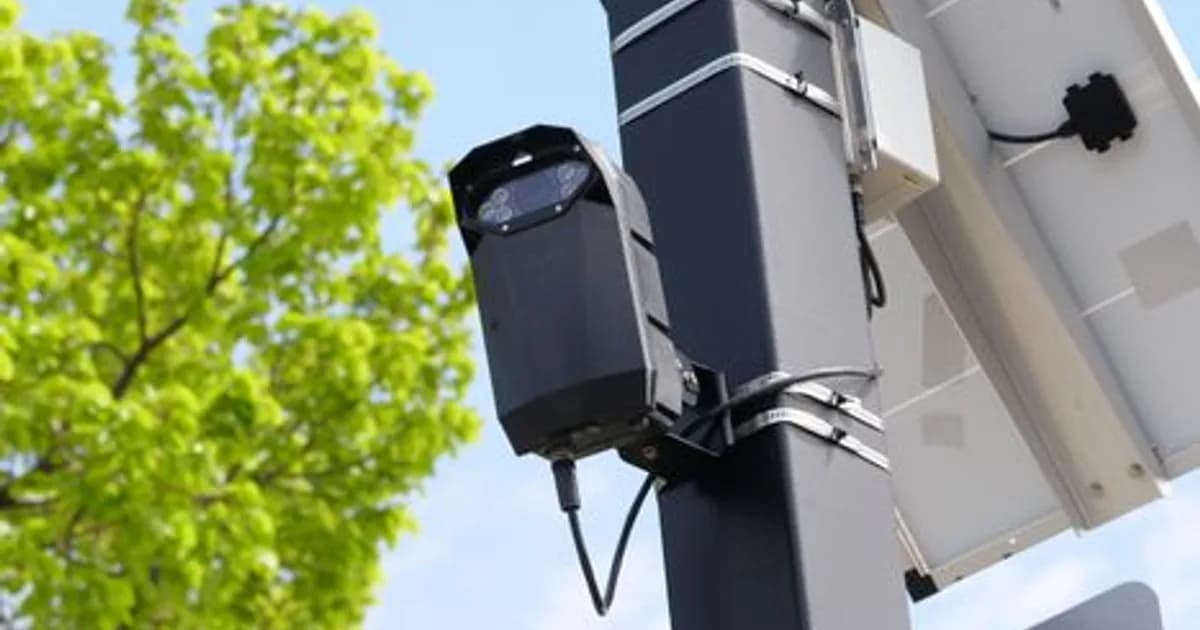
AI Noise Pollution Monitoring in 2026: Smart Cities
AI noise pollution monitoring has expanded across major cities in 2026 as a quiet but increasingly important piece of smart-city infrastructure, built to solve a problem traditional noise enforcement always struggled with: knowing exactly where excessive noise came from and being able to prove it, rather than responding to a complaint hours after the source has gone quiet.
Networks of acoustic sensors paired with machine learning models that can classify sound sources in real time have changed what's enforceable, turning noise complaints from a he-said-she-said dispute into something with an actual evidentiary trail.
Why Manual Noise Enforcement Never Worked Well
Traditional noise enforcement relied almost entirely on resident complaints followed by an officer dispatched to measure decibel levels on arrival — a process with an obvious timing flaw, since the offending noise had often stopped by the time anyone showed up to document it. Even when an officer arrived in time, attributing a measured noise level to a specific source among multiple possibilities was often more guesswork than evidence.
Continuous acoustic sensor networks remove that timing gap entirely, recording sound levels and characteristics around the clock rather than only when someone happens to be present with a meter.
What the Sensor Networks Actually Detect
Modern urban noise-monitoring deployments combine a few distinct capabilities:
- Continuous decibel logging across fixed sensor locations, building a baseline of normal noise patterns for each area and time of day
- Sound source classification, where machine learning models trained on labeled audio can distinguish traffic noise from construction, nightlife, industrial equipment, or aircraft without needing to record identifiable speech
- Anomaly detection that flags sustained deviations from a location's established baseline, rather than reacting to every loud but brief and ordinary sound
- Directional triangulation using multiple sensors to estimate roughly where a noise originated, helpful for enforcement in dense areas with many potential sources
Cities running mature deployments use this primarily for chronic noise problems — a venue consistently running past permitted hours, or an industrial facility exceeding its noise permit at predictable times — rather than as a tool for catching one-off disturbances.
The Public Health Case Driving Investment
Noise exposure isn't just an annoyance; sustained exposure to elevated noise levels has well-documented links to sleep disruption, elevated stress hormones, and cardiovascular risk over time, which has given noise monitoring a public health justification beyond simple quality-of-life complaints. The Environmental Protection Agency has long tracked noise as an environmental health hazard, and that framing has helped noise-monitoring programs secure funding that pure nuisance-abatement framing historically struggled to justify.
This public-health angle connects directly to the broader sensor-driven monitoring trend described in AI in Environmental Monitoring 2026: Protecting Our Planet, where air quality, water quality, and now noise are increasingly tracked through the same kind of always-on sensor and AI classification infrastructure.
The Privacy Question Cities Have to Answer Carefully
Acoustic sensors capable of classifying sound naturally raise the question of whether they're also capable of recording or analyzing speech, and cities deploying this technology have generally had to be explicit — both in system design and public communication — that the sensors are tuned to classify sound types and levels rather than transcribe conversations. Several deployments have built this constraint into the hardware itself, processing audio into classification data locally and discarding the raw waveform rather than storing anything that could later be analyzed for speech content.
That design choice matters for public trust in a way that's easy to underestimate; a noise-monitoring program that can't credibly rule out eavesdropping capability tends to generate disproportionate public pushback regardless of its actual technical limitations.
Getting Enforcement Right Without Overreach
Cities that have run these programs successfully tend to follow similar practices:
- Use anomaly detection against location-specific baselines rather than a single citywide decibel threshold
- Process audio into noise classification locally, avoiding storage of raw recordings that could raise speech-privacy concerns
- Reserve enforcement action for sustained, repeated violations rather than isolated loud events
- Publish aggregate noise data publicly, which has proven useful for urban planning decisions well beyond enforcement
Construction and Industrial Compliance Has Become a Major Use Case
Beyond nightlife and traffic complaints, a substantial share of practical noise-monitoring deployment has gone toward construction site and industrial facility compliance, where permitted noise levels and operating hours are typically spelled out explicitly and violations are comparatively easy to define objectively. Continuous monitoring near construction sites gives regulators an evidentiary record that holds up far better than a neighbor's complaint log when a permit violation gets disputed.
Industrial facilities operating under noise permits have, in some cases, voluntarily adopted self-monitoring sensor networks specifically to demonstrate compliance proactively rather than waiting to be measured by a regulator during a complaint-driven inspection. This shift toward self-monitoring has had the side benefit of giving facility operators earlier warning when equipment degradation is pushing noise output toward permit limits, often well before the noise itself becomes the kind of problem that draws a regulatory complaint.
Comparing Approaches Across Cities
Implementation has varied considerably between cities, reflecting different regulatory priorities and budget constraints. Some cities have concentrated sensor deployment narrowly around historically high-complaint zones — entertainment districts and major arterial roads — while others have pursued broader citywide coverage aimed at building a comprehensive noise baseline for urban planning purposes well beyond enforcement.
Funding models differ too. A few cities have partnered with universities and research institutions to deploy and study sensor networks at lower direct cost, treating the data as a public research resource alongside its enforcement value, while others have contracted directly with commercial noise-monitoring vendors offering a more turnkey enforcement-focused product.
Conclusion
AI noise pollution monitoring in 2026 has finally given cities a practical way to enforce noise rules with actual evidence rather than relying on complaints and after-the-fact spot checks. The technology's public health case is solid, but it only earns public trust if cities are disciplined about what the sensors actually capture and store. If your city is evaluating a noise-monitoring deployment, prioritize vendors who process classification locally and can clearly explain — and prove — that raw audio isn't being retained.
Comments
Loading comments...