
AI Crop Disease Detection in 2026: Catching It Early
AI Crop Disease Detection in 2026: Catching It Early
AI crop disease detection in 2026 has changed how farmers respond to plant pathogens — not by curing disease, but by catching it days or weeks before symptoms would be visible to the human eye. That head start is often the difference between losing a few rows of a field and losing the whole crop.
Plant disease moves fast once it takes hold, and by the time a farmer can see discoloration or wilting from the edge of a field, the pathogen has often already spread well beyond the visibly affected plants. AI-based scanning is closing that detection gap.
How Detection Actually Works
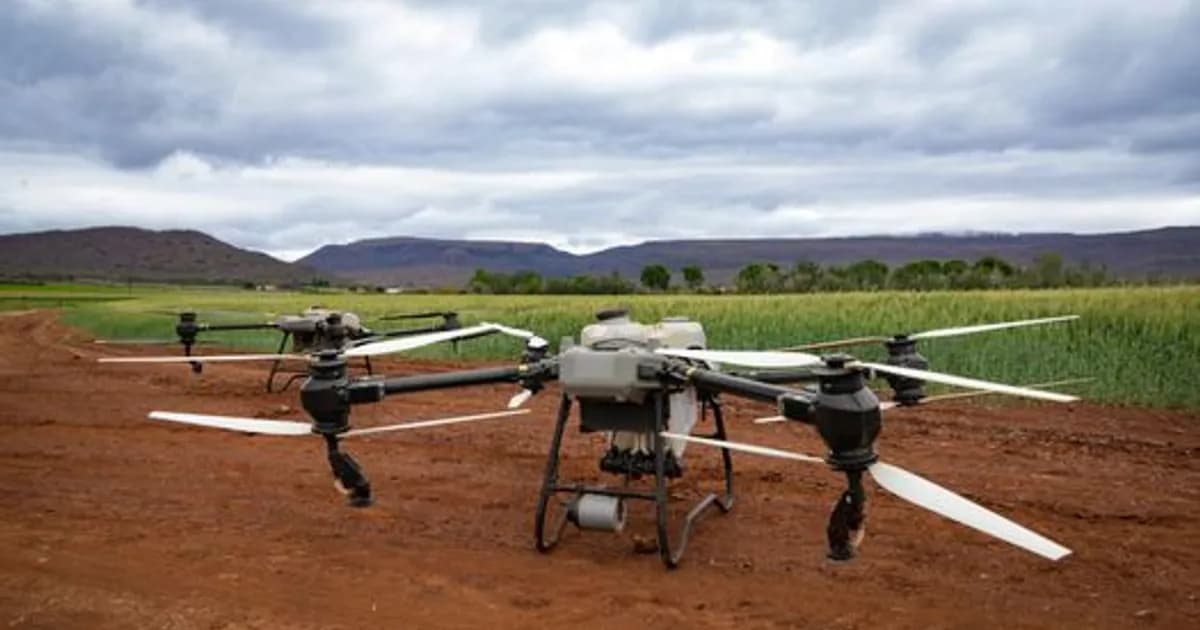
Most AI crop disease systems combine two layers of sensing. Drone or satellite imagery captures wide-area multispectral data — wavelengths beyond what the human eye sees, which can reveal stress in plant tissue before visible symptoms appear. Ground-level cameras, increasingly mounted on autonomous scouting robots or even standard tractors, capture close-up images that AI models analyze for the specific visual signatures of known diseases.
The models are trained on large labeled datasets of healthy and diseased plant tissue across growth stages, then deployed to flag anomalies in real time as equipment moves through a field. Crucially, the better systems don't just flag "something is wrong" — they identify the likely pathogen, since treatment depends entirely on what's actually attacking the crop. Fungal infections, bacterial blights, and viral diseases each require different responses, and misidentifying one for another wastes time and money on the wrong treatment.
What's Changed From Earlier Versions
Crop disease scanning tools have existed for years, but earlier versions were notoriously unreliable outside the narrow conditions they were trained on — a model trained on one region's soybean fields often performed poorly elsewhere. Two things improved that:
- Larger, more geographically diverse training datasets, pulled from agricultural extension programs and farmer-contributed image data across more growing regions and conditions
- Foundation model techniques borrowed from general computer vision research, which generalize better to new conditions than the narrower, purpose-built models that came before
The practical result is detection accuracy that's become reliable enough for farmers to act on directly, rather than treating AI flags as a curiosity to double-check manually before doing anything.
How Farmers Validate an AI Flag Before Acting
Even with improved accuracy, most experienced growers don't treat an AI disease flag as an automatic trigger for treatment. The typical workflow now involves the AI system flagging a suspect zone within a field, the farmer or an agronomist doing a targeted ground check of that specific zone rather than walking the whole field, and treatment decisions following that confirmation.
This two-step process matters economically. Acting on every AI flag without verification risks unnecessary pesticide or fungicide application, which costs money and can trigger regulatory issues around chemical use limits. Skipping verification entirely defeats much of the point of having a trained agronomist's judgment in the loop at all. The systems that have earned the most trust among growers are the ones that make verification fast — providing precise GPS coordinates and a confidence score for each flagged zone, rather than a vague field-wide alert that requires a full manual walkthrough to track down.
Real-World Use Patterns
Adoption looks different depending on farm size and crop type. Large-scale commodity operations growing corn, soybeans, or wheat have integrated disease scanning directly into existing precision agriculture equipment — the same machinery already used for variable-rate fertilizer application now carries cameras feeding disease detection models.
Smaller and specialty crop operations, particularly in high-value crops like tree fruit, grapes, and vegetables, have adopted smartphone-based scanning apps that let a worker photograph a suspicious leaf and get an instant diagnosis, often with treatment recommendations tailored to the detected pathogen and local regulations on pesticide use.
This complements the broader shift toward sensor-driven farming described in AI in Agriculture 2026: Smart Farming Takes the Field, and overlaps directly with indoor growing operations covered in AI Vertical Farming in 2026: Growing Food Indoors Now, where controlled environments make camera-based monitoring even more consistent.
The Limits Worth Knowing
Disease detection AI isn't infallible, and farmers who've used it for a few seasons flag consistent limitations:
- New or regionally unusual pathogen strains can still go unrecognized until enough labeled examples exist to retrain models
- Detection accuracy drops in poor lighting, heavy weather, or dense canopy conditions that obscure clear imagery
- A correct diagnosis doesn't guarantee a good outcome — by the time some diseases are detectable even with AI, effective treatment windows have already narrowed
- Cost remains a barrier for smaller farms in lower-income regions, where the drones, cameras, and connectivity needed for full deployment are out of reach
Agricultural extension services in several countries have started subsidized access programs specifically to address that last point, recognizing that disease outbreaks on under-resourced farms have ripple effects across regional food supply.
There's also a data ownership question that's increasingly part of contract negotiations between farmers and the companies providing these scanning services. Some platforms claim broad rights to aggregate and resell the field-level data they collect, which has made some growers — particularly larger operations with proprietary growing techniques — more cautious about which vendors they're willing to work with. Farmer cooperatives in a few regions have begun negotiating collective data-use agreements specifically to give individual growers more leverage on this point than they'd have negotiating alone.
What Comes Next
The next push is toward predictive rather than purely reactive detection — models that combine weather data, soil conditions, and regional outbreak patterns to flag elevated disease risk before any visual signs appear at all, prompting preventive treatment rather than reactive response. Early versions of this predictive layer are already running in a handful of large commercial operations, with promising but still limited published results.
The Bottom Line
AI crop disease detection in 2026 doesn't eliminate plant disease, but it meaningfully shrinks the window between infection and intervention — often the single biggest factor in how much of a crop can be saved. For an industry where margins are thin and a missed outbreak can wipe out a season's income, that earlier warning has real economic weight.
The technology is mature enough now that farmers should view disease scanning less as an experimental tool and more as a standard input alongside the soil tests and weather data they already rely on.
Comments
Loading comments...