
AI in Agriculture 2026: Smart Farming Takes the Field
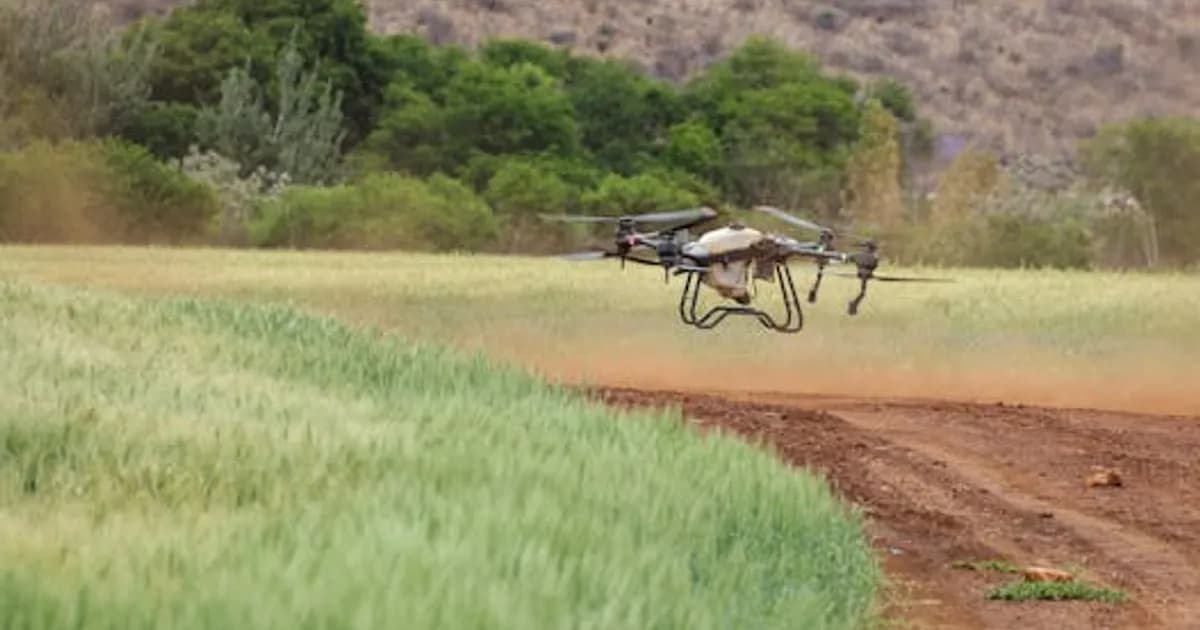
AI in Agriculture 2026: How Smart Farming Is Changing Food Production
Agriculture may not be the first industry that comes to mind when you think about AI transformation, but in 2026, it's one of the areas where AI is having the most concrete, measurable impact. AI in agriculture is helping farmers grow more food with less water, fewer chemicals, and lower emissions—and the scale of deployment has gone from pilot projects to widespread commercial use across major growing regions.
This article covers what precision farming AI actually does, who's deploying it, what farmers think of it, and where the technology is heading.
What AI Precision Farming Means in Practice
Precision farming is the practice of treating different parts of a field differently based on data rather than applying uniform treatments across the entire field. AI is the engine that makes precision farming economically viable at scale.
Without AI, precision farming requires expensive analysis of large datasets from sensors, satellites, and equipment that most farms can't process in real time. With AI, that processing happens automatically and the results are delivered as actionable instructions to farm equipment or mobile apps.
What this looks like in practice:
- Variable-rate fertilizer application: Soil sensors and drone imaging identify where nutrients are deficient across a field. The AI calculates optimal fertilizer rates for each zone, and automated spreaders apply the right amount in each location. This typically reduces fertilizer use by 15 to 25 percent compared to uniform application, cutting costs and reducing runoff.
- Precision irrigation: AI systems monitor soil moisture at multiple depths across the field and predict evapotranspiration based on weather data. Irrigation is triggered only where and when it's actually needed. In drought-prone regions, this can reduce water consumption by 30 to 40 percent.
- Targeted pesticide application: Computer vision systems mounted on sprayer equipment identify weeds and pest damage at the individual plant level. Pesticides are applied only to affected plants, reducing chemical use by 60 to 90 percent for some crops.
- Yield prediction: AI models trained on weather data, satellite imagery, soil data, and historical yields predict harvest outcomes weeks in advance, enabling better supply chain planning and pricing decisions.
Crop Disease Detection: Early Warning at Scale
Crop disease is one of the most costly risks in agriculture. A disease that spreads across a field before it's detected can destroy an entire harvest. Traditional scouting—walking fields and visually inspecting plants—is labor-intensive and catches problems only after they're already widespread.
AI image recognition has transformed this. Smartphone apps that farmers can point at a crop can now identify hundreds of diseases, pest infestations, and nutrient deficiencies from a photo. In 2026, these tools are accurate enough to be trusted for early intervention decisions.
PlantVillage, a project developed by Penn State University, trained models on millions of labeled plant images. Its app is being used by millions of smallholder farmers in Africa and South Asia, providing expert-level disease identification to farmers who previously had no access to agronomists.
Drone-based disease detection takes this further. Drones equipped with multispectral cameras can scan hundreds of acres in a single flight, and AI models analyze the imagery to detect stress signatures before they're visible to the human eye. This allows intervention while problems are still contained.
For major commodity crops, satellite-based disease monitoring is operational at the national and regional level. AI analyzes imagery from Sentinel and Landsat satellites to flag regions showing anomalous vegetation signatures, enabling early response before diseases spread to neighboring farms.
AI in Livestock Management
Precision agriculture isn't limited to crop farming. Livestock operations are also using AI in ways that improve animal welfare, reduce disease, and improve productivity.
Computer vision for health monitoring: Cameras in barns and feedlots continuously monitor animal behavior. AI models trained on thousands of hours of video can detect early signs of illness—changes in gait, feeding behavior, social interactions—before symptoms become obvious. Early detection significantly reduces mortality rates and the need for broad antibiotic treatments.
Automated milking systems: Dairy farms using robotic milking systems now integrate AI to optimize milking schedules based on individual cow production cycles, health indicators, and herd management goals. Milk quality is monitored in real time.
Feed optimization: AI systems optimize feed composition and quantity for each animal based on weight, growth stage, health status, and production goals. This reduces feed costs and improves feed conversion ratios—more output per unit of input.
Poultry monitoring: In large-scale poultry operations, AI systems monitor flock density, temperature, humidity, and behavior to optimize growing conditions and detect health issues early. The productivity gains are substantial in operations managing hundreds of thousands of birds.
Autonomous Farm Equipment
The convergence of AI and robotics is producing a new generation of autonomous farm equipment that addresses agriculture's persistent labor challenges.
Autonomous tractors from John Deere, CNH Industrial, and startup competitors are commercially available in 2026 for standard field operations—plowing, planting, and harvesting. The operator supervises remotely via tablet rather than sitting in the cab. This doesn't eliminate the need for skilled operators, but it allows one operator to manage multiple machines simultaneously.
Robotic harvesters for specialty crops—strawberries, tomatoes, apples—have improved substantially. Harvesting delicate fruits was considered too difficult for robots just three years ago. Computer vision and soft-grip robotics have changed this. The harvest speed still lags human workers, but availability and consistency are advantages.
Small autonomous weeding robots, like those from Carbon Robotics and Naio Technologies, use lasers or mechanical implements to remove weeds between crop rows with precision that avoids crop damage. These can operate overnight and in conditions where human workers can't, and they eliminate the herbicide applications that broad-spectrum weeding requires.
Data, Connectivity, and the Barriers to Adoption
AI agriculture's potential is vast, but adoption barriers are real, particularly for smaller farms.
Data infrastructure: Precision farming AI needs data—from sensors, satellites, equipment, and weather stations. Building that infrastructure has upfront costs that are economically justified for large commercial operations but challenging for small family farms.
Connectivity: Many rural farming areas have limited broadband connectivity, which constrains the ability to upload sensor data, stream AI analysis, and receive real-time recommendations. Rural connectivity investment is a prerequisite for widespread AI agriculture adoption.
Technical skill requirements: Operating and interpreting AI farming tools requires skills that not all farmers have. Extension services and agricultural universities are expanding AI farming education, but the knowledge transfer takes time.
Data ownership concerns: Farmers are rightly concerned about who owns the data generated by their operations. When a farm equipment manufacturer or agtech company holds your production data, they gain leverage over pricing, supply chain decisions, and eventually land. Several agricultural lobbying organizations are pushing for data portability and ownership rights legislation.
Cost: While the return on investment for precision farming technology is demonstrable for large operations, the upfront cost remains a barrier for smallholder farmers globally. Programs that provide AI farming tools as a service rather than requiring capital purchase are helping, but the economic model for reaching the billions of smallholder farmers globally is still developing.
The Sustainability Case for AI Farming
The sustainability argument for AI agriculture is compelling.
Agriculture accounts for roughly 10 percent of global greenhouse gas emissions, primarily from soil disturbance, fertilizer production, methane from livestock, and deforestation for new farmland. AI's ability to improve the efficiency of each input—water, fertilizer, pesticides, land—reduces emissions per unit of food produced.
Reducing chemical runoff from farms into waterways is one of the clearest near-term environmental wins. Precision application technology that reduces fertilizer and pesticide use doesn't just save money—it reduces nitrogen loading in rivers and groundwater, a significant ecological benefit.
More productive farming on existing land reduces pressure to clear new land for agriculture, which is one of the primary drivers of deforestation and biodiversity loss globally. The connection between AI-driven yield improvements and reduced deforestation pressure is an underappreciated benefit.
The UN Food and Agriculture Organization has identified precision agriculture and digital farming as core tools in sustainable food systems development, with technical assistance programs aimed at helping lower-income countries adopt these technologies.
Where AI Agriculture Is Heading
The 2026 trajectory for AI in agriculture points toward further integration and autonomy:
- Foundation models for agriculture: Large AI models trained on agricultural data across crops, climates, and geographies that can provide generalized guidance rather than requiring crop-specific training data
- Carbon credit verification: AI monitoring of soil carbon sequestration and emissions to support credible agricultural carbon markets
- Supply chain transparency: AI tracing the provenance of food from field to consumer, with real-time verification of sustainability claims
- Climate adaptation: AI systems that help farmers adapt crop selection and practices to shifting climate patterns
For the broader picture of how AI is helping address climate challenges, see our article on AI and Climate Change 2026: How AI Is Helping Fight Global Warming.
Getting Started with AI Farming Tools
If you're a farmer or agricultural professional considering AI tools:
- Start with remote sensing: Satellite imagery subscriptions (from providers like Planet or Maxar) plus AI analysis platforms give a high-value data layer without requiring on-farm sensor installations.
- Crop disease apps: PlantVillage, Agrio, and similar apps are free or low-cost and immediately useful for any grower.
- Precision irrigation: Water savings typically produce fast return on investment in water-stressed regions—a good starting point for capital investment.
- Equipment integration: If you're buying new equipment, prioritize models with data connectivity and AI-compatible telematics.
AI's arrival in agriculture is not about replacing the knowledge and judgment of experienced farmers. It's about giving them better information, faster, at a scale that wasn't possible before. The farms most effectively using AI in 2026 treat it as a decision support tool—one input among many, not an autonomous system running the farm.
Comments
Loading comments...