
ChatGPT vs Claude for Business in 2026: Which AI Model Wins?
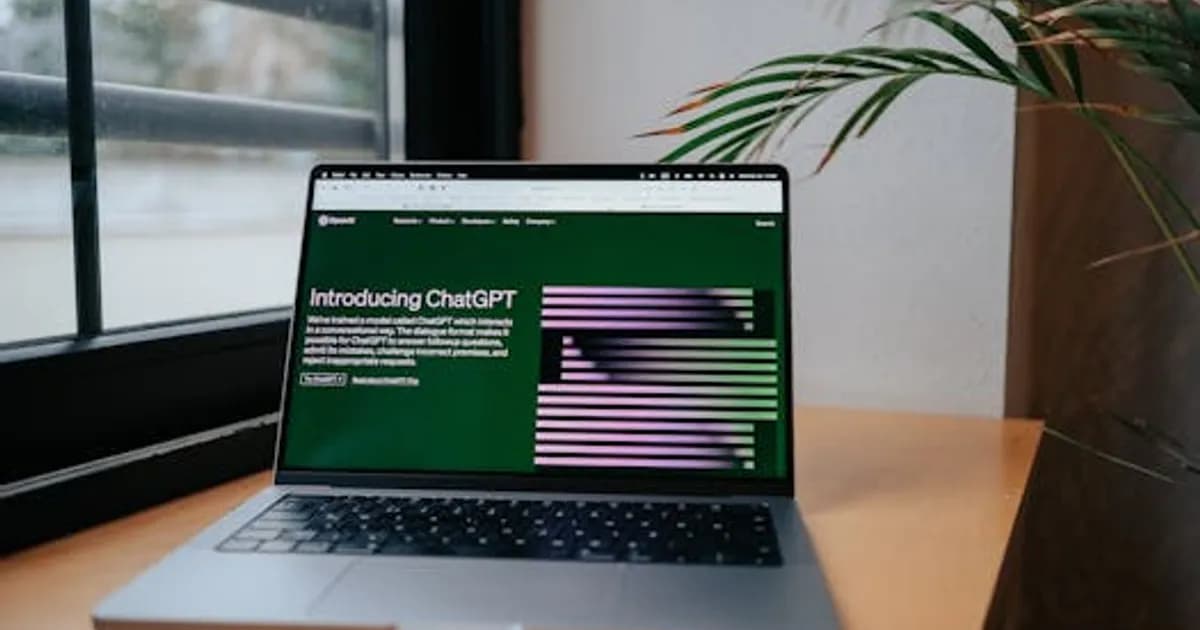
ChatGPT vs Claude for Business in 2026: Which AI Model Wins?
ChatGPT and Claude are the two most-used AI models in business settings in 2026. The question of which to choose comes up constantly—in procurement conversations, in team onboarding, and whenever someone switches and wonders if they made the right call. This comparison cuts through the noise with a practical breakdown of where each model excels and which situations call for which tool.
The State of Play in 2026
OpenAI's GPT-5 powers ChatGPT's current top tier, while Anthropic's Claude 4 Sonnet and Claude 4 Opus are the primary Claude versions in business use. Both have been through multiple generations and have converged on many basic capabilities. The differences that remain are real but nuanced—mostly about specific use cases rather than one being categorically better.
Both models:
- Handle long documents and complex analysis well
- Can write, summarize, research, code, and reason across a wide range of tasks
- Have enterprise tiers with security, admin controls, and compliance features
- Support tool use, function calling, and integrations with external data sources
- Offer API access for custom application development
The meaningful differences show up in specific tasks, consistency behavior, and the broader platform ecosystem around each model.
Writing Quality: Claude Has the Edge
For writing tasks—drafting content, editing prose, tone matching—Claude consistently produces output that requires less editing. Claude's writing tends to be:
- More natural and conversational without prompting for it
- More precise with word choice when precision matters
- Less likely to include unnecessary filler phrases or over-hedging
- Better at matching the specific tone of examples you provide
ChatGPT's writing is good, but it has a more recognizable "AI writing" quality that experienced readers can often detect. For external-facing content that needs to sound genuinely human, Claude is the more reliable starting point.
For creative writing, fiction, and highly stylized content, the gap narrows and becomes more a matter of taste.
Coding Assistance: Roughly Tied, Context Dependent
Both models perform well at coding tasks. In practice:
- ChatGPT (GPT-5) tends to be stronger at general-purpose coding across a wide range of languages and frameworks, with particularly strong performance on JavaScript/TypeScript, Python, and popular frameworks
- Claude tends to be stronger at understanding and working within large, complex codebases where context size matters—partly because of its large context window and partly because of its careful reasoning under uncertainty
For developers building with AI coding assistance in their workflow, the Best AI Coding Assistants in 2026: Ranked and Reviewed covers a wider set of tools including GitHub Copilot, Cursor, and Windsurf alongside the models themselves.
Reasoning and Analysis: Claude Leads on Complex Tasks
For complex analytical reasoning—multi-step problems, technical analysis, tasks where following instructions precisely matters—Claude generally performs more reliably.
Claude's behavior when uncertain is notably more careful. It is more likely to say "I'm not sure" or "this would need verification" in situations where ChatGPT might confidently produce an answer that's partly incorrect. For high-stakes analytical work where accuracy matters more than apparent confidence, Claude's tendency to flag uncertainty is a feature, not a limitation.
ChatGPT with GPT-5's extended thinking mode (enabled by the o-series reasoning models) narrows this gap substantially for specific problem types. When you need GPT to think harder about a problem, the reasoning model is a different experience than the standard chat model.
Research and Summarization: ChatGPT Has More Integration Options
For research-heavy workflows, ChatGPT has more integrations out of the box:
- Deep Research mode in ChatGPT can run multi-step web searches, synthesize across sources, and produce citation-backed research reports autonomously
- ChatGPT's browsing capability is more mature and better integrated into the chat experience
- The OpenAI platform has more third-party integrations and GPT-store plugins for specialized research domains
Claude has web search capability, but OpenAI's research features are currently more capable for tasks that require significant real-time web synthesis.
For research that stays within your own documents and files, the comparison is different. Claude's larger context window means it can hold more source material at once, which matters for document-heavy research workflows.
Context Window: Claude Leads
Context window size determines how much information a model can hold in a single conversation—including long documents, code, and conversation history.
As of mid-2026, Claude 4 Opus and Sonnet both support context windows that are larger than standard GPT-5. This matters when:
- Analyzing long legal documents, contracts, or reports
- Working through large codebases
- Maintaining context across very long conversations or complex project discussions
- Processing multiple documents simultaneously
For most everyday tasks, context window size doesn't matter because the content fits easily in either model. For heavy document work, Claude's advantage is real.
Instruction Following: Claude Is More Precise
When you give detailed, multi-part instructions—"Do X, but not Y, formatted as Z, with these constraints"—Claude tends to follow them more reliably. This matters particularly for:
- System prompts that configure an AI for a specific business application
- Complex templates where formatting and structure requirements must be respected
- Workflows where the AI is being used programmatically and deviations from specified behavior cause downstream problems
ChatGPT is good at instruction following but occasionally paraphrases or simplifies complex instruction sets in ways that cause subtle deviations from the required behavior.
Enterprise Features and Pricing
Both platforms offer enterprise tiers with comparable security features:
ChatGPT Enterprise:
- SSO and SCIM provisioning
- Data does not train OpenAI models by default
- Advanced analytics and admin controls
- Custom GPTs and internal knowledge bases
- Pricing: negotiated per seat, typically $60-$100/month per user at volume
Claude for Enterprise (Teams/Enterprise):
- SOC 2 Type II compliance
- Data does not train Anthropic models
- API management and admin controls
- Custom system prompts and organizational configuration
- Pricing: $25/month (Teams tier) to enterprise negotiated pricing
For API usage, pricing has converged significantly in 2026 as both companies have reduced costs. AI Model Pricing in 2026: The API Cost Wars Explained covers the current cost landscape in detail.
For teams using AI primarily through the consumer web interface, both offer per-seat plans in the $20-$30/month range for the premium tiers.
The Integration Ecosystem
ChatGPT has a larger third-party integration ecosystem through the GPT Store and established API ecosystem. If your business uses tools that have existing OpenAI integrations, ChatGPT may slot into your workflow with less custom development.
Claude has strong integrations through the Anthropic API and partnerships with major platforms including Salesforce, Slack, and several enterprise software vendors. The Claude API is well-regarded by developers for reliability and documentation quality.
Both integrate with major workflow automation platforms like Zapier, Make, and n8n.
When to Choose ChatGPT
ChatGPT makes more sense when:
- Your team needs advanced real-time research capabilities and web synthesis
- You're building on an existing OpenAI integration in your software stack
- You want the largest ecosystem of plugins and third-party extensions
- Your use cases benefit from the o-series reasoning models for complex problem solving
- You need multimodal capabilities that include image generation (DALL-E integration)
When to Choose Claude
Claude makes more sense when:
- Writing quality and tone precision are important to your use case
- You're working with long documents or large codebases regularly
- Precise instruction following is critical for your workflow or application
- You prioritize the model being honest about uncertainty over confident-sounding answers
- You're building enterprise applications where system prompt fidelity matters
Do You Have to Choose?
Many business teams in 2026 use both—often defaulting to one for routine tasks and reaching for the other for specific use cases where it performs better. Both offer API access, and building applications that can route requests to different models based on task type is increasingly common.
The cost of running a small-scale evaluation on your specific use cases is low, and the results are more reliable than benchmark comparisons run on standardized tests. Give both models the same 20 representative tasks from your actual workflow and compare the outputs.
The Bottom Line
In 2026, both ChatGPT and Claude are excellent tools and both will serve most business needs well. The practical answer for most teams:
- Start with whichever you're already familiar with, since the learning curve matters for adoption
- Test both on your specific high-value use cases before making a platform commitment
- Choose Claude if writing quality and instruction precision are your primary needs
- Choose ChatGPT if research capabilities and ecosystem integrations are your priority
The gap between the two has narrowed significantly over the past year. You're unlikely to make a catastrophically wrong choice either way.
For a broader comparison of AI models across more use cases, see Best AI Assistants in 2026: Side-by-Side Comparison Guide.
Comments
Loading comments...