
AI Zoo Animal Welfare in 2026: Watching for Stress 24/7
AI Zoo Animal Welfare in 2026: Watching for Stress 24/7
AI zoo animal welfare monitoring has become a standard tool at accredited zoos and aquariums in 2026, using camera networks and computer vision models to track individual animals' movement, social interaction, and behavioral patterns around the clock. The goal isn't novelty — it's catching the subtle early signs of illness, stress, or declining welfare that even experienced keepers can miss when they're responsible for dozens of animals and can only observe each one for a limited window each day.
Animals, especially prey species and animals that mask pain or distress as a survival instinct, are notoriously good at hiding signs of illness until a condition has progressed significantly. Continuous, automated observation closes a gap that periodic human checks have always had.
What These Systems Actually Track
Modern zoo monitoring setups combine camera feeds positioned throughout habitats with computer vision models trained to recognize species-specific behavior patterns. The specific things being tracked include:
- Movement and activity levels, flagging when an animal becomes unusually lethargic or, conversely, displays repetitive pacing associated with stress in captive settings.
- Social interaction patterns, particularly important for highly social species where withdrawal from a group can be an early indicator of illness or social conflict.
- Feeding behavior, tracking how quickly and how much an animal eats relative to its own baseline, since appetite changes are often among the earliest signs something is wrong.
- Sleep and rest patterns, monitoring whether nocturnal or diurnal rhythms shift unexpectedly.
- Enclosure usage, identifying whether an animal is avoiding parts of its habitat, which can indicate the space isn't meeting its behavioral needs.
Crucially, these systems are trained per-individual where possible, learning what's normal for a specific animal rather than applying a generic species-wide baseline, since healthy behavioral ranges vary considerably between individuals just as they do in humans.
Why This Matters More for Some Species Than Others
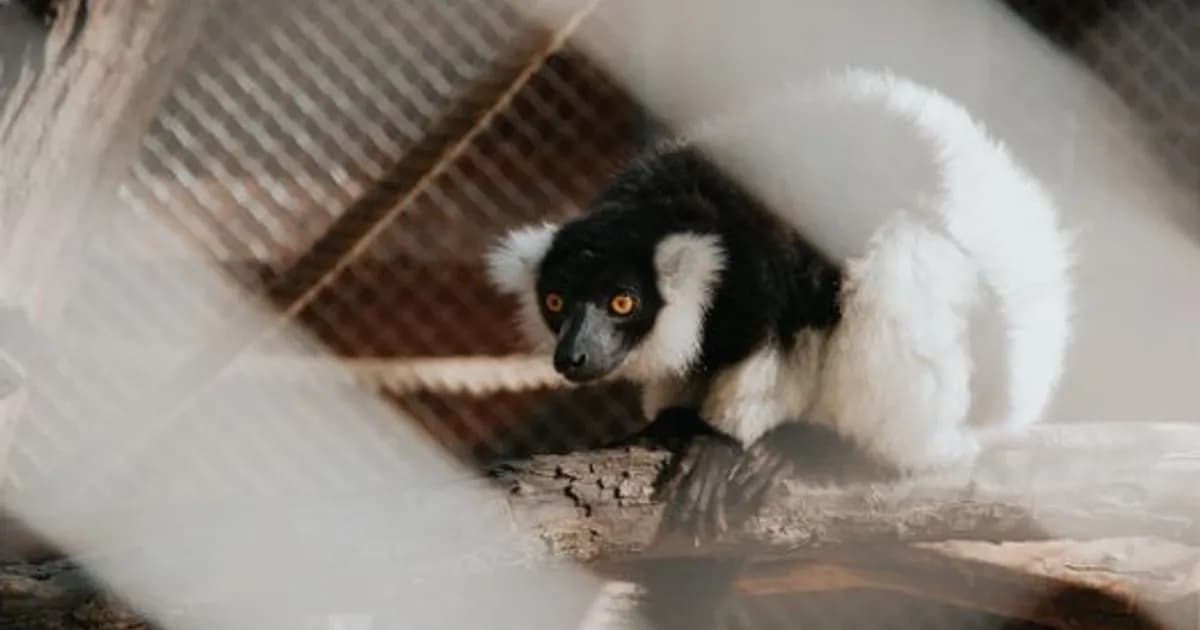
The benefit is especially pronounced for species that are naturally solitary, nocturnal, or otherwise hard to observe directly. Big cats, many reptile species, and nocturnal primates are notoriously difficult to assess through brief daytime keeper checks, since their most revealing behaviors often happen overnight or in secluded parts of an enclosure. Continuous AI monitoring captures that hidden activity automatically, giving veterinary staff a far more complete behavioral record than spot checks ever could.
Aquariums face a parallel challenge with marine species, where subtle changes in swimming pattern, fin position, or schooling behavior can indicate water quality issues or early illness well before visible symptoms appear. Computer vision models trained on fish and marine mammal movement have been used to flag these changes faster than manual observation, in some documented cases catching issues days before they would otherwise have been noticed.
The Accreditation and Research Angle
Organizations like the Association of Zoos and Aquariums have increasingly incorporated welfare science into accreditation standards, and continuous behavioral monitoring gives institutions quantifiable data to demonstrate compliance rather than relying solely on keeper notes and periodic welfare assessments. This data also feeds conservation research more broadly — long-term behavioral datasets on captive populations of endangered species provide insight into breeding readiness, social dynamics, and stress responses that inform both captive care and, in some cases, reintroduction planning for wild populations. Organizations like WWF and zoo-affiliated conservation programs have drawn on this kind of behavioral data when assessing whether captive-bred animals are ready for release programs.
Where This Connects to Broader Animal AI
The computer vision and pattern-recognition techniques used in zoo welfare monitoring overlap substantially with tools used in pet health wearables and livestock health monitoring, where similar behavioral-baseline approaches catch illness earlier than periodic human checks. Zoos benefit from a particular advantage those settings don't always have: dense camera coverage of a controlled environment, which makes continuous monitoring more practical to deploy comprehensively than it would be across an open pasture or in someone's living room.
It's also worth distinguishing this from the camera-trap and drone-based monitoring used in wildlife conservation work in the wild, which generally focuses on population counts, poaching detection, and habitat tracking across large, uncontrolled landscapes. Zoo and aquarium welfare monitoring sits at the opposite end of that spectrum — a small number of known individuals in a controlled, densely instrumented environment, where the goal is fine-grained behavioral insight into specific animals rather than broad population-level data.
The Limits and Ethical Questions
Continuous monitoring raises its own questions, even when the intent is purely welfare-focused. Some animal behavior researchers caution against over-relying on automated alerts without contextualizing them against an experienced keeper's broader knowledge of an individual animal's history and personality — a model flags a deviation from baseline, but interpreting what that deviation means still benefits enormously from human expertise. There's also a resource question: smaller, less-funded zoos and aquariums, including many in regions with weaker animal welfare regulation, are far less likely to have access to this kind of monitoring infrastructure, meaning the welfare benefits skew toward institutions that are already better-resourced and likely already providing stronger care overall.
Visitor Behavior Is Part of the Picture Too
Some zoos have extended these camera systems to also track how visitor presence and crowd noise affect animal behavior, an angle that's become more relevant as institutions try to balance public access against animal stress. Models that correlate visitor density and noise levels with behavioral changes in a given enclosure can help facility managers decide when to add visual barriers, adjust viewing hours, or redesign exhibit layouts to give animals more retreat space during peak visitor periods. This is a relatively new application compared to core health monitoring, but it reflects a broader shift toward treating animal welfare as something that's actively measured and optimized rather than assumed based on enclosure design alone.
What Keepers Say About the Change
Keepers who've worked with these systems generally describe them as additive rather than replacing their own observational skills — an early-warning layer that catches things during the hours no one is physically present, rather than a replacement for the relationship-based knowledge an experienced keeper builds with animals over years. The most commonly cited benefit isn't dramatic disease catches, though those happen, but the steady accumulation of behavioral data that makes it easier to notice gradual, easy-to-miss changes that develop over weeks rather than days.
The Bottom Line
AI zoo animal welfare monitoring fills a genuine gap: human attention is finite, animals are good at masking distress, and the hours when no keeper is watching are exactly when problems can go unnoticed longest. Used well, alongside rather than instead of experienced keeper judgment, it's a meaningful upgrade to how captive animal care actually works. The open question is how quickly this kind of monitoring reaches beyond the best-funded institutions to the wider range of zoos and aquariums where the welfare gains could matter just as much, if not more.
Comments
Loading comments...