
AI in the Workplace 2026: What Businesses Are Deploying Now
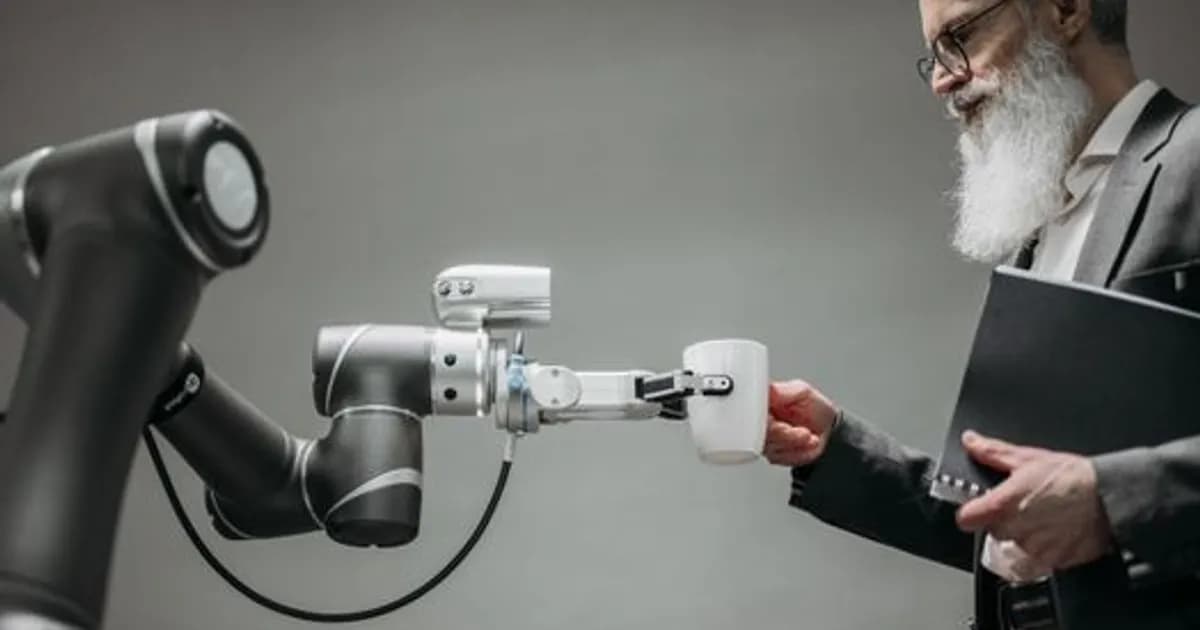
AI in the Workplace 2026: What Businesses Are Actually Deploying
The conversation about AI in the workplace has been running for years, but 2026 is where corporate AI deployment has moved from pilot to standard practice. Boards are no longer asking whether to adopt AI — they're asking why specific units haven't adopted it yet and what the deployment roadmap looks like.
This shift is visible in the numbers. Gartner's mid-2026 enterprise AI survey finds that 78% of large enterprises have at least one AI tool deployed at scale, up from 34% in 2024. More telling than adoption rate is where the tools are landing: not just in tech departments, but in HR, finance, legal, operations, and customer service.
Customer Service: The First Wave Matures
Customer service was among the first business functions to see serious AI deployment, and in 2026 the technology has matured significantly from the frustrating early chatbots that sent customers in circles.
Modern AI customer service systems — powered by large language models with access to company-specific knowledge bases — resolve a substantial share of routine inquiries without human escalation. Telecoms, banks, retailers, and utilities report first-contact resolution rates of 60-75% for AI-handled interactions, with customer satisfaction scores that often match or exceed human agent scores for simple transactions.
The remaining 25-40% that escalates to human agents arrives with full context, attempted solutions documented, and sentiment analysis flagging frustration level — making human agents' conversations more productive from the first exchange. AI workflow automation in customer service has made this handoff seamless where well-implemented.
Where AI still underperforms human agents: emotionally complex situations, novel problems outside the training data, and customers who are upset in ways that require genuine empathy rather than efficient resolution. Businesses that have learned this have structured their deployments accordingly — AI handles volume, humans handle complexity and emotion.
HR and Talent Management
HR is seeing rapid AI adoption across two distinct use cases: administrative efficiency and analytical decision support.
On the administrative side, AI handles:
- Job description drafting and optimization
- Resume screening and initial qualification assessment
- Interview scheduling and candidate communication
- Onboarding paperwork processing and new hire orientation support
- Benefits enrollment assistance and HR policy Q&A
On the analytical side, AI is transforming workforce planning. People analytics platforms now give HR leaders predictive attrition models — identifying flight risk employees 3-6 months before resignation, allowing targeted retention conversations before exits become inevitable. Workforce planning models integrate headcount, skills gap analysis, and hiring pipeline data to project staffing needs 12-18 months out with meaningful accuracy.
Bias mitigation in hiring is both a promise and a risk. AI tools designed to remove bias from resume screening can perpetuate historical biases present in training data. The HR industry has learned — sometimes the hard way — that AI-assisted hiring requires ongoing audit for disparate impact rather than one-time setup.
Finance and Accounting
Finance teams have embraced AI for automation of high-volume, rule-based processes while developing more sophisticated uses in analysis and forecasting.
Automated processes now standard in finance departments:
- Accounts payable invoice processing and matching
- Expense report processing and policy compliance checking
- Bank reconciliation and month-end close acceleration
- Financial statement drafting and variance commentary
More advanced deployments use AI for:
- Cash flow forecasting with machine learning that incorporates macroeconomic signals
- Anomaly detection in transactions that flags fraud or errors for human review
- Financial report summarization that creates board-ready narratives from raw data
- Audit preparation assistance that pre-populates substantive testing documentation
The CFO Council's 2026 survey found that finance departments using AI for close and reporting processes averaged a 35% reduction in close cycle time and a 20% reduction in time spent on report preparation. The time saved is being reallocated to analysis and strategic work.
Software Development
The impact of AI on software development has been the most discussed and perhaps most dramatic workplace transformation of 2025-2026. AI coding assistants are now used by the large majority of professional developers in organizations that have enabled access.
Productivity studies from Microsoft, Google, and independent researchers consistently find that developers using AI coding assistants complete tasks 20-50% faster on benchmarks, with the gains concentrated in code generation, boilerplate, and documentation tasks. The impact on code quality is more nuanced — AI-generated code reduces syntax errors and speeds routine implementation while introducing new categories of subtle logic errors that require careful review.
The developer workflow in 2026 looks different from 2023. AI handles first drafts of functions, generates test cases, explains unfamiliar codebases, and suggests fixes for identified bugs. Senior developers increasingly describe their role as directing and reviewing AI output rather than writing from scratch — a significant shift in how software engineering skill is expressed.
AI code review tools are the complementary piece — AI that reviews AI-generated code, catching the specific failure modes that human reviewers might miss because the code looks superficially correct.
Legal and Compliance
Law firms and in-house legal teams have adopted AI for document review, contract analysis, and legal research faster than many predicted.
Contract review AI can process large volumes of agreements and flag non-standard clauses, missing provisions, and risk language in minutes rather than days. For companies managing high-volume commercial contracts — vendor agreements, employment contracts, software licenses — the time savings are substantial.
Legal research AI has improved to the point where junior associates routinely use it for initial case law research, with results that require verification but are meaningfully faster than traditional search approaches. The major legal research platforms have all embedded AI that summarizes relevant cases, identifies analogous precedents, and synthesizes doctrinal arguments.
Compliance monitoring is another strong use case. AI systems that read regulatory updates and flag relevant changes to applicable regulations — alerting compliance teams to rule changes before they become violations — have become standard in financial services and healthcare compliance functions.
Operations and Supply Chain
Operations teams have found AI valuable for demand forecasting, inventory optimization, and predictive maintenance — three use cases where AI pattern recognition outperforms human judgment reliably.
Demand forecasting AI incorporates signals that human forecasters struggle to process simultaneously: weather patterns, social media trend signals, competitor pricing movements, economic indicators, and historical seasonality. The improvement in forecast accuracy directly translates to inventory efficiency and reduced waste.
Predictive maintenance has expanded from manufacturing into facilities management, fleet operations, and infrastructure monitoring. Sensors embedded in equipment generate data that AI models use to predict failure 2-8 weeks before it occurs — shifting maintenance from reactive to scheduled and dramatically reducing unplanned downtime costs.
What Good Deployment Actually Looks Like
The organizations seeing the strongest AI ROI in 2026 share several characteristics:
Clear use case selection. They deployed AI in specific, well-defined processes rather than broadly "AI-enabling" operations without clear targets.
Change management investment. They invested in training employees to work with AI tools effectively and in redesigning workflows to take advantage of AI capabilities.
Measurement from day one. They established baseline metrics before deployment and measured outcomes systematically, adjusting deployments based on what the data showed.
Human oversight for high-stakes decisions. They kept humans accountable for decisions with significant consequences — terminations, credit denials, medical recommendations — using AI as input rather than decision-maker.
The organizations struggling most treated AI deployment as a technology installation rather than an organizational change program. The technology is necessary but not sufficient. AI business cost savings require the organizational capability to use the technology well — and that's a people and process challenge as much as a technology one.
AI in the workplace in 2026 is producing real, measurable results in the organizations that have deployed it thoughtfully. The window for competitive advantage from early adoption is narrowing as deployment becomes standard — but the window for competitive disadvantage from non-adoption is opening.
Comments
Loading comments...