
AI Code Review Tools in 2026: Ship Better Code at Speed
AI Code Review Tools in 2026: Ship Better Code at Speed
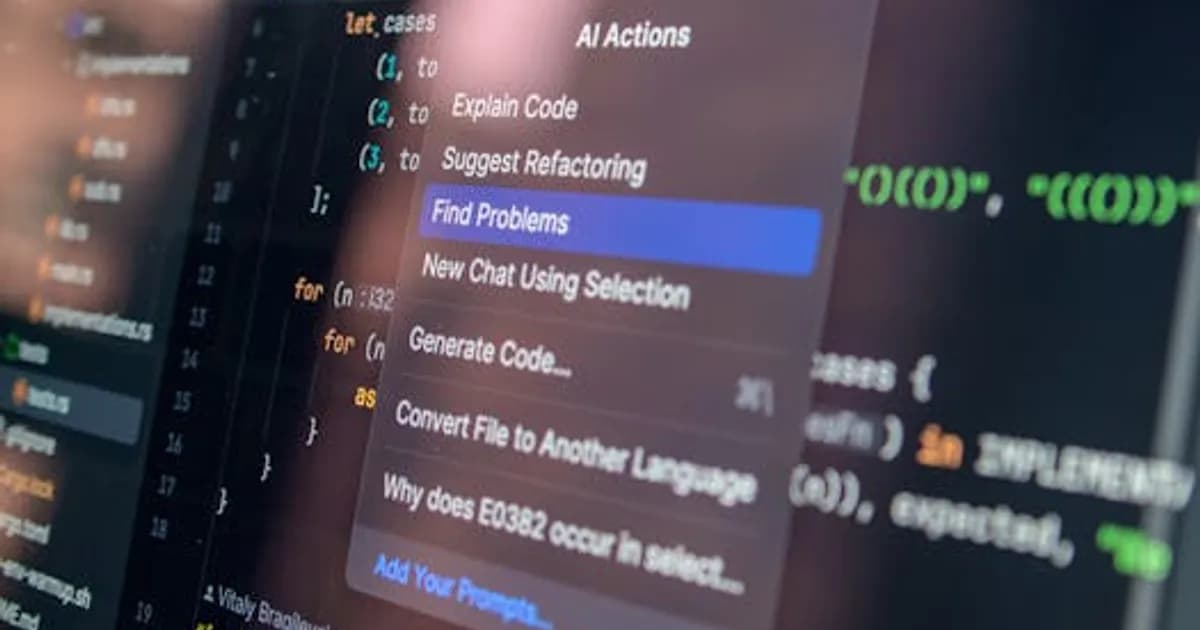
AI code review tools have become a standard part of the software development workflow. In 2026, the best tools go beyond lint checks and static analysis—they understand code intent, spot logical errors, identify security vulnerabilities, and suggest meaningful improvements in the context of the full codebase. For engineering teams under delivery pressure, that shift from manual to AI-assisted review changes both speed and quality.
The key change in 2026 is that AI code review tools now understand context. Earlier tools flagged surface-level issues. Current tools read the surrounding code, understand what a function is supposed to do, and evaluate whether it actually does it correctly.
What AI Code Review Tools Do
Modern AI code review operates across several dimensions:
Bug detection. AI reviewers catch logical errors, off-by-one mistakes, null pointer risks, and race conditions that pass unit tests but cause production failures. The best tools identify bugs in the context of how the code will actually be called, not just in isolation.
Security vulnerability detection. SQL injection risks, improper authentication logic, insecure data handling, and dependency vulnerabilities with known CVEs are flagged automatically. Security review that would take a senior engineer hours to conduct manually runs in seconds.
Code quality and maintainability. AI tools evaluate readability, complexity, and adherence to team coding standards. They suggest where logic should be extracted into functions, where naming is ambiguous, and where documentation is missing.
Performance optimization suggestions. Some tools identify inefficient database queries, unnecessary re-renders in front-end code, or algorithmic choices that will perform poorly at scale.
Test coverage gaps. AI code review tools can identify untested code paths and in some cases suggest the unit tests needed to cover them.
Top AI Code Review Tools in 2026
GitHub Copilot Code Review integrates directly into GitHub pull requests, providing AI-generated review comments alongside human reviewer feedback. For teams already using GitHub, this is the lowest-friction path to AI-assisted review—it lives where code review already happens and requires no workflow changes.
CodeRabbit provides PR-level AI reviews that summarize what a pull request does, identify potential issues, and suggest improvements in inline comment format. It supports multiple languages and frameworks and has become popular with mid-size engineering teams for its balance of depth and signal-to-noise ratio.
Sourcery focuses on Python specifically, integrating with IDEs and CI pipelines to suggest refactoring and code quality improvements in real time. For Python-heavy teams, its specialization produces more targeted advice than general-purpose tools.
Amazon CodeWhisperer includes code review and security scanning as part of its broader AI coding assistant suite. For teams using AWS infrastructure, the security scanning that flags issues before AWS-specific misconfigurations reach production is particularly valuable.
Cursor and similar AI-native editors combine code generation and review in a unified interface, with the AI providing suggestions as you write and reviewing changes before commit. The distinction between writing and review blurs in these tools, which can speed up development cycles significantly.
Integration Patterns That Work
AI code review tools deliver the most value when integrated at the right points in the development cycle:
Pre-commit hooks. Running AI analysis before a commit reaches the PR stage catches issues earlier, when fixing them is cheaper. Developer flow isn't interrupted by review comments on code that's already been shared.
CI/CD pipeline checks. Automated AI review runs on every PR, providing consistent analysis regardless of reviewer availability or workload. Issues surface before human review begins, reducing the cognitive load on reviewers who can focus on higher-level concerns.
IDE integration. Real-time suggestions during coding provide the fastest feedback loop—fixing an issue as you write it takes seconds; fixing it during code review takes minutes; fixing it in production takes hours.
Security scanning gates. For compliance-sensitive codebases, AI security scanning can be configured as a required gate—a PR cannot merge until AI security review passes. This creates a consistent security baseline without requiring dedicated security reviewer time on every PR.
Pair these tools with AI coding assistants for a full-cycle AI development workflow: generation, completion, and automated review handled by AI at each stage.
What AI Code Review Doesn't Replace
AI code review tools are excellent at catching well-defined categories of issues. They're less effective at:
- Architecture and design review. Whether the right abstraction was chosen, whether the system design scales, whether the feature aligns with long-term goals—these require human judgment and context that AI tools don't have.
- Business logic validation. Confirming that the code does what the product requirements intended requires understanding the requirements, not just the code.
- Team knowledge transfer. Human code review serves an educational function—junior developers learn from senior reviewers' comments. AI review comments can supplement but shouldn't fully replace that mentorship.
The best teams use AI tools to handle routine review tasks—catching bugs, enforcing style, flagging security issues—and redirect human review time toward the higher-value judgment calls.
Performance and Language Support
Language support varies across tools. Most major AI code review platforms handle:
- JavaScript and TypeScript
- Python
- Java
- Go
- Ruby
- C/C++
Support for less common languages is more variable. If your codebase uses niche languages, verify support before committing to a tool.
Review speed also matters in high-velocity teams. Most AI code review tools complete analysis in under two minutes for typical PRs, which doesn't materially slow down development cycles. Very large PRs may take longer, which is another argument for keeping PR size manageable.
Measuring the Impact
Teams adopting AI code review often report:
- Fewer bugs reaching production
- Shorter human code review cycles (reviewers focus on fewer, higher-quality issues)
- Faster onboarding for new developers who get instant, contextual feedback
- More consistent security practices without dedicated security reviewer time
Measuring impact requires baseline data. Before adopting a tool, track your current bug escape rate, average PR review time, and security incident frequency. Measure the same metrics three to six months post-adoption for a meaningful comparison.
See also our guide on AI code generation in 2026 for context on how code review tools fit into the broader AI-assisted development workflow.
Conclusion
AI code review tools in 2026 are practical, production-ready, and worth adopting for most engineering teams. The time saved on routine review tasks, the bugs caught before production, and the security vulnerabilities flagged automatically add up to a measurable improvement in code quality and developer productivity.
Start with the tool that integrates most naturally with your existing workflow—if you're on GitHub, Copilot Code Review is the obvious starting point. Run it alongside your existing review process for a sprint, compare the issues it catches to what your human reviewers catch, and use that data to decide how deeply to integrate it.
Comments
Loading comments...