
AI Video Surveillance in 2026: Smarter Security or Privacy Risk?
AI Video Surveillance in 2026: Smarter Security or Privacy Risk?
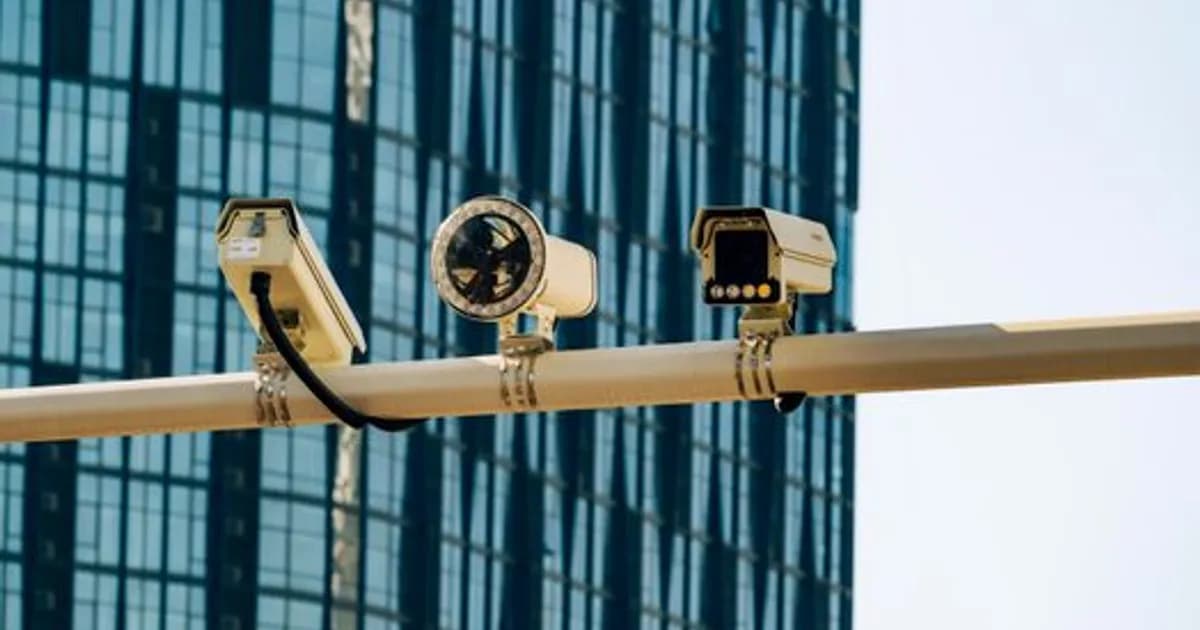
Security cameras are everywhere — in retail stores, transit systems, apartment lobbies, office buildings, schools, and public streets. For most of camera history, footage was reviewed after incidents and stored for insurance or evidence purposes. The cameras were recording, but not really watching.
AI has changed this. In 2026, camera networks connected to AI analytics platforms are actively analyzing what they see in real time, detecting specific behaviors, identifying individuals, and generating alerts without human review of every frame. The capabilities are impressive. The implications for privacy and civil liberties are significant.
What AI Video Analytics Can Do Today
Modern AI video analytics platforms go far beyond motion detection:
Object detection and classification — Identifying specific objects, vehicles, or individuals within camera frames. Retail loss prevention systems can identify products being concealed or detect specific merchandise leaving without a scan. Traffic systems can count vehicles by type, detect congestion, and identify incidents in real time.
Behavioral analysis — Recognizing patterns of movement or behavior that indicate specific events. Loitering detection flags individuals who remain in an area longer than expected. Crowd density analysis monitors public spaces for dangerous crowding. Slip-and-fall detection in retail and industrial settings triggers automatic alerts.
Facial recognition — Matching faces captured on camera to databases of known individuals. Law enforcement applications compare against mugshot databases. Retail applications flag previously identified shoplifters. Access control applications verify identities for entry. Capability and accuracy vary significantly across systems and demographic groups.
License plate recognition — Automatically reading and logging license plates from moving vehicles. Used extensively in parking management, toll collection, border control, and law enforcement.
Anomaly detection — Flagging activities that deviate from learned normal patterns for a given location. A camera that has learned what "normal" looks like in a hospital lobby can flag unusual activity patterns that might indicate a security incident.
Where AI Surveillance Is Deployed
The deployment landscape varies significantly by sector and geography:
Retail is the most widespread commercial deployment. AI surveillance for loss prevention is standard in large retail chains. The systems identify potential shoplifting behaviors, flag known offenders from existing databases, and alert staff. Major retailers report measurable reductions in loss rates; civil liberties advocates have raised concerns about false positive rates and demographic disparities in accuracy.
Transit and public safety deployments are expanding across major US, European, and Asian cities. London's extensive camera network has integrated AI analytics over the past several years. Several Chinese cities operate comprehensive AI-enhanced surveillance networks that are among the most extensive in the world. US transit authorities have deployed AI for security monitoring and behavioral detection with more limited facial recognition use due to state and local restrictions.
Critical infrastructure security — airports, seaports, power facilities, data centers — uses AI analytics extensively. These deployments typically have stronger privacy rationale and are subject to regulatory security requirements that provide some governance structure.
Corporate campuses and offices deploy AI access control and security monitoring. Facial recognition for building access is increasingly common. Employee monitoring raises specific workplace privacy concerns that are addressed differently by different jurisdictions.
Schools and universities are a contested area. Several US school districts have deployed or piloted AI surveillance systems, citing safety concerns. Pushback from parents and civil liberties organizations has led some to roll back deployments. The use case — identifying potential threats — carries strong intuitive appeal while the implementation raises legitimate questions about the surveillance of minors.
The Facial Recognition Debate
No aspect of AI video surveillance is more contested than facial recognition. The technology works, but its accuracy varies:
- Performance is consistently lower for darker-skinned individuals across multiple independent evaluations
- Accuracy degrades with lower image quality, angle variation, and occlusion (masks, hats)
- The standard for "recognition" (confidence threshold) is typically set by deploying organizations, often without published guidance on what threshold is used
Several US cities, including San Francisco, Boston, and Portland, have banned or restricted government use of facial recognition. Several states have enacted biometric privacy laws that regulate its commercial use. The EU's AI Act classifies real-time remote biometric identification in public spaces as generally prohibited for law enforcement, with limited exceptions.
China's regulatory approach is different: AI facial recognition is widely deployed for law enforcement and social management, integrated with a national ID system. The Chinese experience provides a case study in large-scale deployment that both proponents and critics cite regularly, for different reasons.
What the Research Says About Accuracy
The NIST Face Recognition Vendor Test (FRVT) provides the most systematic public evaluation of facial recognition accuracy across demographic groups. The 2024–2026 reports show meaningful improvement in the best commercial systems but persistent performance disparities:
- Top-performing algorithms achieve error rates below 0.5% for high-quality frontal images
- Error rates increase significantly for lower-quality images, non-frontal angles, and lower-contrast subjects
- Performance disparities between demographic groups have narrowed but not been eliminated in most commercial systems
For law enforcement applications, error rate and demographic disparity data matter because the consequences of false positives — wrongful investigation, arrest, or prosecution — are severe. Several documented cases of wrongful arrests based on facial recognition misidentification have driven the legislative response restricting its use.
Privacy Law and Governance
The legal landscape for AI video surveillance is fragmented in the US and more unified in the EU.
US federal law does not comprehensively regulate AI surveillance or facial recognition. The Fourth Amendment limits government surveillance without a warrant, but its application to AI analytics is evolving through litigation and case law. The FTC has taken some enforcement actions against commercial misuse of biometric data.
State and local laws vary significantly. Illinois' Biometric Information Privacy Act (BIPA) is the most robust US state framework, requiring consent for biometric data collection and providing a private right of action. Several cities have enacted surveillance technology oversight laws that require public approval before government agencies deploy new surveillance technology.
EU AI Act classifies real-time remote biometric identification in publicly accessible spaces as a prohibited AI practice for law enforcement purposes, with specific narrow exceptions. Commercial use is subject to GDPR requirements around biometric data, which is classified as sensitive special category data requiring explicit consent or a specific legal basis.
The Civil Liberties Case Against Broad AI Surveillance
The civil liberties concerns about AI video surveillance go beyond individual accuracy errors:
Chilling effects on free speech and assembly. Awareness of pervasive surveillance changes behavior. People who know they're being identified and recorded in public spaces may be less willing to attend protests, worship at minority religious institutions, or engage in other legal activities they consider private.
Data aggregation risks. Location data from multiple camera systems, combined with other data sources, creates detailed behavioral profiles of individuals without their knowledge or consent. The individual pieces may seem innocuous; the composite is not.
Mission creep. Systems deployed for one purpose tend to be used for others. A license plate system deployed for parking management can become a tool for tracking individuals' movements. Historical examples of surveillance technology being repurposed for political targeting are well documented.
Lack of transparency. Most AI surveillance deployments are not visible to the people being monitored. Who is in the database the system is matching against? What confidence threshold triggers an alert? Who reviews alerts? These questions often don't have public answers.
For more on the broader AI and privacy landscape, see AI Data Privacy 2026.
What Good Governance Looks Like
Not all AI video surveillance is equally concerning. The civil liberties and law enforcement communities agree on some principles that distinguish more from less acceptable deployments:
- Public transparency about where systems are deployed, what data they collect, and how it's used
- Meaningful independent oversight of how systems are deployed and how alerts are acted upon
- Use limitations that prevent function creep beyond the stated purpose
- Audit trails that allow review of decisions made using surveillance data
- Accuracy requirements and testing before deployment, with published results
- Facial recognition restrictions in high-stakes contexts unless strong accuracy can be demonstrated
Cities and organizations that implement these governance principles make more defensible deployments. Those that deploy AI surveillance with minimal governance structure are generating both legal risk and legitimate public concern.
The Trajectory
AI video surveillance capability will continue to improve. The analytical questions — detecting behaviors, identifying individuals, predicting events from patterns — are tractable engineering problems that better AI models, better training data, and better hardware will continue to advance.
The harder questions are governance ones: Who decides what's surveilled? Who has access to surveillance data? What decisions can be made based on AI surveillance output without human review? How are errors corrected? What oversight mechanisms exist?
These questions don't resolve themselves technically. They require deliberate policy choices that communities, legislatures, and regulatory bodies need to make — ideally before capability is deployed at scale, rather than after.
In 2026, capability is ahead of governance in most jurisdictions. The window to make deliberate choices about how AI surveillance is used in democratic societies is narrowing.
Comments
Loading comments...