
AI in Space Exploration 2026: From Earth Orbit to Mars
AI in Space Exploration 2026: From Earth Orbit to Mars
Space exploration has always been a data problem. Missions generate more telemetry than human teams can process, spacecraft navigate environments where communication delays make real-time human control impossible, and the universe is vast enough that pattern recognition at scale matters more than any individual analyst.
AI in space exploration in 2026 addresses all three of these challenges—and it's doing so across every phase of space activity, from satellite operations in Earth orbit to autonomous systems on Mars.
Why Space Exploration Needs AI
The core problem is latency and scale. A signal traveling from Earth to Mars takes between 3 and 22 minutes depending on orbital position. That means a spacecraft on Mars can't ask Houston for instructions when something goes wrong—it needs to decide on its own.
On the data side, a single Earth observation satellite generates terabytes of imagery per day. A network of hundreds generates more than any human team could examine. AI doesn't replace human scientists in space exploration; it handles the volume and speed that humans can't.
The combination of these two factors—operational autonomy and data processing—explains why NASA, ESA, SpaceX, and a growing number of commercial operators are investing heavily in AI systems for space.
Autonomous Navigation and Hazard Avoidance
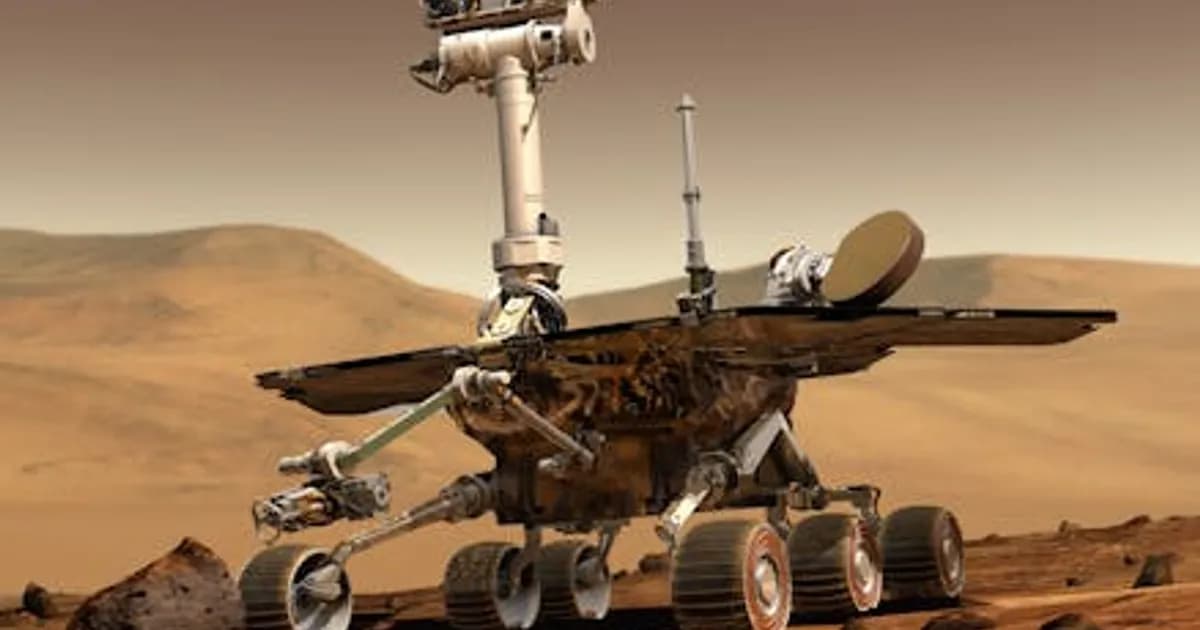
The most safety-critical application of AI in space is autonomous navigation. Mars rovers have used AI-assisted navigation for years, but the capability has advanced substantially. NASA's Perseverance rover uses AutoNav, an onboard AI that plans and executes driving routes across Mars terrain without waiting for commands from Earth.
In 2026, the next generation of autonomous navigation goes further. Spacecraft bound for the Moon and Mars use AI to:
- Identify and avoid hazards in real time during landing
- Plan optimal driving routes across unmapped terrain
- Adjust mission priorities when instruments detect something unexpected
- Monitor system health and initiate corrective actions before problems become failures
This autonomy is especially critical for lunar missions, where the lag is short but response time still matters during dynamic events like landing. For Mars missions, it's essential.
AI for Telescope Data and Scientific Discovery
Space telescopes generate data volumes that overwhelmed analysis pipelines built around human review. The James Webb Space Telescope produces complex spectroscopic and imaging data that would take years to analyze manually at the rate it's collected.
AI in space science now handles the first pass:
- Anomaly detection: Flag unusual objects or phenomena for human follow-up
- Exoplanet identification: Identify planetary transit signals in light curves from thousands of stars
- Galaxy classification: Categorize millions of galaxies in survey data by shape, age, and composition
- Signal filtering: Separate genuine astrophysical signals from instrument noise
The result isn't that AI makes discoveries instead of scientists—it's that AI makes it possible for scientists to work on far more discoveries than they could otherwise reach. Several significant 2025-2026 exoplanet detections were identified by AI systems that then flagged candidates for human confirmation.
Satellite Operations and Orbital Intelligence
There are now thousands of operational satellites in Earth orbit, and managing that constellation is an AI problem at scale. Ground operators can't monitor every satellite individually in real time. AI handles:
- Collision avoidance: Monitoring orbital paths and automatically adjusting positions to avoid debris and other satellites
- Predictive maintenance: Identifying early signs of component degradation before failures occur
- Imagery analysis: Processing Earth observation data for agriculture, disaster response, weather forecasting, and infrastructure monitoring
- Communications optimization: Routing data across satellite networks to minimize latency and maximize throughput
Commercial operators like Planet, Maxar, and others use AI-powered analysis pipelines that deliver actionable Earth observation insights within hours of a satellite pass—turnaround times that would be impossible with manual processing.
SpaceX and AI in Launch Operations
Rocket launches involve thousands of parameters that must remain within acceptable bounds simultaneously. SpaceX has integrated AI into its launch and recovery operations extensively, most visibly in the autonomous flight software that guides Falcon 9 booster landings.
The booster return is an AI navigation problem: compute and execute a precise landing burn in real time with no margin for error. AI also supports:
- Pre-launch anomaly detection across hundreds of sensor feeds
- In-flight trajectory optimization
- Post-flight data analysis to identify performance trends and anomalies
As Starship flight operations mature, the complexity of AI-assisted launch management will increase substantially. Orbital refueling, lunar landers, and eventual Mars transit vehicles all require more sophisticated autonomous operation than current systems provide.
AI-Powered Astronomy: Mapping the Universe at Scale
Sky survey projects like the Vera Rubin Observatory's Legacy Survey of Space and Time will, when fully operational, image the entire visible sky every few nights. The data volume from a single run exceeds what any team of astronomers could process manually.
AI classifiers are the only tool capable of handling the throughput. Machine learning models trained on known object types identify galaxies, variable stars, supernovae, asteroids, and other transient phenomena automatically, prioritizing the most scientifically interesting candidates for follow-up observation.
This has already accelerated asteroid discovery rates, which matters for planetary defense—identifying potentially hazardous objects years before they become threats rather than weeks.
The Commercial Space AI Ecosystem
Beyond NASA and ESA, commercial space companies are building AI capabilities across a range of applications. Key areas include:
- Launch optimization: Reducing fuel consumption and improving payload delivery precision
- In-orbit manufacturing: AI-guided robotic systems for assembling structures in space
- Space resource identification: Identifying mineral-rich asteroid and lunar targets for future extraction missions
- Ground station automation: Reducing human operator load for routine operations
Startups building AI specifically for space operations raised significant funding rounds in 2024 and 2025, reflecting investor confidence that the commercial space market—now spanning hundreds of companies—needs specialized AI tooling that general-purpose models don't provide.
Challenges AI Hasn't Solved Yet
AI in space exploration faces genuine limitations worth understanding:
Reliability in unknown environments: AI systems trained on known Mars terrain may behave unpredictably in genuinely novel situations. Building in appropriate uncertainty and fallback behaviors is an active research problem.
Radiation hardening: Space-grade hardware runs far slower than the latest AI chips. Running sophisticated AI models on radiation-tolerant processors requires significant optimization.
Explainability: When an AI navigation system makes a decision during a critical maneuver, mission controllers need to understand why. Black-box behavior is unacceptable in safety-critical space operations.
Progress on all three is advancing, but they remain meaningful constraints on how much autonomy mission designers assign to AI systems today.
AI Is Making Space Exploration Faster
The practical effect of AI in space exploration in 2026 is acceleration. Missions achieve more science per dollar, data backlogs shrink, and spacecraft operate more safely in environments where human reaction time is either insufficient or impossible.
As launch costs continue falling and the number of operational spacecraft increases, the need for AI to manage, analyze, and operate at scale will only grow. The next phase—truly autonomous deep space missions requiring years of independent operation—will test these systems further than any current deployment has.
For more on how AI is reshaping other science-intensive fields, see our guide to AI in scientific research in 2026.
Comments
Loading comments...