
AI and National Security in 2026: Military AI Rising
AI and National Security in 2026: Military AI Rising
AI and national security have become inseparable topics in 2026. Every major military power is investing heavily in AI for defense applications, from autonomous drone systems and logistics optimization to intelligence analysis and cyber operations. The pace of deployment has outrun international governance efforts, and the decisions being made now about how AI national security systems are designed, constrained, and deployed will shape military conflict and strategic stability for decades.
Military AI: Drones, Targeting, and Autonomous Systems
The most discussed AI national security application is autonomous weapons — systems that can identify, target, and engage without direct human control over individual decisions. The operational reality in 2026 is more nuanced than the "killer robot" framing suggests, but the trajectory is genuinely concerning.
Current AI military systems span a spectrum from human-controlled to increasingly autonomous:
AI-assisted targeting is widespread. Systems that use computer vision and sensor fusion to identify potential targets and present them to human operators have been deployed by multiple militaries. The human nominally approves each engagement, but in practice, the speed of engagement and cognitive load on operators means AI recommendations are accepted with limited scrutiny in high-tempo operations.
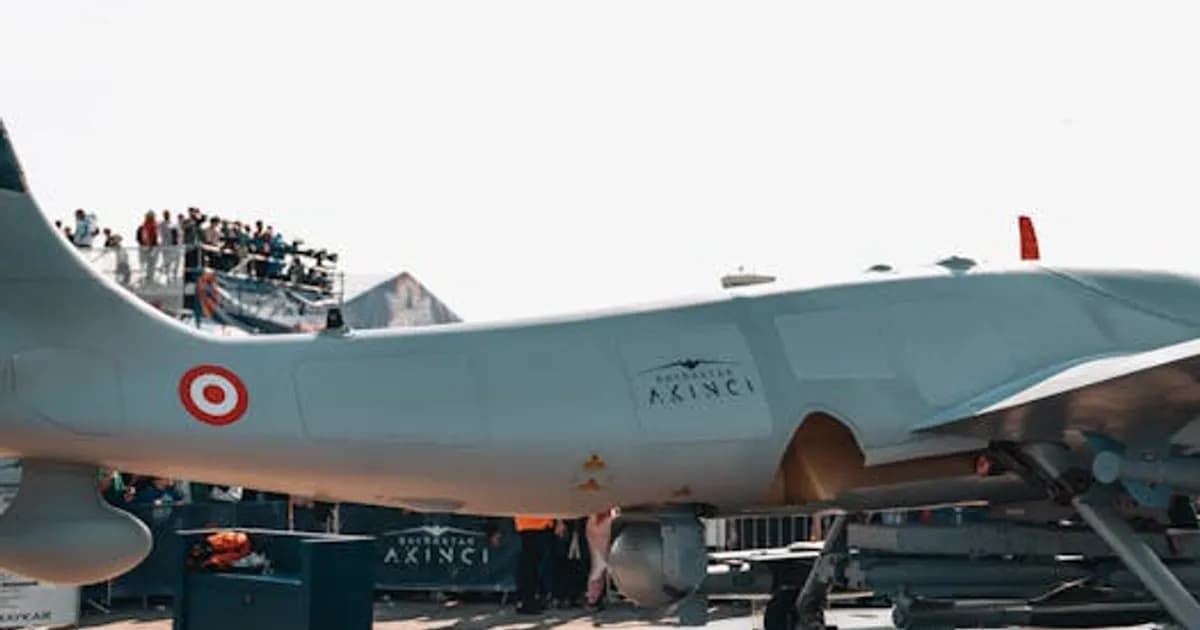
Autonomous loitering munitions — drones that are launched, patrol an area, and engage targets meeting specified criteria without per-engagement human control — have been used in several conflicts. These systems represent the clearest current example of meaningful autonomy in lethal AI national security systems.
Drone swarm operations use AI to coordinate large numbers of relatively inexpensive drones in coordinated attack or reconnaissance patterns. No single operator controls individual drones; AI manages the swarm's collective behavior toward an objective.
Naval and aerial unmanned systems with increasing autonomy for navigation, obstacle avoidance, and mission execution reduce the human footprint required for sustained maritime and aerial operations.
The ethical and legal dimensions of autonomous AI national security systems are intensely debated. The International Committee of the Red Cross has called for legally binding constraints on autonomous weapons, while several major military powers argue that existing laws of armed conflict are sufficient and that preemptive restrictions on AI national security development would disadvantage responsible actors relative to those who ignore such constraints. DARPA (darpa.mil) publishes unclassified research on many AI defense programs, providing a partial window into US military AI development.
AI in Cybersecurity and Cyber Defense
AI national security applications in cyberspace are arguably more immediately impactful than physical weapons systems, because cyber operations are continuous, relatively low-cost, and can be conducted without the escalation signals of conventional military action.
On the offensive side, AI is being used to:
- Automate the identification of software vulnerabilities at scale, dramatically accelerating the rate at which potential exploits can be discovered and developed.
- Generate highly convincing spear-phishing campaigns customized to specific targets, using AI to research target profiles and craft persuasive messages.
- Develop and test malware variants that evade detection systems trained on known attack signatures.
On the defensive side, AI national security tools are being applied to:
- Detect anomalous network behavior that may indicate intrusion, reducing the time between a breach and its detection from months to hours.
- Correlate security events across large, complex infrastructure to identify attack patterns that span multiple systems.
- Automate response to known attack types, containing threats faster than human response teams could manage.
AI Cybersecurity 2026: How AI Is Reshaping Threat Detection covers the cybersecurity dimension of AI national security in greater depth, including both defensive tools and the evolving threat landscape.
Intelligence Analysis and AI Surveillance
Intelligence agencies are among the most significant users of AI nationally security capabilities. The volume of signals intelligence, imagery, and open-source data available to intelligence organizations has long exceeded human capacity to analyze. AI is changing the economics of intelligence in fundamental ways.
Signals intelligence processing uses AI to process intercepted communications at scale, identifying relevant content, translating languages, recognizing speakers and their relationships, and flagging topics of intelligence interest.
Imagery and video analysis applies computer vision to satellite imagery and other visual intelligence sources to identify military equipment concentrations, infrastructure changes, construction activity, and other indicators of strategic significance — at far greater scale and speed than human analysts could achieve.
Open-source intelligence (OSINT) has been transformed by AI. AI systems now continuously monitor social media, news sources, academic publications, financial filings, and technical forums for indicators relevant to AI national security priorities, synthesizing findings across languages and sources.
Social network analysis uses AI to map relationships between individuals and organizations of intelligence interest, identifying connections that aren't visible by examining individuals in isolation.
The dual use of these AI national security capabilities for domestic surveillance is a significant civil liberties concern. AI surveillance systems used to monitor adversaries abroad can be and have been turned toward domestic populations, often with far less oversight than foreign-facing intelligence operations.
The AI Arms Race Between Superpowers
AI national security competition between the United States, China, and to a lesser extent Russia and other powers is shaping defense investment and policy across the world.
The US-China competition is the central dynamic. Both countries have made AI national security development an explicit national priority and have invested tens of billions of dollars in military AI programs. The competition spans:
- Foundation model development for military applications — both countries are developing large AI models on classified datasets for intelligence, planning, and operations.
- Hypersonic weapons guidance — AI systems for terminal guidance of hypersonic vehicles are a priority area given the difficulty of human reaction times in these engagement scenarios.
- Electronic warfare — AI-enabled jamming and spectrum management systems that adapt to adversary countermeasures faster than human operators could manage.
- Logistics and supply chain AI — the often-overlooked backbone of military capability, where AI optimization of maintenance, resupply, and planning provides operational advantages that accumulate over a sustained conflict.
The AI national security competition also extends to norms and governance — who sets the rules for how military AI systems are used, and whether any international constraints are possible.
International Governance Challenges
The international governance of AI national security applications is at an early, fragmented stage. Unlike nuclear weapons, which required decades to develop meaningful arms control frameworks, AI capabilities are being deployed at pace while governance debates continue without resolution.
Key governance challenges include:
- Attribution difficulty — it's often unclear whether an AI-enabled cyber operation or disinformation campaign originates from a state actor or non-state group, complicating the application of existing international law.
- Verification intractability — unlike nuclear weapons, AI national security capabilities are largely software-based and invisible to traditional verification methods.
- Dual use — the same AI capabilities useful for military applications often have legitimate civilian uses, making restriction agreements difficult to design and enforce.
- Asymmetric interests — countries at different stages of AI development have very different incentives regarding what constraints they're willing to accept.
What the US, China, and EU Are Doing
The US has established the AI Safety Institute, published AI national security guidance through the National Security Commission on AI recommendations, and requires AI-enabled weapons systems to include meaningful human control. Actual implementation of human control requirements in fast-moving operational scenarios remains contested.
China has issued regulations governing AI in military applications and framed AI national security development explicitly in its civil-military fusion policy, which blurs the line between commercial AI development and military AI capability.
The EU, a significant AI governance actor on the civilian side through the AI Act, has less direct role in AI national security — defense policy remains largely a member state function. AI Regulation in 2026: What New Laws Mean for Your Business covers the civilian regulatory landscape that overlaps with many AI national security applications.
The Stakes Are High
AI and national security in 2026 represent one of the most consequential technology intersections of our time. The decisions being made now — about what constraints to build into autonomous systems, what human oversight to require, what international norms to pursue — will shape the character of future conflict.
Staying informed about AI national security developments? Defense analysts, policy researchers, and technology professionals with relevant expertise are in high demand for both government and private sector roles analyzing these dynamics. The field moves fast and the stakes are high enough that informed public engagement matters.
Comments
Loading comments...