
AI Robotics August 2026: Humanoid Robots Update
AI Robotics August 2026: Humanoid Robots Update
AI robotics in August 2026 is hitting deployment milestones that seemed ambitious 18 months ago. Humanoid robots are on factory floors, in hospital corridors, and in warehouse operations — not as prototypes, but as working systems logging real hours alongside human colleagues.
The cost curves are moving faster than most forecasts predicted. Here's the state of AI robotics as of this month.
Humanoid Robots in Manufacturing: What's Actually Working
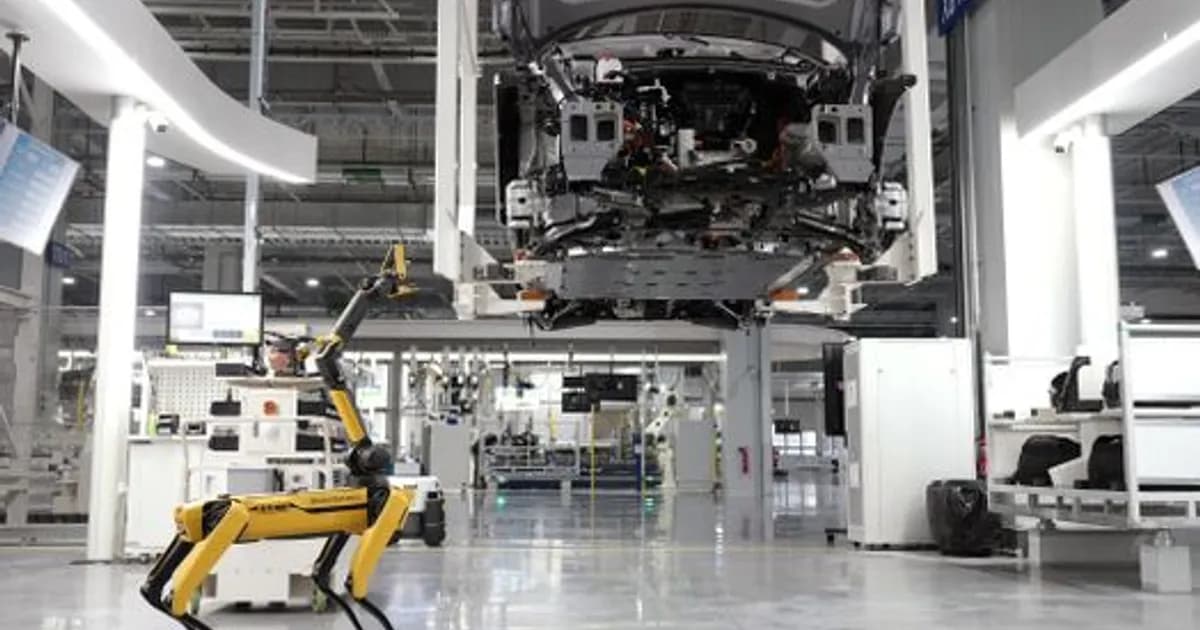
The clearest AI robotics success story this August is automotive manufacturing. Several major automakers have deployed humanoid robots for specific assembly-line tasks: installing components in constrained spaces, quality inspection, and materials handling. The common thread is that these robots are doing tasks that are hard to automate with traditional fixed-arm robots because they require physical adaptability.
These aren't fully autonomous operations. Robots still have supervising technicians nearby, and task assignments are carefully scoped to avoid complex edge cases. But the supervised deployments are generating the real-world training data that will make the next generation more capable.
The limitation holding back broader adoption right now is dexterity under uncertainty. Robots perform excellently on known tasks in structured environments. Novel situations — a misplaced part, an unexpected obstacle — still require human intervention more often than manufacturers would like.
Cost Reduction: Faster Than Expected
One of the most significant pieces of AI robotics news this August is the cost trajectory. Manufacturing cost-per-unit for leading humanoid platforms has dropped substantially over the past 12 months, driven by:
- Maturing supply chains for specialized actuators
- Software improvements that reduce hardware reliability requirements
- Growing competition among manufacturers
- Longer production runs as orders scale
Enterprise lease pricing for humanoid robots in North America has reached ranges that make economic sense for high-labor-cost operations. The math is working at scale in a way that it simply didn't in 2024.
Healthcare Robots: A Different Kind of Deployment
In healthcare, AI robotics in August 2026 is about two distinct use cases that are both advancing quickly.
Surgical robotics continue to improve in precision and autonomy. The latest surgical robot systems offer AI-assisted guidance that helps surgeons execute complex procedures with greater consistency, especially in minimally invasive surgery. Full autonomous surgery remains firmly in research territory, but AI-assisted is now standard in leading surgical centers.
Hospital logistics robots are the less glamorous but commercially successful story. Robots delivering medications, meals, linens, and lab samples between departments are now common in large hospitals. They free nursing staff from time-consuming transport tasks, and the reliability data is strong.
For a broader look at AI's role in healthcare, see AI in healthcare 2026: transforming medical diagnosis.
Warehouse Robotics: The Quiet Giant
While humanoid robots generate headlines, the real volume of AI robotics deployment in 2026 remains in warehouse and logistics. Mobile robots, sorting systems, and picking arms are operating in thousands of facilities.
August 2026 updates in this space are less dramatic but meaningful: better coordination between different robot types, improved handling of irregular package shapes, and tighter integration with inventory management systems. The category is maturing from early adoption to operational standard.
What's new this month is the integration of vision-language models into warehouse robot control systems. Robots can now understand natural-language work orders and respond to real-time verbal instructions from operators — a significant usability improvement over older control interfaces.
What the Leading Robotics Companies Are Doing
The AI robotics competitive landscape in August 2026 includes several well-capitalized players each taking different approaches:
- Established players with long robotics heritage are integrating AI capabilities into existing product lines, improving autonomy without radical hardware redesigns
- AI-first entrants are shipping second and third generation hardware with AI control at the center, betting that software capability matters more than mechanical refinement
- Tech company entrants are leveraging their AI model capabilities and integrating them with acquired or partnered hardware
Competition is healthy and driving rapid improvement across the board. The current moment resembles the smartphone market in the early 2010s — category is proven, scaling up, multiple credible players, costs falling.
Safety and Regulation: Catching Up Fast
Regulators are paying close attention to AI robotics deployments, particularly in contexts where robots work alongside humans.
Workplace safety bodies in the US and EU are developing specific standards for human-robot collaboration. Key questions being addressed include:
- Minimum required sensing capabilities before a robot can operate near humans
- Incident reporting requirements for robot-caused workplace injuries
- Liability frameworks when a robot causes harm in a commercial deployment
- Certification processes for AI systems controlling physical robots
The regulatory picture is still forming, but August 2026 shows clear signals that sector-specific rules are coming before year-end. Companies deploying robots now are well advised to document their safety practices carefully.
For AI regulation context, see our coverage of AI regulation in 2026.
The Skills and Jobs Question
The most common concern about AI robotics from workers and policymakers is job displacement. The picture in August 2026 is more nuanced than early fears suggested.
In manufacturing, robot deployments have largely absorbed through attrition and growth rather than direct layoffs — companies are deploying robots to expand capacity, not replace workers one-for-one. In warehouses, worker displacement has been more direct, but logistics job creation in other parts of the supply chain has partially offset losses.
The clearest emerging demand is for robot technicians, AI system operators, and fleet managers. These roles require a mix of mechanical understanding and AI system knowledge that most vocational training programs are now offering.
What to Watch in Coming Months
AI robotics is moving on multiple fronts simultaneously:
- Dexterity improvements: The next generation of hand designs and manipulation algorithms
- Sim-to-real training: Better methods for training robots in simulation and deploying to physical environments
- Fleet management software: As deployments scale, managing hundreds of robots becomes the key challenge
- Energy efficiency: Current humanoid platforms have limited battery life; this is an active engineering focus
For background on the year's robotics breakthroughs so far, our AI robotics breakthroughs guide covers the full arc of progress.
Want to understand where AI robotics fits your industry? Start with the economic case — the numbers on cost-per-task are now concrete enough to model for most manufacturing and logistics use cases.
Comments
Loading comments...