
AI Restaurant Menu Optimization in 2026: What's Changing
AI Restaurant Menu Optimization in 2026: What's Changing
AI restaurant menu optimization has moved from pilot projects to standard back-office practice at a lot of chains and independent restaurants alike. Instead of a manager eyeballing a sales report once a quarter, software now tracks every dish, every day, and flags what's working and what isn't.
The shift matters because restaurant margins are thin and food costs have been volatile for years. A menu with too many underperforming dishes ties up inventory, prep labor, and kitchen space that could go toward items customers actually want.
This article looks at four pieces of that shift: how menu engineering software analyzes sales data, how dynamic pricing is being used (and resented), how restaurants protect margins as ingredient costs rise, and how personalized recommendations are changing what diners see when they order.
What Menu Engineering Means Today
Menu engineering isn't new. Restaurant consultants have used a version of it since the 1980s, plotting dishes on a grid of profitability against popularity to decide what to keep, promote, reposition, or cut.
What's different now is the input. Older menu engineering relied on a manager's intuition plus a monthly spreadsheet. Today's tools pull data continuously from the point-of-sale system, kitchen display screens, and even delivery-app order logs.
That means a restaurant can see, in near real time:
- Which dishes sell well but carry poor margins because of ingredient cost or prep time
- Which dishes have high margins but low order volume, suggesting a menu placement or description problem
- Which combinations of items get ordered together, informing bundling and upsell prompts
- Which dishes correlate with longer kitchen ticket times, which affects table turnover
The output isn't usually a fully automated decision. It's a ranked list that a chef or owner reviews before deciding whether to cut a dish, move it on the menu, rename it, or adjust its price.
How AI Restaurant Menu Optimization Analyzes Sales Data
The mechanics behind this are fairly straightforward compared to some other applications of machine learning. The software ingests transaction-level data — what was ordered, at what price, at what time, alongside what else — and looks for patterns a human reviewing aggregate reports would miss.
A few patterns show up consistently across operators using these tools:
- Dishes lose popularity gradually before a sharp drop-off, giving early warning before an item becomes true dead weight on the menu
- Items placed in certain menu positions, such as the top of a section or paired with a photo, sell measurably better independent of the dish itself
- Weather, local events, and day of week shift demand for specific categories in predictable ways
- New menu items often underperform in the first few weeks simply because regulars haven't tried them yet, which matters for deciding how long to give a new dish before cutting it
None of this requires the system to understand food. It's pattern recognition applied to structured transaction data, plus enough history to separate a temporary dip from a genuine decline.
The harder part is operational: getting a chef or owner to actually act on the recommendation, especially when a beloved but unprofitable dish has sentimental value on the menu.
Dynamic Pricing and the Customer Backlash
Restaurant dynamic pricing is the most visible, and most controversial, piece of AI menu optimization. The basic idea borrows from airlines and hotels: prices flex with demand instead of staying fixed all day.
In practice this looks like lower prices during slow afternoon hours to fill seats, or modest price increases on a handful of high-demand items during a dinner rush. Some delivery and kiosk platforms experiment with this more aggressively than dine-in restaurants, since digital menus make price changes trivial to implement.
The backlash is real and predictable. Diners associate fixed menu prices with fairness; a price that changes based on when you happen to be hungry feels like the restaurant is exploiting a captive moment, the same complaint leveled at ride-hailing apps during surge pricing. Unlike a hotel room booked weeks ahead, a meal is an immediate, often social need, and price changes that interact with that immediacy read as unfair even when the underlying logic is closer to ordinary discounting.
Restaurants that have tried more visible forms of demand-based pricing have learned a few lessons:
- Discounts during slow periods are received well; surcharges during busy periods are not, even when the dollar amount is identical
- Transparency about why a price changed, such as a happy-hour discount or a holiday surcharge, is tolerated far more than an unexplained price that simply varies
- Framing matters enormously: "off-peak pricing" lands differently than "peak surcharge" even for the same price gap
The practical result is that most restaurants pursuing AI-driven pricing in 2026 lean toward time-based discounts and clearly labeled promotions rather than raising prices on popular items during rushes, precisely because the latter generates disproportionate complaints relative to the revenue gained.
Protecting Margins as Food Costs Rise
Ingredient cost inflation has pushed many operators toward AI tools that go beyond pricing and into recipe and sourcing decisions. The goal is to protect margin without simply raising menu prices across the board, which risks pushing price-sensitive customers away entirely.
These systems typically connect a recipe database to live or recently updated ingredient costs, then flag dishes whose margin has eroded below a target threshold. From there, the suggestions tend to fall into a few categories:
- Substitute ingredients with similar flavor profiles but more stable or lower per-unit cost
- Adjust portion sizes slightly, particularly for higher-cost proteins, without changing the dish's description
- Resequence prep steps to reduce labor cost tied to a specific dish
- Flag dishes for removal or repositioning when no cost adjustment restores an acceptable margin
Food-cost volatility isn't new, but recent inflation has made manual recipe costing, recalculating margins by hand whenever an ingredient's price shifts, too slow for many kitchens. Cost data from sources like the USDA Economic Research Service shows how much food categories can swing year over year, and restaurants that build those swings into recipe software tend to hold margins more consistently than those reacting after the fact.
This is also where AI-driven kitchen tools intersect with menu decisions more broadly. See our coverage of AI restaurant robots in 2026 for how automated prep and cooking equipment factor into the same cost equation.
Personalized Recommendations at the Point of Order
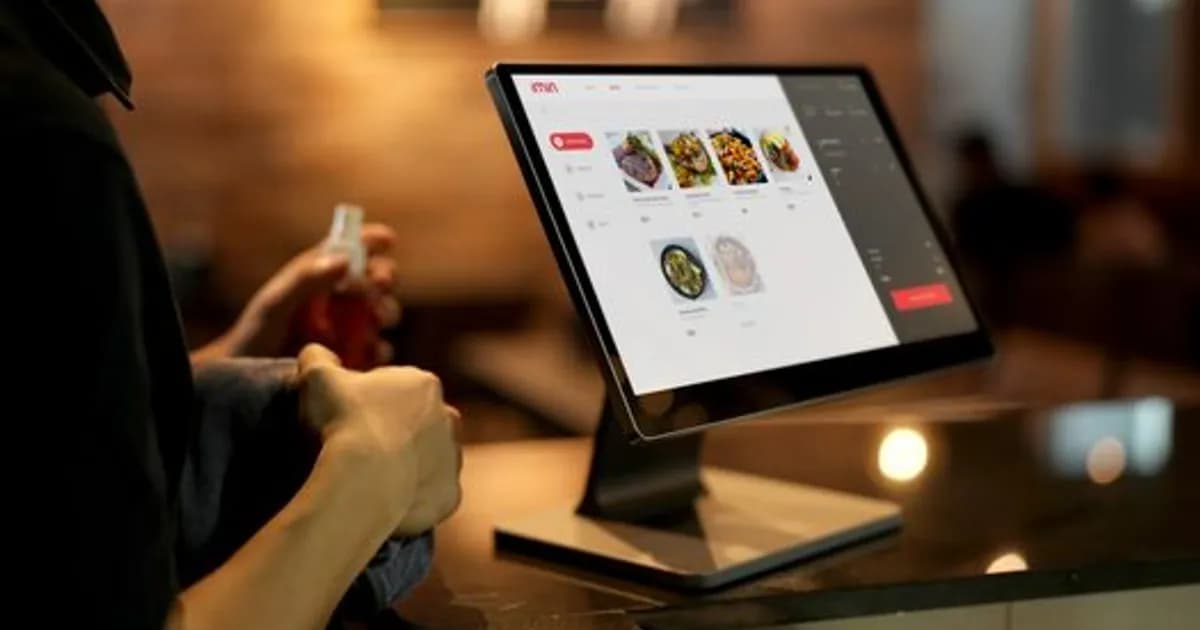
The most customer-visible piece of AI restaurant menu optimization is the recommendation layer on ordering kiosks, apps, and delivery platforms. Instead of every customer seeing the same menu in the same order, AI menu recommendations surface dishes based on order history, time of day, weather, and what similar customers have chosen.
This is the same logic that powers product recommendations in e-commerce, applied to food. A returning customer who always orders a particular protein might see that dish promoted, or be offered a logical add-on based on what people who ordered similarly have also bought.
For operators, the appeal is straightforward: a relevant suggestion at the point of order lifts average order value more reliably than a generic upsell prompt. For diners, the experience ranges from genuinely useful, such as a reminder of a dish they liked last time, to mildly unsettling once it's obvious how much the system has tracked about their habits.
The same personalization principles increasingly extend past the order screen into nutrition-aware suggestions, an area covered in more depth in our piece on AI in food and nutrition in 2026.
What Restaurants Should Watch For
Restaurants adopting AI restaurant menu optimization tools in 2026 are running into a consistent set of practical issues worth flagging before signing up for a platform:
- Sales data alone can't explain why a dish underperforms. A bad photo, vague description, or poor menu placement can sink a genuinely good dish, and the software won't distinguish that from a dish nobody actually likes
- Overcorrecting on margin can strip the personality out of a menu, leaving a collection of statistically optimal but forgettable dishes
- Dynamic pricing requires careful framing and disclosure to avoid the surge-pricing backlash that has already hit other industries
- Staff need to understand and buy into recommendations, or the software's suggestions simply sit unused in a dashboard
None of this is a reason to avoid these tools. It's a reason to treat them as input to a decision a person still makes, rather than a system that runs the menu on its own.
The Bottom Line
AI restaurant menu optimization is becoming a normal part of running a restaurant in 2026, much the way point-of-sale software became standard a generation ago. The tools are genuinely useful for spotting underperforming dishes, protecting margin against ingredient cost swings, and surfacing relevant recommendations to diners.
The friction point is dynamic pricing, where the line between smart demand management and something that feels like price gouging is thin and easy to cross. Restaurants that get the most value tend to combine the data with restraint, using AI to inform decisions about cuts, recipes, and recommendations, while being cautious and transparent about anything that changes what a customer pays.
If you run a restaurant evaluating these tools, start with the sales-data and margin-protection side before touching customer-facing pricing. That's where the clearest returns are and the lowest risk of customer backlash. For broader context on food-service trends, the National Restaurant Association tracks industry data worth following as you decide what to adopt next.
Comments
Loading comments...