
AI Restaurant Robots in 2026: Kitchens Go Autonomous
AI Restaurant Robots in 2026: Kitchens Go Autonomous
AI restaurant robots have moved well past the novelty stage in 2026. Fry stations, drink dispensers, and even full burger assembly lines are now running on AI vision systems and robotic arms in thousands of restaurant locations, driven by a labor market that hasn't loosened up and margins that keep getting squeezed by food costs.
This isn't humans being replaced wholesale by robots. It's restaurants automating the most repetitive, injury-prone, and hardest-to-staff stations while keeping people on the jobs that require judgment, speed of adaptation, and customer interaction.
Where Restaurant Automation Is Actually Working
The stations getting automated first share a common profile: repetitive motion, predictable inputs, and high turnover among the humans who used to do them.
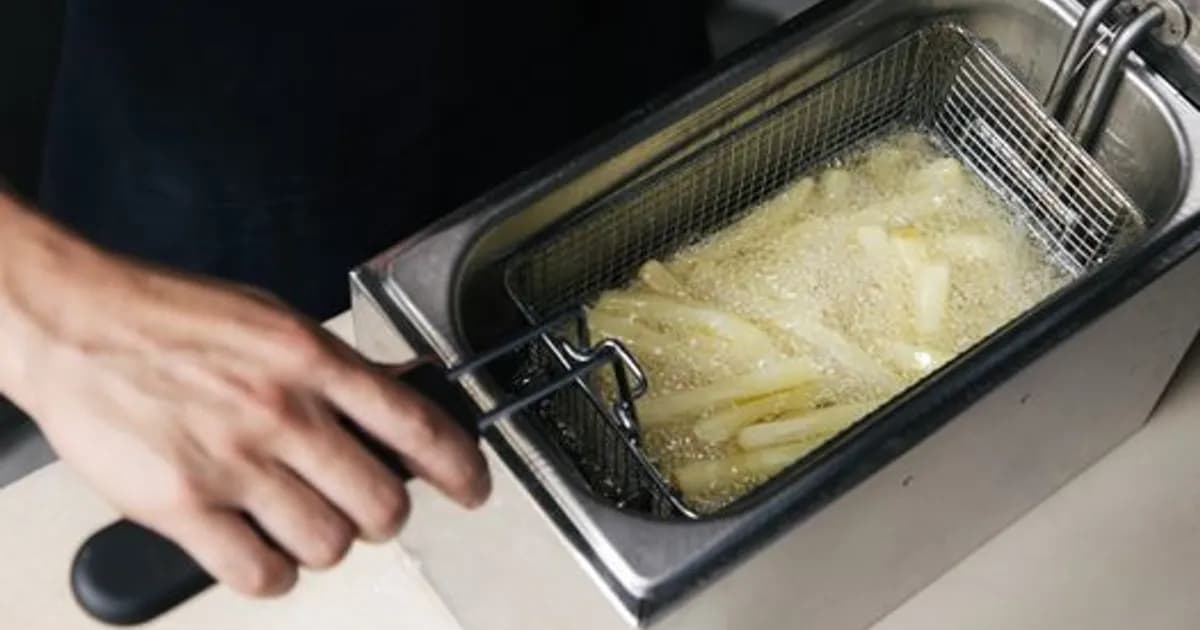
- Fry stations: Robotic arms paired with AI vision systems lower baskets, monitor cook time and oil temperature, and pull product at the optimal moment — a job notorious for burns and high turnover
- Beverage and drink assembly: Automated systems handle pouring, mixing, and order-matching for high-volume drink menus
- Pizza and bowl assembly: Conveyor-based systems with AI-guided portioning handle the repetitive layering work for build-your-own concepts
- Dishwashing and prep: Less visible to customers but widely adopted — AI-guided sorting and prep-line robotics reduce back-of-house labor needs
The AI Layer That Makes This Work
What separates 2026's restaurant robots from earlier attempts at kitchen automation is the AI vision and adaptive control layer. Earlier kitchen automation needed rigid, pre-programmed routines and broke down with any variation in ingredients or order timing. Current systems use computer vision to identify food readiness by appearance, adjust timing dynamically based on real-time order volume, and flag anomalies — a jammed conveyor, an out-of-spec ingredient — for human intervention rather than failing silently.
This adaptive layer is also what makes the economics work. A robot that needs a dedicated technician on-site to keep running doesn't save labor cost; one that runs reliably for a full shift with occasional remote monitoring does.
What's Driving Adoption
Three forces are pushing restaurant chains toward automation faster than five years ago:
- Persistent staffing shortages in back-of-house roles, especially in markets with low unemployment and high turnover in food service
- Falling robotics hardware costs, with kitchen-specific robotic arms now priced for payback periods under two years for high-volume locations
- Rising minimum wages in major markets, which shift the cost comparison between human labor and automation toward the latter for routine tasks
Where Humans Still Win
Order-taking that requires reading ambiguous customer requests, expediting during chaotic rush periods, plating that needs visual judgment, and any task requiring physical dexterity across varied, non-standardized inputs remain solidly human territory. Full-service and higher-end dining has seen far less kitchen automation than fast food and fast-casual, where menus are simpler and volume is higher.
Front-of-house roles — hosting, serving, handling complaints — have seen far less direct robotic automation, though AI-powered ordering kiosks and voice systems for drive-through have expanded significantly. For more on how AI voice systems are handling customer-facing interactions, see AI in Customer Service 2026: How Chatbots Are Changing Support.
The Economics Operators Are Actually Running
For multi-unit operators deciding whether to invest, the calculation has gotten more straightforward as hardware costs have dropped and reliability has improved. A typical fry-station robotic arm system now costs roughly the equivalent of one to two years of fully loaded labor cost for that position once installation, maintenance contracts, and the AI monitoring subscription are factored in — and unlike a human employee, it doesn't quit after a few months, which has historically been one of the most expensive parts of running a high-turnover kitchen station.
The harder cost to model is downtime risk. A broken fryer robot during a dinner rush is a worse outage than a sick call from a human employee, because there's often no backup plan beyond reverting to manual operation with whatever staff happens to be on shift. Operators who've adopted automation successfully tend to describe a learning curve around maintenance contracts and spare-parts logistics that took a year or more to get right, suggesting the technology is mature but the operational playbook around it is still being figured out chain by chain.
What the Rollout Looks Like in Practice
Adoption has concentrated heavily among large multi-unit chains rather than independent restaurants, for a straightforward reason: the capital cost and the operational learning curve are easier to absorb across hundreds of locations than for a single-unit owner-operator. Several major fast food and fast-casual chains have run multi-year pilot programs before committing to wider rollouts, testing automation at a handful of flagship locations and tracking metrics like order accuracy, throughput during peak hours, and technician callout frequency before expanding further.
Independent restaurants have generally adopted automation more selectively, often through equipment-as-a-service models where a vendor owns and maintains the robotic hardware in exchange for a monthly fee rather than requiring upfront capital purchase — a structure that's made the technology accessible to smaller operators who couldn't otherwise justify the investment.
The Labor Conversation
Restaurant automation has drawn predictable pushback from labor advocates concerned about job losses in an industry that has historically provided entry-level employment for younger and lower-skilled workers. Industry data on the actual employment impact remains mixed — some operators report shifting displaced kitchen staff to expanded front-of-house and training roles rather than net headcount reduction, while others have used automation explicitly to reduce total staffing costs.
The National Restaurant Association tracks industry technology adoption trends and workforce data at restaurant.org, which provides ongoing visibility into how widespread this shift is becoming across different segments of the industry.
What This Means for Diners
For customers, the visible changes are mostly in speed and consistency rather than anything dramatic. Orders involving automated stations tend to come out with more consistent timing and fewer preparation errors, though the experience of watching a robotic arm work a fry station has itself become something of a draw at flagship locations for some chains.
Pricing impact has been modest so far — automation savings have mostly gone toward offsetting rising food and real estate costs rather than translating into lower menu prices, though some operators in highly competitive fast-casual segments have used automation savings to hold prices steady longer than competitors.
The Bottom Line
The trajectory for AI restaurant robots points toward steady, segment-specific expansion rather than a sudden industry-wide overhaul. AI restaurant robots in 2026 have found their niche: the repetitive, physically taxing, high-turnover stations where consistency matters more than judgment. The technology has matured enough that adoption is now a straightforward cost-and-reliability calculation for operators rather than an experimental bet.
Restaurants considering automation should start with the stations causing the most staffing pain — usually fry and beverage — rather than attempting a full kitchen overhaul, and budget for the AI monitoring layer that keeps the hardware running reliably, not just the robotic arm itself.
Comments
Loading comments...