
AI in Mining Industry 2026: Automation Transforms Resource Extraction
AI in Mining Industry 2026: How Automation Is Transforming Resource Extraction
Mining is one of the most dangerous industries on earth. It's also one of the most expensive to run. Those two facts have made it a prime target for AI deployment — and in 2026, the results are substantial enough that major mining companies are reporting both improved safety records and reduced operational costs.
Here's where AI is being used in mining, what the real-world outcomes look like, and what challenges remain.
Why Mining Adopted AI Early
Unlike many industries where AI adoption has been cautious, mining moved fast for practical reasons:
- Safety — Mines are dangerous environments. Every automated system that removes humans from high-risk situations has an immediate safety dividend
- Data richness — Modern mines generate enormous volumes of sensor data — pressure, temperature, vibration, gas concentration — that AI models can analyze continuously
- Remote locations — Mining operations are often far from population centers, making human expertise expensive to maintain on-site. AI reduces the need for constant physical presence
The combination of strong ROI and genuine safety benefits made the business case unusually compelling.
Where AI Is Being Deployed
Autonomous Haul Trucks
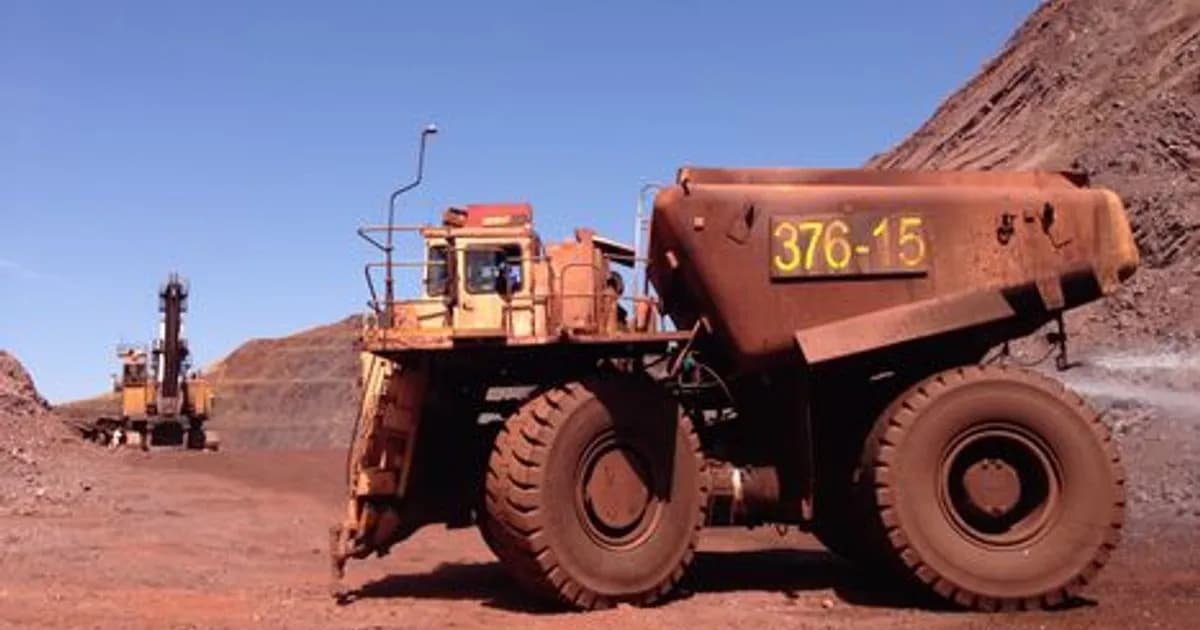
The most visible AI application in mining is autonomous haul trucks — the massive 300-ton vehicles that move ore from extraction points to processing facilities. Companies like Rio Tinto and BHP have been running autonomous truck fleets for several years; in 2026, the technology has spread to mid-tier miners and expanded to include autonomous drilling rigs and loading machines.
Rio Tinto's Pilbara operations in Western Australia now run with over 120 autonomous trucks operating 24/7 without drivers. The trucks have logged hundreds of millions of kilometers with a safety record significantly better than human-operated equivalents — fewer incidents, better route optimization, and no driver fatigue.
Predictive Maintenance
AI systems analyze vibration, temperature, and operational data from equipment — pumps, conveyor belts, crushers, mills — to predict failures before they happen. The economic impact is significant: unplanned equipment downtime in a large mine can cost $50,000–$500,000 per hour depending on operations.
Predictive maintenance AI from companies like Uptake and SparkCognition is now standard at most major mining operations. Typical outcomes reported include 20–35% reduction in unplanned downtime and 15–25% reduction in maintenance costs.
Mineral Exploration
Finding where to mine is traditionally expensive and slow, requiring geologists to analyze vast amounts of geological survey data, historical production data, and remote sensing imagery. AI models trained on existing mine data can now predict mineral deposit locations with accuracy that narrows the search area — reducing the drilling required for exploration by meaningful amounts.
KoBold Metals, backed by significant venture funding, has built its entire business model around AI-driven mineral exploration. It uses machine learning to synthesize historical geological data and identify likely deposits of critical minerals — cobalt, nickel, lithium — needed for battery production.
Underground Safety Monitoring
AI-powered sensor networks now monitor gas concentrations, structural stability, and worker locations in underground mines continuously. When anomalies are detected — a drop in oxygen, unusual seismic activity, a structural shift — AI systems alert human operators and, in some cases, automatically initiate ventilation changes or evacuation protocols.
Anglo American's South African operations have deployed AI monitoring systems that have reduced the time between hazard detection and worker notification from 8–12 minutes to under 90 seconds.
Ore Grade Prediction
Sorting rock for processing is expensive. AI systems that analyze images or sensor data from ore on conveyor belts can determine ore grade in real time, allowing low-value material to be sorted out before costly processing steps. This reduces energy consumption and processing costs while improving the yield of valuable material.
The Challenges Still Facing AI in Mining
Data Quality and Connectivity Underground mines often have poor connectivity, making real-time AI processing difficult. Companies are deploying edge computing solutions — processing data locally on equipment rather than sending it to the cloud — but infrastructure investment is still a significant barrier.
Skills Gap Operating and maintaining AI systems in a mining environment requires a workforce with skills that traditional miners don't have. Upskilling programs are underway at major companies, but the skills gap is real and is limiting adoption pace at smaller operators.
Integration With Legacy Systems Older mines run on equipment and software that weren't designed to interface with modern AI platforms. Retrofitting sensors and building data pipelines in operational mines — where stopping production has enormous costs — is complex and expensive.
Trust in Automation Underground miners are understandably cautious about trusting their safety to automated systems. Cultural adoption takes time, and the workforce needs to trust that autonomous systems are genuinely more reliable before accepting reduced human oversight.
What's Coming Next
The near-term roadmap for AI in mining includes:
- Fully autonomous underground mining — Surface autonomy is mature; underground is harder but advancing rapidly
- Digital twins of entire mine operations — Real-time virtual replicas of mines that allow simulation of production scenarios before execution
- AI-optimized blasting — AI systems that calculate optimal explosive placement for maximum ore liberation with minimum energy
The global demand for critical minerals — lithium, cobalt, copper, rare earths — driven by the energy transition is making these efficiency gains urgent. AI in mining isn't just a cost story; it's increasingly a supply chain story tied to clean energy infrastructure.
Interested in AI's role in industrial sectors? Read our analysis of AI in manufacturing 2026 or subscribe to our newsletter for industry-specific AI coverage.
Comments
Loading comments...