
AI Memory Chip Shortage in 2026: Hardware Bottleneck
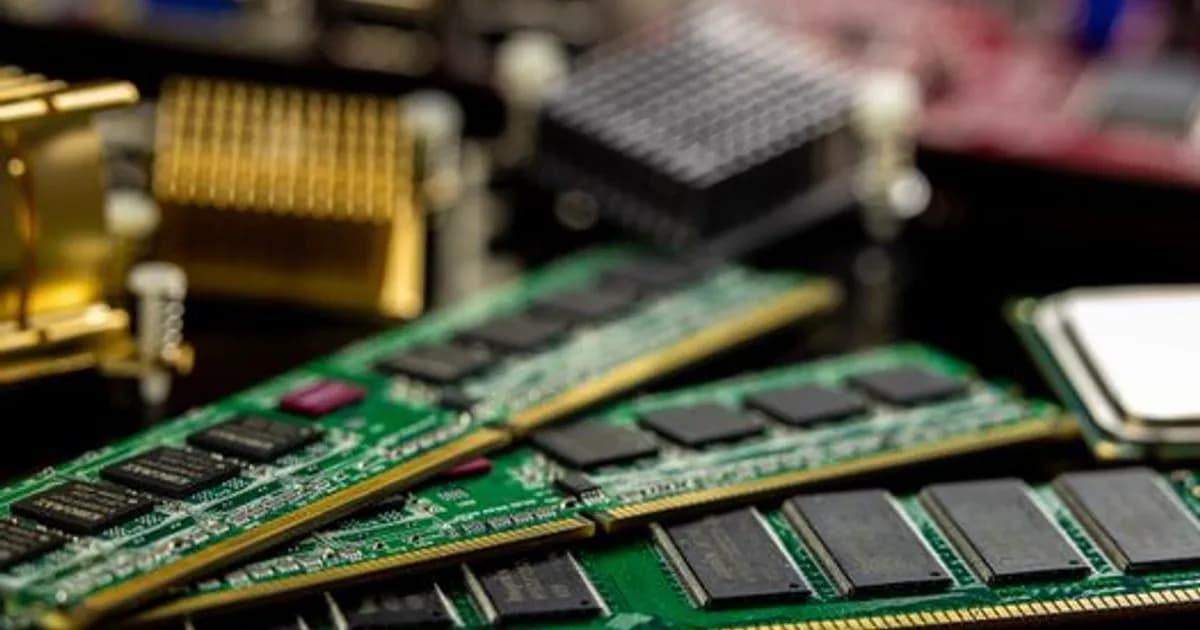
AI Memory Chip Shortage in 2026: The Next Hardware Bottleneck
The AI memory chip shortage has overtaken raw GPU availability as the most pressing hardware constraint on AI infrastructure expansion in 2026. While GPU production capacity has scaled significantly over the past two years, high-bandwidth memory (HBM) — the specialized memory that sits directly on AI accelerator packages — has not kept pace, creating a bottleneck that's now shaping which companies can actually deploy the compute they've ordered.
This isn't a story about chip designers running out of ideas. It's a story about a manufacturing process — stacking memory dies with through-silicon vias to build HBM — that is genuinely harder to scale quickly than logic chip production, even with massive capital investment flowing into the category.
Why HBM Is the Bottleneck, Not Just GPUs
Modern AI accelerators pair a logic chip (the actual processor) with HBM stacked directly on the same package, providing the memory bandwidth that large model training and inference require. Unlike standard DRAM, HBM production involves precise 3D stacking of multiple memory dies connected through microscopic vertical interconnects — a process with lower yields and more complex quality control than conventional chip manufacturing.
Only a small number of manufacturers produce HBM at the volumes and quality AI accelerators require, and expanding that capacity means building entirely new fabrication lines, not just running existing ones harder. That capacity expansion takes years, not quarters, which means the current shortage was largely locked in by capacity planning decisions made well before AI demand reached its current scale.
Who's Affected Most
The shortage doesn't affect all AI infrastructure buyers equally:
- Large cloud providers and frontier labs with long-term supply agreements and the capital to pre-pay for future HBM allocation have secured priority access, insulating them somewhat from spot shortages
- Mid-size AI companies and startups building their own infrastructure face the longest wait times and the least negotiating leverage on pricing and delivery timelines
- Consumer electronics and other non-AI sectors that also depend on advanced memory — high-end gaming graphics cards, premium smartphones — have seen memory costs rise as manufacturers prioritize the higher-margin AI accelerator market
This dynamic has accelerated the broader compute access disparity already covered in AI Compute Shortage in 2026: GPU Demand and Supply Reality — memory scarcity compounds the GPU access gap rather than existing as a separate, independent constraint.
How This Connects to the Broader Hardware Race
The major AI chip makers are responding by deepening direct partnerships with the limited set of memory manufacturers, in some cases taking equity stakes or signing multi-year exclusive supply agreements to lock in capacity ahead of competitors. This has reshaped competitive dynamics covered in The AI Hardware Battle in 2026: Who Is Challenging NVIDIA's Grip and NVIDIA Blackwell GPUs in 2026: AI Performance Benchmarks Explained, since a chip design's real-world performance increasingly depends on guaranteed memory supply as much as the logic architecture itself.
Some AI chip startups challenging incumbent designs have specifically marketed memory-efficient architectures that reduce HBM requirements per unit of compute, framing memory scarcity as an opportunity to compete on efficiency rather than raw bandwidth. More on this competitive angle is in AI Chip Startups Challenging NVIDIA's Dominance in 2026.
Pricing and Timeline Impact
HBM pricing has risen meaningfully as demand has outstripped supply, and that cost increase flows directly into the price of AI accelerators and, ultimately, into cloud GPU rental costs for end customers. Lead times for new HBM-equipped accelerator orders have stretched well beyond historical norms for chip industry order-to-delivery timelines, forcing companies planning large training runs to factor hardware delivery uncertainty into their roadmaps in a way that wasn't necessary just a few years ago.
Industry analysts tracking semiconductor supply chains, including those at TrendForce, have published ongoing capacity expansion forecasts suggesting meaningful relief is still multiple years away given the lead time required to bring new HBM fabrication capacity online.
The Geopolitical Layer
HBM manufacturing is concentrated in a small number of facilities, heavily clustered in regions already subject to export control regimes and geopolitical tension over advanced semiconductor technology. This concentration means the memory shortage isn't purely a supply-and-demand story — it's also entangled with export restrictions, government subsidy programs aimed at diversifying manufacturing locations, and the broader strategic competition over advanced chip capability between major economic powers.
Governments in several regions have responded with direct subsidies aimed at building domestic advanced memory manufacturing capacity, recognizing that dependence on a small number of overseas facilities for a now-critical AI input represents a strategic vulnerability beyond just a commercial supply problem. These subsidy-driven capacity expansions are underway but, like commercially funded expansion, face the same multi-year timeline before producing meaningful additional output.
What Companies Are Doing About It
Faced with constrained and expensive HBM supply, AI infrastructure buyers are pursuing several mitigation strategies: signing longer-term supply contracts to lock in future allocation despite the upfront commitment risk, investing in model architectures and inference techniques that reduce memory bandwidth requirements per query, and in some cases accepting older-generation accelerators with less cutting-edge performance simply because supply is more available.
The Bottom Line
The AI memory chip shortage in 2026 has become the binding constraint on AI infrastructure scaling in ways that raw GPU production increases haven't been able to solve, because the bottleneck sits in a different, harder-to-scale part of the manufacturing chain. Relief depends on memory manufacturers bringing genuinely new fabrication capacity online, a process that's underway but still years from resolving the gap.
Companies planning AI infrastructure investments should treat memory supply, not just GPU availability, as a primary planning constraint — securing supply commitments early and building architectural flexibility into their plans rather than assuming hardware delivery timelines that matched pre-shortage expectations.
Comments
Loading comments...