
The AI Hardware Battle in 2026: Who Is Challenging NVIDIA's Grip
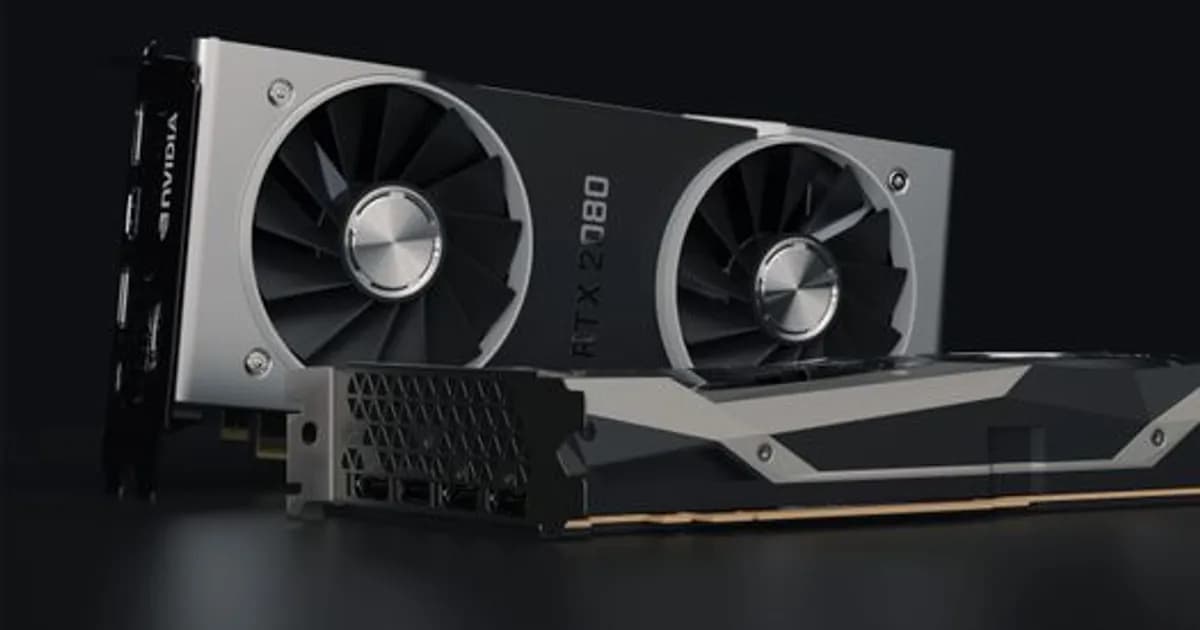
The AI Hardware Battle in 2026: Who Is Challenging NVIDIA's Dominance
NVIDIA's H100 and H200 chips defined the AI hardware landscape for the past few years, and the company's market capitalization has reflected that dominance. But 2026 looks different. A serious set of challengers has emerged — from established chip companies to well-funded startups to the hyperscalers themselves — and the AI compute market is becoming genuinely competitive for the first time.
Here's where the battle stands and what it means for AI development costs and capabilities.
Why NVIDIA Still Leads
First, let's be clear about NVIDIA's position. Despite intense competition, NVIDIA's Blackwell architecture remains the performance leader for most AI training workloads. The H200 and B200 GPUs deliver better raw FLOPS-per-dollar for large-scale model training than any currently shipping alternative, and NVIDIA's CUDA software ecosystem represents a years-long competitive moat that hardware specs alone can't bridge overnight.
See our earlier analysis of NVIDIA Blackwell GPU performance for benchmark details.
But NVIDIA's lead is narrowing, and more importantly, the overall market is large enough that competitors don't need to beat NVIDIA to win significant business.
AMD's Serious Comeback
AMD's MI300X accelerator launched in late 2023 and has been steadily gaining traction, particularly for AI inference workloads (running trained models, as opposed to training them). In 2026, AMD's MI350 has closed the gap further, and its ROCm software stack — long the weakest link in AMD's AI story — has improved to the point where developers can migrate from CUDA without prohibitive friction.
Key AMD wins in 2026: Microsoft Azure has significantly expanded MI300X availability, and AMD has landed several large-scale inference contracts where the economics made it competitive with NVIDIA offerings.
AMD is not beating NVIDIA at training flagship frontier models, but for inference at scale — where many businesses actually spend their AI compute budget — it's a credible option.
Intel's Gaudi 3 and the Long Game
Intel's Gaudi 3 accelerator has had a rocky road to adoption, but Intel has positioned it as a value option for enterprises that want to reduce NVIDIA dependence. Gaudi 3 delivers roughly 60–70% of the raw performance of comparable NVIDIA GPUs at a significantly lower price — which is a reasonable tradeoff for many inference workloads.
Intel is playing a long game, investing in the broader AI ecosystem and positioning for the inference market as it scales. Its acquisition of AI networking technology and its foundry partnerships give it angles that AMD lacks.
The Hyperscalers Build Their Own
The most disruptive development in AI hardware isn't from traditional chip companies — it's from the major cloud providers building custom silicon:
Google's TPU v5e is now widely deployed in Google Cloud and has become a genuine alternative for training transformer models, particularly when optimized for the specific architectures Google uses internally.
Amazon's Trainium 2 powers a growing portion of AWS's own AI services and is available to customers through AWS at pricing that undercuts NVIDIA-based options for compatible workloads.
Microsoft's Maia 2 chip, used internally for some Azure AI services, represents Microsoft's hedge against GPU supply constraints and cost.
Apple's M4 Ultra continues to make on-device AI increasingly capable — not a data center chip, but relevant for the growing on-device AI market.
These chips don't have to outperform NVIDIA to be strategically important. By giving hyperscalers an alternative for their most predictable workloads, they reduce NVIDIA pricing power significantly.
Startups Worth Watching
A cohort of AI chip startups has survived the funding winters and is now delivering products:
Cerebras has placed its gigantic wafer-scale chips in several national labs and research institutions. Its architecture is genuinely different from GPU-based approaches and excels at certain model types, particularly sparse models.
Groq is focused on inference speed rather than training throughput. Its Language Processing Unit (LPU) architecture delivers extremely fast inference for specific model sizes — useful for applications where latency is critical.
d-Matrix and Etched are building inference-specialized chips designed specifically for transformer architectures — a bet that transformer-based models will be dominant long enough to justify purpose-built hardware.
For a detailed look at these startups and their market positions, see our AI chip startups analysis.
What This Means for AI Costs
Competition in AI hardware is translating into falling prices in specific segments:
- Cloud inference costs have fallen 40–60% over the past 18 months as AMD and hyperscaler chips compete with NVIDIA for inference workloads
- On-device AI capabilities continue to improve without increased cost as mobile chipmakers integrate more capable AI accelerators
- Training frontier models at scale remains expensive, but spot instance pricing and alternative hardware options have created more flexibility
The cost trajectory is favorable for AI developers and businesses. GPU shortage anxiety that dominated 2024 has eased as capacity has expanded and alternatives have emerged.
The Outlook
NVIDIA will likely remain the leader for cutting-edge training through 2026 and into 2027. But the competitive landscape for inference — where most AI application spend actually lives — is becoming multi-vendor in a meaningful way.
For businesses planning AI infrastructure, the practical implications are:
- Don't assume NVIDIA-only for inference workloads — benchmark your specific use case across providers
- Cloud pricing for AI compute is negotiable and competitive; shop actively
- The on-device AI trajectory means some workloads will migrate away from cloud entirely
The AI hardware battle is good for everyone who buys compute. The monopoly phase of AI hardware appears to be over.
Want to follow the AI chip race closely? Our newsletter covers hardware developments, pricing changes, and performance benchmarks weekly — subscribe below.
Comments
Loading comments...