
AI in Maritime Shipping 2026: How Ports Get Smarter
AI in Maritime Shipping 2026: How Ports Get Smarter
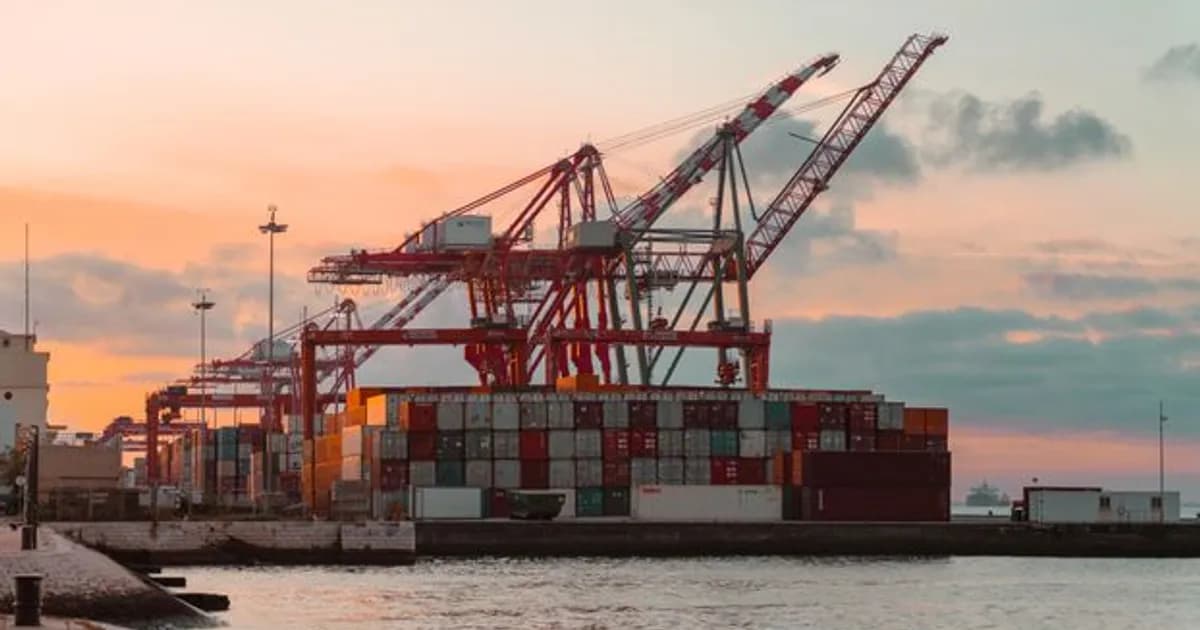
A container ship sitting idle at anchor costs its owner money every hour it waits for a berth. That simple fact explains why AI in maritime shipping 2026 has become one of the more consequential, if unglamorous, applications of AI in global trade. Ports from Rotterdam to Singapore to Los Angeles are running AI systems that schedule berths, allocate cranes, and predict equipment failures before they cause a shutdown.
None of this is about autonomous ships taking over the seas just yet. It's about squeezing delay out of a system where even small inefficiencies multiply across thousands of vessel calls a year.
Berth Scheduling and Crane Allocation
Vessel turnaround time—how long a ship sits in port before it can leave again—is one of the most closely watched metrics in shipping, because every extra hour in port is an hour the vessel isn't earning revenue elsewhere. AI scheduling systems now model dozens of variables simultaneously: vessel arrival windows, tidal conditions, crane availability, yard congestion, and labor shift patterns.
Major terminal operators have adopted AI-driven berth planning that adjusts in near real time as conditions change, rather than relying on fixed schedules built days in advance. When a vessel runs late or a crane goes down for maintenance, the system can re-sequence the whole day's plan rather than leaving terminal staff to manually rework it.
The practical effect for shippers is more predictable transit times, which matters enormously for industries running just-in-time inventory models. This ties directly into broader AI in Supply Chain 2026 efforts, where port delays are often the least visible but most disruptive link in a global shipping chain.
Predictive Maintenance on Ships and Equipment
Cranes, conveyor systems, and ship engines generate huge amounts of sensor data that mostly went unused until recently. AI models trained on that data can flag developing mechanical problems—a bearing running hot, a hydraulic system showing unusual pressure patterns—well before they cause a breakdown.
This shift from scheduled to predictive maintenance has tangible benefits:
- Fewer unplanned equipment failures that block a berth or yard lane for hours
- Lower maintenance costs since parts get replaced based on actual wear rather than a fixed calendar
- Better safety outcomes, since equipment failures at ports can be genuinely dangerous for dockworkers
Shipowners are applying the same approach to vessel engines and onboard systems, using AI to flag maintenance needs before a ship reaches port so repairs can be scheduled rather than discovered as an emergency mid-voyage.
Computer Vision for Container Inspection
Manually inspecting every container for damage, improper stacking, or hazardous material mismarking is slow and inconsistent across different inspectors. Computer-vision systems mounted at gate entries and on cranes now scan containers automatically, flagging dents, leaks, door seal issues, and mismatched documentation faster than a human visual check.
This doesn't replace customs and safety inspectors, but it does triage which containers need a closer human look. Ports running these systems report catching damage and discrepancies earlier in the process, before a problem container gets buried deep in a stack where it's expensive to access again.
Route Optimization and Fuel Savings
Fuel is one of the largest operating costs in shipping, and AI-driven route optimization has become a meaningful lever for cutting it. Models that combine weather forecasting, ocean currents, and vessel-specific performance data can suggest routes and speed adjustments that avoid rough weather and reduce fuel burn without missing arrival windows.
This connects closely to advances covered in AI Weather Forecasting in 2026, where faster and more accurate AI weather models are feeding directly into shipping route decisions. A route that avoids a developing storm system isn't just safer—it usually burns less fuel than punching straight through rough seas.
Shipping companies are under real pressure to cut emissions as international rules tighten, and the International Maritime Organization has continued pushing decarbonization targets for the industry. AI route optimization is one of the more immediately actionable tools operators have to make progress against those targets without new vessels or engines.
Supply Chain Visibility for Shippers
For companies shipping goods, knowing exactly where a container is and when it will actually arrive has historically been harder than it should be. AI-powered tracking platforms now combine vessel position data, port congestion estimates, and historical transit patterns to give shippers more reliable arrival predictions than the static schedules carriers used to publish.
This visibility matters most when a delay happens. Instead of finding out a shipment is late only when it fails to show up, AI tracking can flag a developing delay—a port congestion spike, a missed connection—days in advance, giving logistics teams time to adjust downstream plans. Retailers and manufacturers managing complex last-mile delivery operations depend on this upstream visibility to plan inventory and avoid stockouts.
AI in Maritime Shipping 2026: Friction Points That Remain
The picture isn't entirely smooth. Three friction points keep coming up across the industry:
-
Labor concerns. Dockworker unions in several countries have pushed back hard on automation at ports, arguing that AI-driven scheduling and equipment is a step toward reducing headcount rather than just improving efficiency. Strikes and contract disputes over automation clauses have occurred at major ports, and this tension isn't going away as AI adoption deepens.
-
Cybersecurity risk. As ports network more systems together—scheduling, crane control, gate systems, vessel tracking—the attack surface grows. A port's operations can be brought to a near standstill by a well-targeted cyberattack on its terminal operating system, and several ports have experienced disruptive incidents in recent years that exposed how interconnected and exposed these systems have become.
-
Regulatory fragmentation. Port authorities operate under different national rules, and there's no single global standard governing how AI systems should be validated, audited, or made interoperable across borders. A shipping line calling at ports in a dozen countries deals with a dozen different approaches to AI-driven operations, which slows adoption of fully integrated systems across a vessel's full route.
These aren't reasons to dismiss the technology, but they're real constraints on how fast it spreads and how evenly it's adopted across the industry.
Conclusion
AI in maritime shipping 2026 is delivering real, measurable improvements—shorter vessel turnaround times, fewer equipment failures, better fuel efficiency, and more reliable supply chain visibility for shippers. The technology is mature enough now that the conversation has shifted from "does this work" to "how do we deploy it fairly and securely across a fragmented, unionized, and only partially regulated global system."
If you're involved in shipping, logistics, or port operations, the near-term opportunity is in the parts of this technology that are already proven: predictive maintenance, route optimization, and supply chain visibility tools that don't require waiting for global regulatory alignment. Start a pilot with a vendor in one of those areas and measure the turnaround-time or fuel-cost impact directly—the data will make the case for further investment far more convincingly than any industry forecast.
Comments
Loading comments...