
AI Healthcare Diagnostics in September 2026: An Update
AI Healthcare Diagnostics in September 2026: What's Actually Being Used
AI healthcare diagnostics in September 2026 has moved substantially from controlled trials and regulatory submissions to actual clinical deployment. The FDA's AI medical device approval pathway has processed more submissions in the past 24 months than in the prior decade, and major health systems have moved from piloting AI diagnostic tools to operationalizing them as standard of care for specific clinical workflows.
This is worth distinguishing from earlier cycles of AI in healthcare that generated headlines but limited clinical impact. The current wave has regulatory clearance, prospective clinical evidence, and active deployment in systems that treat real patients.
Where AI Diagnostics Is Deployed in Practice
Radiology: The Most Mature Deployment Area
Radiology remains the area where AI diagnostic deployment is deepest and the evidence base strongest. AI tools are cleared and actively used for:
Chest X-ray interpretation: AI analysis of chest X-rays to detect pneumonia, lung nodules, cardiomegaly, and pleural effusion is standard in many radiology departments. Systems that prioritize worklist ordering — putting the most urgent cases at the top for radiologist review — have shown clear impact on turnaround time for time-sensitive findings.
CT screening: AI for CT lung cancer screening has been adopted widely in screening programs. FDA-cleared systems analyze low-dose CT scans and characterize nodules, providing risk stratification that helps clinicians and patients make decisions about follow-up workup.
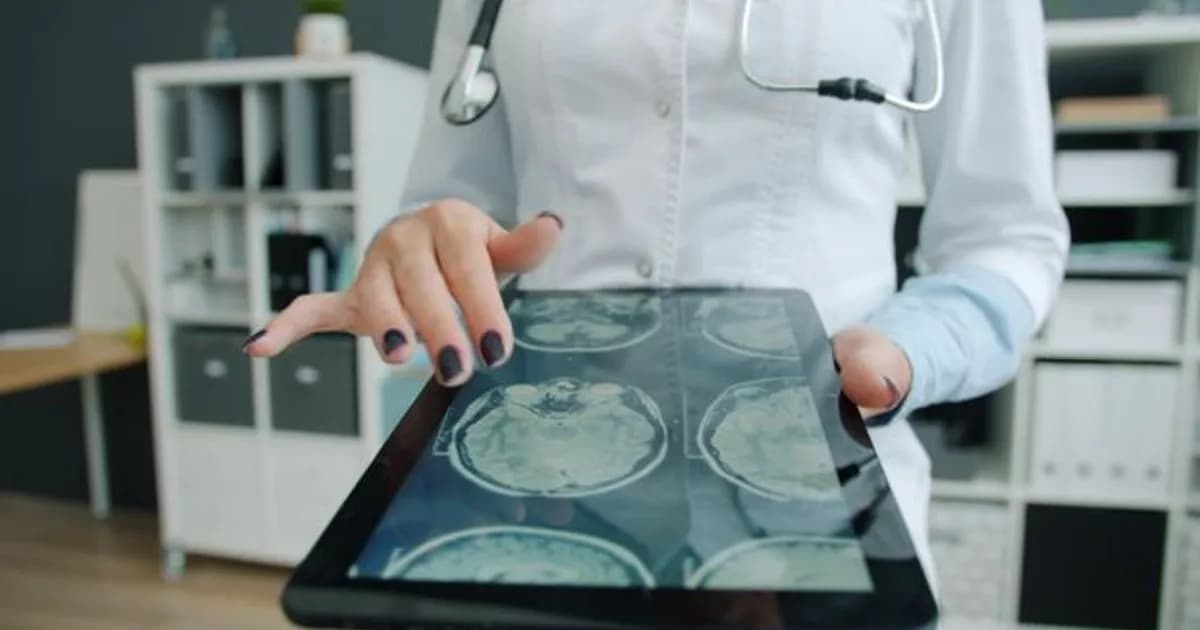
Brain imaging: AI analysis of brain MRI and CT for stroke detection, hemorrhage identification, and treatment planning (including identification of patients likely to benefit from mechanical thrombectomy) has become standard in many emergency imaging workflows. The evidence base here is particularly strong because the time-sensitivity of stroke treatment makes speed of accurate interpretation directly measurable in outcomes.
Mammography: AI second-read systems for mammography screening are deployed in European health systems more broadly than in the US, where regulatory pathways have been more conservative. The evidence for AI mammography reducing false negatives while not substantially increasing false positive rates has accumulated.
The pattern across radiology deployments is consistent: AI is most effective as a decision-support tool that helps radiologists prioritize, detect findings they might miss in high-volume workflows, and provides a second opinion layer — not as a replacement for radiologist interpretation.
Pathology: Digital Pathology Plus AI
Digital pathology — scanning tissue slides to create high-resolution digital images — has been the enabling technology that makes AI pathology diagnostics possible. AI analysis of digital pathology slides is now cleared and deployed for:
- Cancer grading: AI systems for prostate cancer grading (Gleason scoring) have been validated against pathologist performance and are in use at major academic medical centers.
- HER2 and biomarker scoring: Quantitative biomarker scoring in tumor samples — determining whether a tumor expresses specific treatment-relevant proteins — is an area where AI brings reproducibility advantages over manual scoring.
- Rare cell detection: Finding rare abnormal cells in a slide — a task that is tedious and subject to human fatigue — is well-suited to AI, which maintains attention uniformly across a slide.
Digital pathology adoption is still uneven — the infrastructure investment to digitize pathology workflows is substantial, and many pathology labs, particularly community hospitals, remain on traditional analog workflows. But academic medical centers and large health systems have moved meaningfully toward digital pathology, and AI tools are being deployed as that transition happens.
Primary Care: Early-Stage but Growing
AI diagnostic tools in primary care settings are less mature than in specialist imaging, but early deployments are underway:
Retinal imaging: AI analysis of retinal photographs for diabetic retinopathy screening is one of the earliest AI diagnostics to reach deployment, and programs have now run for several years. The evidence base is solid: AI can accurately screen for diabetic retinopathy in a primary care or pharmacy setting without a specialist ophthalmologist, increasing access to screening for at-risk patients.
Dermatology AI: AI analysis of skin lesion images for melanoma risk has been cleared in several markets. Deployment models range from dermatologist decision support to direct-to-patient smartphone tools for initial screening.
Cardiac risk prediction: ECG-based AI tools that detect cardiac conditions — including atrial fibrillation, heart failure, and hypertrophic cardiomyopathy — from standard ECGs are cleared and increasingly deployed. Some of these tools detect conditions that trained cardiologists would miss on standard ECG interpretation, because the AI detects subtle patterns associated with underlying pathology even when the ECG looks normal to human reviewers.
The Evidence Base
The clinical evidence for AI diagnostic tools in 2026 is better than it was two years ago, but still heterogeneous in quality:
What the evidence shows:
- Sensitivity improvements for time-critical diagnoses (stroke, cardiac events) where AI speeds detection
- Reduced missed diagnoses in high-volume workflows where AI provides a safety net
- Improved reproducibility for subjective assessments like cancer grading
- Extended access to specialist-level analysis in settings where specialists aren't available
Evidence gaps that remain:
- Most studies show technical performance (how well AI detects a finding) better than clinical outcome evidence (does AI use lead to better patient outcomes?)
- Long-term performance in clinical deployment versus controlled trial conditions
- Performance across diverse patient populations, including populations underrepresented in training data
- Clear understanding of how AI changes physician behavior and decision-making — sometimes in beneficial ways, sometimes not
The FDA's evolving approach to AI medical device regulation now includes requirements for post-market surveillance that should help fill evidence gaps over time, as deployed tools report real-world performance.
Concerns That Haven't Gone Away
Algorithmic Bias
AI diagnostic tools trained predominantly on data from certain patient populations can perform differently on patients whose characteristics differ from the training distribution. Skin tone effects on dermatology AI, chest X-ray model performance variations across different imaging equipment, and racial performance disparities in cardiac AI have all been documented in the literature.
Health systems deploying AI diagnostics in 2026 are increasingly evaluating tools for subgroup performance before deployment — but this practice is not yet universal, and bias auditing of deployed AI remains more aspirational than standard practice in many community hospital settings.
Liability and Clinical Responsibility
The legal and ethical framework for clinical responsibility when AI is involved in a diagnosis is still developing. When AI recommends a finding and a physician acts on that recommendation incorrectly, who bears liability? When AI misses a finding and a physician misses it too, how is responsibility allocated?
These questions don't have settled answers in most jurisdictions, which creates clinical and legal uncertainty for health systems and physicians using AI tools.
Over-reliance
Automation bias — the tendency to defer to automated systems even when the system is wrong — is a genuine concern in clinical AI. Studies have shown physicians can over-rely on AI outputs, detecting fewer findings on their own when AI provides assessments, even when the AI is intentionally incorrect. Designing AI systems that enhance human judgment rather than substitute for it is an active area of human factors research in clinical AI.
What's Coming
Near-term developments in clinical AI diagnostics to watch:
- Multimodal AI: Systems that integrate imaging, pathology, genomic, and clinical data to provide more comprehensive diagnostic assessment than any single modality allows
- AI for rare disease: AI trained to detect rare conditions that individual physicians rarely encounter — potentially extending the diagnostic reach of primary care
- Continuous monitoring AI: Real-time AI analysis of ICU monitoring data, wearable sensor streams, and outpatient continuous monitoring devices
AI healthcare diagnostics in September 2026 is a field that has made genuine clinical progress while retaining genuinely hard unsolved problems. The tools that have reached deployment work, the evidence continues to accumulate, and the regulatory framework is maturing. The harder questions — about equity, liability, and human-AI collaboration — remain works in progress.
Comments
Loading comments...