
AI in the Food Industry 2026: Smarter Production to Plate
AI in the Food Industry 2026: Smarter Production to Plate
The food industry feeds eight billion people through a system of extraordinary complexity — farms, processing facilities, distribution networks, retailers, and restaurants operating across climate zones, regulatory environments, and supply chains that span continents. Every step is a potential point of failure. AI is working across this entire system, from detecting defects on production lines to personalizing menus for individual dietary needs.
The economic stakes are high. Food waste alone costs the global economy over $1 trillion annually. Safety failures cost far more in recalls, legal liability, and human harm. AI that can reliably reduce those numbers has enormous commercial value, which is why investment in food AI has accelerated sharply.
Quality Control and Food Safety
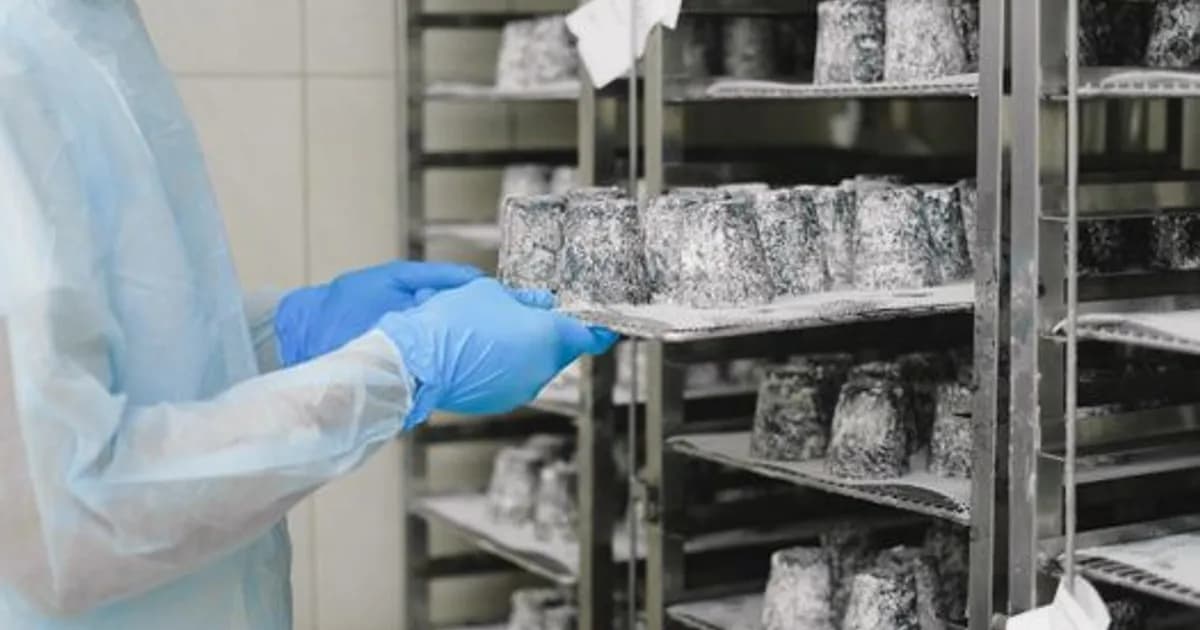
One of the clearest early wins for AI in food production is computer vision for quality inspection. Processing lines move too fast for human inspectors to reliably catch every defect — and human attention degrades over long shifts. Computer vision systems can inspect products at full line speed, continuously, with consistent accuracy.
Deployed applications include:
- Produce grading: Automated sorting of fruits and vegetables by size, color, defect presence, and ripeness. Major agricultural processors have deployed systems that sort produce at speeds no human team could match, with defect detection rates that exceed manual inspection.
- Packaged goods inspection: Vision systems check fill levels, seal integrity, label placement, and foreign object detection on high-speed packaging lines.
- Meat processing: AI systems detect bone fragments, fat content distribution, and pathogen indicators in real-time during processing.
The food safety application is particularly high-stakes. Companies like Marel and JBT have integrated AI inspection into processing equipment, with systems that can detect contamination indicators before food leaves the facility.
Predictive Shelf Life and Waste Reduction
Food waste is one of the largest solvable problems in the food system. A significant portion of waste occurs at retail and foodservice — not because food has spoiled, but because retailers can't accurately predict demand and manage inventory precisely enough to avoid overordering.
AI is attacking this from multiple directions:
Demand forecasting: Grocery chains including Walmart, Kroger, and Tesco have deployed AI systems that incorporate weather, local events, historical patterns, and real-time sales data to generate hyper-local demand forecasts. Better forecasts mean less overordering and less food disposed of before it can be sold.
Dynamic pricing: AI-powered markdown systems automatically reduce prices on perishables approaching their sell-by date, giving consumers a price incentive to purchase products that would otherwise be wasted.
Freshness prediction: Computer vision systems can assess produce ripeness non-invasively, giving retailers and distributors more accurate shelf life estimates and enabling better routing decisions — directing items with shorter remaining shelf life to nearby locations rather than distant distribution centers.
Some restaurant chains are using AI to optimize prep quantities — analyzing historical order patterns to prepare exactly enough of each menu item rather than preparing in advance and discarding unsold food at closing.
AI in Agricultural Production
The connection between farming and the food industry is where AI in agriculture (covered in depth here) meets downstream processing. Several developments are specifically relevant to the food supply chain:
- AI soil and crop analysis tools allow farmers to optimize inputs — fertilizer, water, pesticides — to maximize yield while reducing costs and environmental impact
- Predictive harvest scheduling tools give processors better advance notice of crop availability, improving production planning
- Climate-adaptive crop recommendation systems help farmers shift toward varieties better suited to changing growing conditions
The net effect on food supply stability is significant. AI-assisted agriculture is reducing the volatility in supply that creates price spikes and processing challenges downstream.
Restaurant Technology
The restaurant industry has seen several waves of technology adoption, and AI is the current wave:
Kitchen operations: AI systems analyze order patterns to optimize prep timing, reducing both food waste from over-preparation and wait times from under-preparation. Brands including McDonald's and Chipotle have deployed AI kitchen management tools.
Ordering and personalization: AI-powered ordering systems can suggest menu items based on past orders, dietary restrictions, or seasonal preferences. Several fast-casual chains have implemented conversational AI for drive-through ordering, with voice AI handling routine orders and passing complex requests to human operators.
Staff scheduling: AI scheduling tools analyze historical traffic patterns, current reservation data, and local event calendars to optimize staff levels — reducing both understaffing during rushes and overstaffing during slow periods.
Supply chain management: AI tools help restaurant operators manage perishable ingredient inventory more precisely, reducing waste and ensuring availability.
Food Safety Monitoring and Traceability
Foodborne illness outbreaks are expensive and dangerous. AI is improving both prevention and response:
Real-time monitoring: IoT sensors connected to AI platforms monitor temperature, humidity, and other conditions throughout cold chains. Deviations trigger alerts automatically, enabling intervention before safety thresholds are breached.
Traceability: Blockchain combined with AI is enabling faster trace-back when contamination is identified. What used to take days to trace from consumer illness back to source farm can now be accomplished in hours, limiting the scope of recalls and reducing harm.
Predictive risk: AI systems that analyze supply chain data can identify high-risk lots — shipments from suppliers with recent inspection failures, products that traveled through temperature-compromised logistics — before they reach consumers.
Personalized Nutrition at Scale
Consumer interest in personalized nutrition — eating in ways tailored to individual health goals, genetic profiles, and metabolic characteristics — has created demand for AI applications that weren't possible at scale before.
Companies like Zoe (UK-based, focused on gut microbiome) and DayTwo (focused on glycemic response) use AI to analyze individual metabolic responses to foods and generate personalized dietary recommendations. These approaches are moving from research into consumer products, though the evidence base for highly personalized nutrition interventions is still developing.
At a less complex level, apps like Cronometer and MyFitnessPal are using AI to make nutritional tracking easier — automatically identifying foods from photos, suggesting appropriate portions, and flagging dietary patterns that diverge from stated health goals.
Supply Chain Resilience
The food supply disruptions of the early 2020s — pandemic-related logistics failures, extreme weather affecting harvests, geopolitical disruptions to commodity markets — drove investment in AI tools for supply chain resilience. The question of AI supply chain risk management is directly relevant to food companies managing complex international sourcing.
AI tools that can model alternative sourcing scenarios, assess supplier risk, and simulate the downstream effects of supply disruptions are now widely deployed among major food companies. The ability to respond quickly when a key supplier faces problems has become a competitive differentiator.
The Path Forward
The food industry's AI adoption is uneven — large processors and national restaurant chains are well ahead of small farms, independent restaurants, and regional distributors. Cost and technical complexity remain barriers for smaller operators, though these are declining as cloud-based AI tools become more accessible.
The fundamental value proposition — less waste, higher quality, better safety, more personalization — is clear enough that adoption will continue accelerating. The companies that have built data infrastructure and AI capabilities in their operations are already seeing measurable advantages in efficiency and risk management.
Food is too important, and too complex, to leave its future to intuition and tradition alone.
Comments
Loading comments...