
AI in Finance September 2026: What's Actually Changing
AI in Finance September 2026: What's Actually Changing
AI in finance and trading in September 2026 is no longer experimental. It is embedded infrastructure at large financial institutions — present in trading systems, fraud detection, credit decisioning, compliance monitoring, and increasingly in retail investor-facing products. The shift from "AI pilot programs" to "AI as operational reality" is more complete in financial services than in almost any other industry.
Here's what's actually happening across the major application areas in September 2026.
AI's Role in Finance: An Overview
The financial services industry has moved faster on AI adoption than most industries for a straightforward reason: the value of marginal improvements in accuracy and speed is directly and immediately measurable in dollars. A fraud detection system that catches 1% more fraud, an underwriting model that prices risk more accurately, a trading algorithm that executes 50 milliseconds faster — each improvement has a clear financial value.
That said, the sector has also moved carefully, pushed by regulatory scrutiny and the consequences of getting it wrong. The AI in finance that exists in September 2026 is, for the most part, AI that has been validated, tested, and audited before deployment. The headline AI failures in finance have largely shaped the deployment practices of the industry rather than deterring adoption.
Importantly, for insurance applications AI has also become central. See our coverage of AI in insurance underwriting in 2026 for how closely related financial services are using similar techniques.
Algorithmic Trading: Where AI Stands
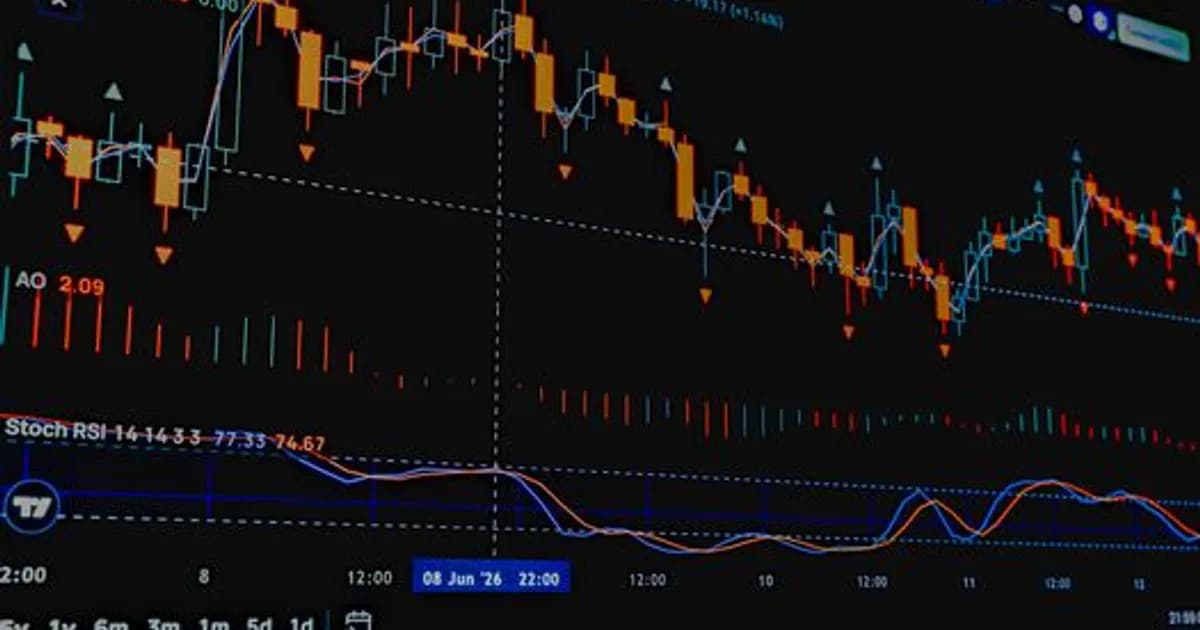
AI-enhanced algorithmic trading in September 2026 operates across multiple layers:
Execution: AI optimizes trade execution — breaking large orders into smaller pieces, timing execution to minimize market impact, and adapting to real-time market conditions. This has been standard practice at major institutions for several years.
Signal generation: Machine learning models process vast amounts of alternative data — satellite imagery, credit card transaction data, social media sentiment, supply chain data — to generate trading signals. The models have gotten better at synthesizing heterogeneous data sources, and the competition for new data sources is intense.
Risk management: Real-time AI risk models monitor portfolio exposures across hundreds of dimensions simultaneously, flagging potential risks faster than human risk managers could review.
Natural language processing for news: AI systems read and process financial news, earnings call transcripts, regulatory filings, and analyst reports in milliseconds, extracting signals that inform trading decisions.
The edge from AI in trading is real but competitive. Because most large institutions are using similar techniques, the returns to AI-based trading strategies tend to compress over time as they become widespread. The advantage goes to firms that develop proprietary data sources and model architectures faster than competitors.
AI for Fraud Detection: Where It Stands
Fraud detection is arguably AI's most mature and successful application in financial services. The gains have been substantial:
- Transaction fraud detection systems using machine learning now operate at sub-second latency across billions of transactions daily
- False positive rates (legitimate transactions declined as potentially fraudulent) have decreased substantially, improving customer experience
- Novel fraud patterns are detected faster, with models adapting to emerging attack techniques without requiring full retraining
In September 2026, fraud detection AI is dealing with a new challenge: AI-generated fraud. Deepfake audio used to impersonate customers in phone banking, AI-generated synthetic identities used to open fraudulent accounts, and AI-crafted phishing that evades traditional filters have all become more prevalent.
The response from financial institutions has been layered AI-based detection: models specifically trained to detect AI-generated content, voice biometrics that can identify synthetic audio, and anomaly detection focused on behavioral signals that AI identity fraud struggles to mimic convincingly.
For broader context on how AI fraud and deepfake detection is evolving, see AI deepfakes and detection in 2026.
Retail Investor Tools Using AI
The availability of AI-powered tools for individual investors has expanded significantly in 2026. Several categories have reached mass-market adoption:
AI-powered portfolio analysis: Tools that analyze a retail investor's portfolio for concentration risk, sector exposure, and alignment with stated goals are now available through major brokerage platforms as standard features.
Research summarization: AI that distills earnings calls, analyst reports, and 10-K filings into plain-language summaries has democratized access to research that previously required either paying for expensive research products or spending hours reading source documents.
Personalized financial planning: AI-powered financial planning tools that account for individual tax situations, risk tolerance, and financial goals are available through banks and independent fintech apps. These are not generic calculators — they model complex scenarios and adapt recommendations dynamically.
Automated tax optimization: Tax-loss harvesting and other optimization strategies that wealth management firms have offered to high-net-worth clients are now automated and available at lower account thresholds.
The regulatory question around AI financial advice — whether AI-generated investment recommendations constitute regulated financial advice — is still being worked out. Most current tools are carefully designed to provide information and analysis without crossing into regulated advice territory.
Risk and Compliance AI Applications
Compliance is a high-volume, high-stakes use case where AI has delivered clear value. In September 2026:
Anti-money laundering (AML): AI has substantially improved the accuracy of AML monitoring, reducing the enormous false positive rate that plagued rule-based systems and overwhelmed compliance teams with alerts that turned out to be legitimate transactions. Machine learning models flag genuinely suspicious patterns more accurately.
Know Your Customer (KYC): AI-powered document verification and identity checking has accelerated customer onboarding while maintaining compliance standards. What used to take days in manual review now takes minutes.
Regulatory reporting: AI systems that monitor transactions and automatically prepare regulatory filings have reduced compliance costs and error rates for routine reporting obligations.
Contract review: AI that reviews financial contracts — loan documents, derivatives documentation, custody agreements — for regulatory compliance has become standard in legal and compliance departments at major institutions.
The Regulatory View on AI in Finance
Financial regulators worldwide have taken active positions on AI in financial services in 2026. The EU AI Act's high-risk requirements explicitly cover AI in credit scoring, insurance, and other financial applications.
US regulators — the SEC, CFTC, OCC, and Federal Reserve — have all issued guidance or proposed rules touching on AI. The common themes across regulatory positions:
- Model governance and validation requirements
- Explainability obligations for adverse decisions affecting consumers
- Vendor risk management for third-party AI
- Documentation and audit trail requirements
- Board-level oversight of AI risk
For financial institutions, the compliance posture on AI is becoming as important as the capability posture. Regulators are increasingly asking not just whether an AI system works, but whether the institution can explain how it works, who is accountable for it, and what controls govern its behavior.
The companies that have built AI governance frameworks ahead of regulatory requirements are finding it a competitive advantage as well as a compliance necessity. The institutions that are scrambling to document AI they've already deployed are finding it harder and more expensive to establish the record that regulators are starting to expect.
Comments
Loading comments...