
AI Energy Demand August 2026: Data Center Crisis
AI Energy Demand August 2026: Data Center Crisis
AI energy demand in August 2026 has become one of the defining infrastructure stories of the decade. Data centers training and running AI models are consuming electricity at a scale that's straining regional power grids, reshaping energy investment, and forcing difficult questions about AI's environmental footprint.
The numbers are large, the problems are real, and the solutions being pursued are both innovative and controversial.
How Big Is AI's Electricity Appetite?
Data centers globally consumed roughly 1-2% of total electricity several years ago. AI's explosive growth has pushed that figure substantially higher, with AI-related workloads contributing a disproportionate share of the increase because AI training and inference are computationally intensive per unit of output.
In regions with high concentrations of data centers — parts of Virginia, Texas, Ireland, and Singapore — the electricity demand from AI infrastructure has triggered grid capacity warnings. Utilities that had planned capacity years out are now in emergency procurement of additional power.
The challenge is compound: demand is growing faster than new power generation can be brought online. Power plants take years to build. Transmission lines take years to permit and install. AI infrastructure can be deployed in months.
The Nuclear Pivot
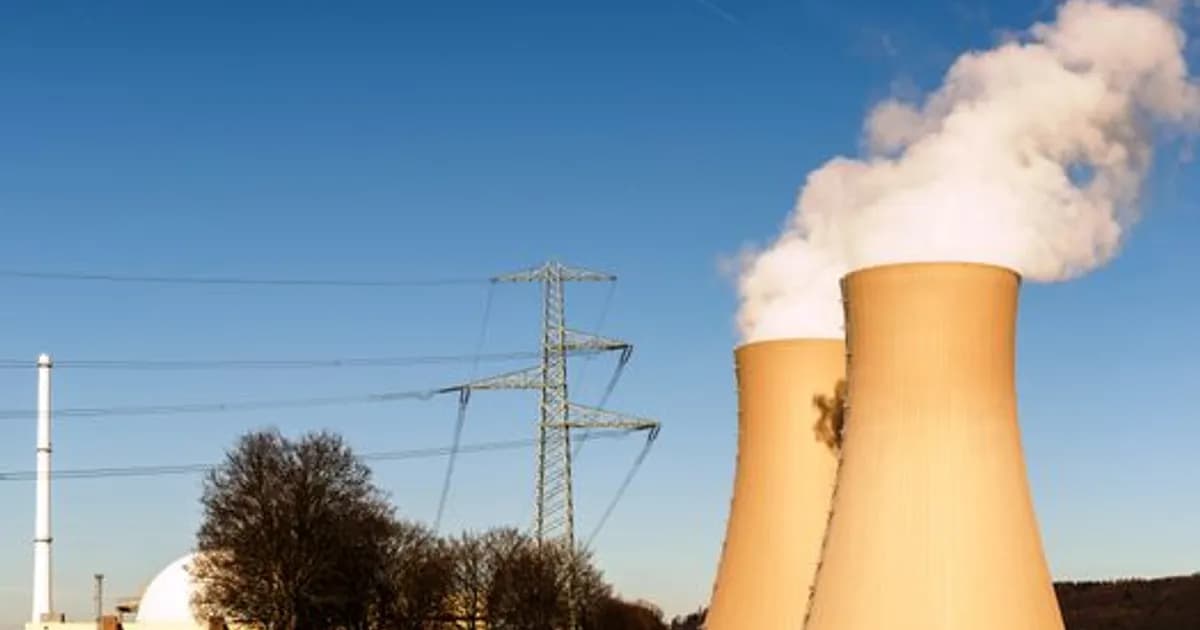
The most significant development in AI energy news this August is the acceleration of investments in nuclear energy by major AI companies. The logic is compelling: nuclear power provides high-density, reliable, carbon-free electricity without the variability that makes wind and solar challenging as sole data center power sources.
AI companies have moved from interested observers to active investors and power purchase agreement signers. Specific arrangements include:
- Long-term power purchase agreements with existing nuclear plants
- Investment in nuclear plant restarts and life extensions
- Direct investment in new nuclear development, including next-generation reactor designs
- Small modular reactor (SMR) development partnerships
The nuclear pivot is not without controversy. Nuclear construction timelines are long, costs are high, and waste storage remains a political challenge. But from the perspective of AI companies that need gigawatts of reliable power in the next decade, nuclear has attributes that other carbon-free sources can't easily match.
For more on AI's nuclear energy investments, see AI nuclear energy in 2026.
Grid Strain: Regional Case Studies
Northern Virginia remains the global epicenter of data center density. The region hosts a significant fraction of the world's hyperscale data center capacity, and the electricity grid has been under sustained pressure. Transmission projects are being fast-tracked, but the timeline gap between demand and new supply is measured in years.
Texas presents a different picture. ERCOT, the Texas grid, operates independently and has seen AI data center development accelerate. Abundant wind and natural gas generation has provided headroom, but peak demand events — heat waves in particular — create stress that AI data center load amplifies.
Ireland and the EU have faced serious concerns about data center electricity demand relative to national and regional supply. Some jurisdictions have imposed moratoriums or restrictions on new data center permits, creating a regulatory constraint on AI infrastructure growth in Europe.
Singapore and Southeast Asia are seeing rapid AI data center development alongside serious constraints on land and electricity. The city-state has been selective about new data center approvals.
Efficiency: The Other Side of the Equation
The AI energy demand story is not only about consumption growing — it's also about efficiency improving. AI compute efficiency has improved at a rate that partially offsets raw demand growth.
Model efficiency: The same AI capability that required a large model in 2024 can now be delivered by a smaller, faster, cheaper model in 2026. Distillation techniques, quantization, and architectural innovations have dramatically improved performance-per-watt.
Inference optimization: Specialized inference chips and software optimizations mean that serving AI models to users is more efficient than running the same workloads on earlier hardware.
Data center efficiency: Power Usage Effectiveness (PUE) — the ratio of total data center power to computing power — has improved at the best-in-class facilities, with advanced cooling and power distribution reducing waste.
Chip advances: Each successive generation of AI chips delivers more compute per watt. Chip efficiency has improved faster than most forecasters expected.
But the efficiency gains have been outpaced by demand growth. More efficient AI means more AI deployed at larger scale — a rebound effect common to efficiency improvements in technology.
Water: The Overlooked Resource
Data center cooling uses substantial amounts of water, and AI data centers — with their high heat output — are particularly water-intensive. In regions already facing water stress, AI data center development is generating serious community concern.
Cooling technology alternatives — including air cooling, immersion cooling in dielectric fluid, and closed-loop water systems that don't consume municipal water — are being deployed. But the transition is slow and expensive, and many older data centers use evaporative cooling that does consume water.
Water usage in data centers is increasingly scrutinized by local governments and community groups when new data center permits are sought. For more on this dimension, see AI data center water use in 2026.
What AI Companies Are Doing
Major AI infrastructure operators are responding to energy demand concerns through multiple paths:
Renewable energy investment: Long-term power purchase agreements for solar and wind at scale, with battery storage to partially address variability.
Geographic diversification: Building data center capacity in regions with more available power, including the US Midwest, Scandinavia, and parts of the Middle East.
Demand response programs: Agreeing to curtail non-critical workloads during grid stress events in exchange for favorable long-term rate structures.
On-site generation: Some large facilities are pursuing their own generating capacity — including natural gas peakers, fuel cells, and eventually nuclear — to reduce grid dependence.
Efficiency mandates: Internal programs requiring engineers to hit compute efficiency targets before new infrastructure is approved.
The Policy Debate
AI energy demand has become a policy issue in August 2026:
- Several US states are developing AI data center specific energy requirements and incentives
- The EU is incorporating AI infrastructure energy use into sustainability reporting frameworks
- Calls for AI energy disclosure requirements — how much electricity does training a given model require? — are gaining support from environmental groups
- Some researchers argue for compute efficiency standards, requiring AI systems to meet minimum performance-per-watt benchmarks
The policy picture is evolving quickly, and AI companies are actively engaged in shaping it. For more on AI energy policy, see AI energy consumption 2026: data center overview.
Looking Ahead
The AI energy situation in August 2026 is not a crisis that will be quickly resolved. New power generation, transmission, and data center capacity all have long lead times. The gap between AI electricity demand growth and supply expansion will persist for years.
The practical implications:
- Electricity costs will remain a significant factor in AI deployment economics
- Geography will matter more for AI infrastructure — power availability shapes where data centers get built
- Efficiency will be a competitive advantage — companies that can do more with less compute gain a structural cost edge
- Policy risk is real — energy-related regulation could constrain AI data center development in some jurisdictions
For organizations planning AI infrastructure: Factor energy cost and availability into your data center strategy. The cheapest GPU in the wrong region could cost more in electricity than cheaper compute in a power-rich location. See AI data center innovation in 2026 for the latest in infrastructure approaches.
Comments
Loading comments...