
AI Data Center Water Use in 2026: The Hidden Real Cost
AI Data Center Water Use in 2026: The Hidden Real Cost
A new AI campus in the desert Southwest can drink as much water as a town of 10,000 people. That's not a hypothetical — it's the math behind cooling systems built to keep thousands of GPUs from overheating. As AI data center water use climbs alongside the industry's energy appetite, it's no longer a side issue buried in sustainability reports.
In June 2026, a Guardian analysis found that roughly two-thirds of the 809 data centers planned across the United States — 517 facilities — are slated for areas that experienced drought within the past year. That overlap between AI's physical footprint and water-stressed regions is exactly why this fight has escalated so fast. Communities that once welcomed data centers for tax revenue and jobs are now showing up at zoning hearings to ask a blunter question: where is the water actually coming from?
Why Cooling AI Hardware Takes So Much Water
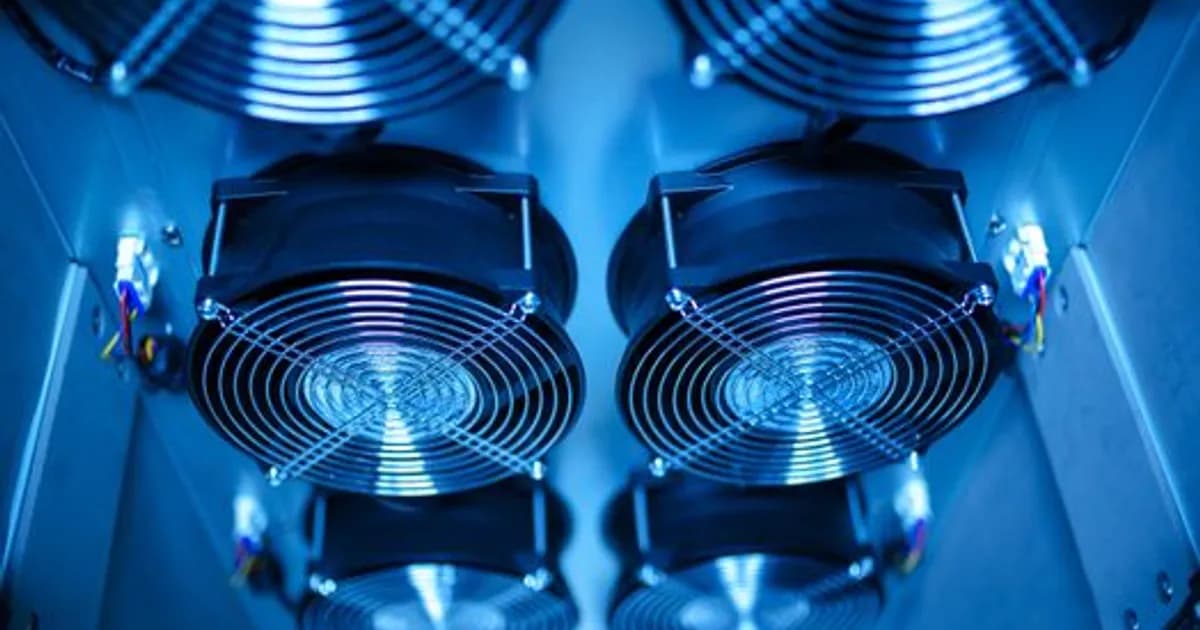
Training and running large AI models generates enormous heat. Modern GPU racks running dense AI workloads pack far more compute — and far more thermal output — into the same footprint as traditional servers, so cooling has become the binding constraint on how fast facilities can scale.
The cheapest, most common solution is evaporative cooling: water absorbs heat and evaporates into the air, similar to how sweat cools skin. It's effective and inexpensive, but it consumes water outright rather than just borrowing it. A single large AI training run can evaporate millions of gallons over its lifecycle, and that water doesn't return to the local supply.
This is the same engineering tradeoff explored in AI Data Center Cooling in 2026: Solving the Heat Crisis — operators are constantly balancing thermal performance against resource cost, and water has historically won on price even when it loses on sustainability.
The Numbers Behind AI's Water Footprint
Exact figures vary by company and methodology, but the scale is becoming clearer as disclosure improves. Some reference points from 2026 reporting:
- Amazon disclosed using 2.5 billion gallons of water across its data centers in a single recent year.
- Meta's owned-site water usage rose 51% between 2020 and 2024, climbing from 3,726 to 5,637 megaliters, according to its environmental reporting.
- Global data center water demand tied to AI is projected to approach a footprint comparable to the basic annual domestic water needs of over a billion people by 2030, per United Nations University researchers.
Those numbers are hard to verify independently because most hyperscalers report water use in aggregate, across owned facilities only, excluding the leased or under-construction sites where much of the AI buildout is actually happening. Critics call this reporting gap a "black box" — you can't manage what you don't disclose, and right now disclosure is inconsistent across the industry.
Drought-Prone Regions Are Pushing Back
The friction isn't theoretical anymore. Data Center Watch tracked more than 75 data center projects worth roughly $130 billion blocked by local opposition in the first quarter of 2026 alone — matching the total number of projects blocked across all of 2025 combined.
The pattern repeats across drought-affected regions: a hyperscaler proposes a facility, the local utility approves a water allocation, and residents discover the numbers only after construction is underway. In Uruguay, a 2023 drought that depleted Montevideo's freshwater reserves to the point where tap water became unsafe to drink coincided directly with plans for a large, water-intensive data center, fueling public anger that outlasted the original controversy.
In the American Southwest and parts of Texas, similar standoffs are playing out over groundwater rights that predate the AI boom by decades. Farmers and municipal water boards are now negotiating — sometimes in court — with companies whose water needs didn't exist five years ago. This is precisely why community water fights are increasingly mentioned in the same breath as grid strain in coverage of AI energy consumption in 2026; the two resource constraints are converging on the same projects, often the same week.
What Hyperscalers Are Actually Doing
To their credit, the largest cloud providers have moved beyond vague pledges into concrete engineering changes, even if rollout is uneven.
Microsoft has committed to becoming water-positive by 2030, meaning it aims to replenish more water than it consumes globally. Its next-generation closed-loop cooling design — first piloted at facilities in Phoenix, Arizona and Mount Pleasant, Wisconsin — eliminates evaporative water loss entirely by recirculating the same coolant in a sealed loop. According to Microsoft, each zero-water facility built this way cuts annual consumption by more than 125 million liters compared to a conventional evaporative design.
Google has focused on transparency and reuse, increasingly tapping reclaimed wastewater and non-potable sources for cooling rather than treated drinking water, and publishing per-facility water metrics that let local communities see actual draw rather than estimates. Meta and Amazon have both said they're shifting newer AI-specific facilities toward closed-loop systems as well, following the same logic: air cooling and liquid-to-liquid heat exchange where climate allows, evaporative cooling only where it's unavoidable.
Common strategies now in deployment or testing across the industry include:
- Closed-loop liquid cooling — coolant is recirculated rather than evaporated, eliminating most ongoing water draw after initial fill.
- Direct-to-chip and immersion cooling — liquid touches hardware directly, which is more efficient per watt of heat removed than air-based systems.
- Air-side cooling — relying on outside air in cooler climates, cutting water use to near zero but limiting where facilities can be built.
- Reclaimed and non-potable water sourcing — using treated wastewater or brackish water instead of municipal drinking supply.
- On-site water recycling loops — treating and reusing gray water within the facility before any discharge.
These approaches connect to broader infrastructure efforts like AI wastewater treatment 2026, where the same AI boom driving water demand is also, somewhat ironically, being used to optimize water treatment and create new non-potable supply for the data centers that need it.
The Limits of the Fixes
Even the best engineering doesn't fully solve the problem. Nvidia published a reference design on June 22, 2026, claiming its next-generation AI data center architecture can run on virtually no water at scale. That's a genuine breakthrough for on-site consumption — but it only addresses water used directly for cooling inside the facility's walls.
The bigger, less visible water cost sits upstream: the power plants generating electricity for these data centers, particularly fossil fuel plants, consume water for their own cooling and steam cycles. Researchers estimate that power-generation water demand accounts for roughly 54% of AI's total projected water footprint through 2050 — a figure that closed-loop data center cooling does nothing to reduce. Lower-water generation sources, including modern reactor designs, are drawing fresh interest as a result, since they can offer stable power with a smaller water footprint per megawatt than legacy fossil plants.
Investors have started pressing on this gap directly. Shareholder proposals filed in early 2026 pushed Amazon, Microsoft, and Google for more granular water and power disclosure, arguing that without site-by-site transparency, sustainability claims can't be independently checked.
Why Water Is Becoming as Contentious as Energy
For years, the AI infrastructure conversation centered almost entirely on electricity — grid strain, renewable targets, nuclear deals. Water flew under the radar because it's harder to meter publicly and less visible in monthly utility bills than a spiking power grid.
That's changing fast. Water is a hyperlocal resource: a data center's power can be sourced from a grid spanning hundreds of miles, but its water typically comes from the watershed it sits in. That makes water scarcity immediate and personal in a way grid strain often isn't — when a well runs dry or a reservoir drops, residents feel it directly, and they know exactly which new neighbor to blame.
Regulatory scrutiny is catching up. Several state legislatures are now drafting disclosure requirements specifically for data center water permits, mirroring the energy reporting rules that emerged a few years earlier. Expect water allocation hearings to become as routine — and as contested — as grid interconnection fights have already become for new AI campuses.
The Bottom Line
AI data center water use has moved from a footnote to a frontline issue, and the trajectory through the rest of 2026 points toward more disclosure requirements, more community opposition, and faster adoption of closed-loop and air-cooled designs as hyperscalers race to defuse the controversy before it slows their buildout. If you're tracking AI infrastructure — as an investor, a builder, or just a concerned resident near a proposed campus — keep an eye on water permits and disclosure filings as closely as you'd watch a power purchase agreement, because water is shaping up to be the next resource fight that decides where, and how fast, AI can actually scale.
Comments
Loading comments...