
AI Emotional Intelligence in 2026: Tools That Read the Room
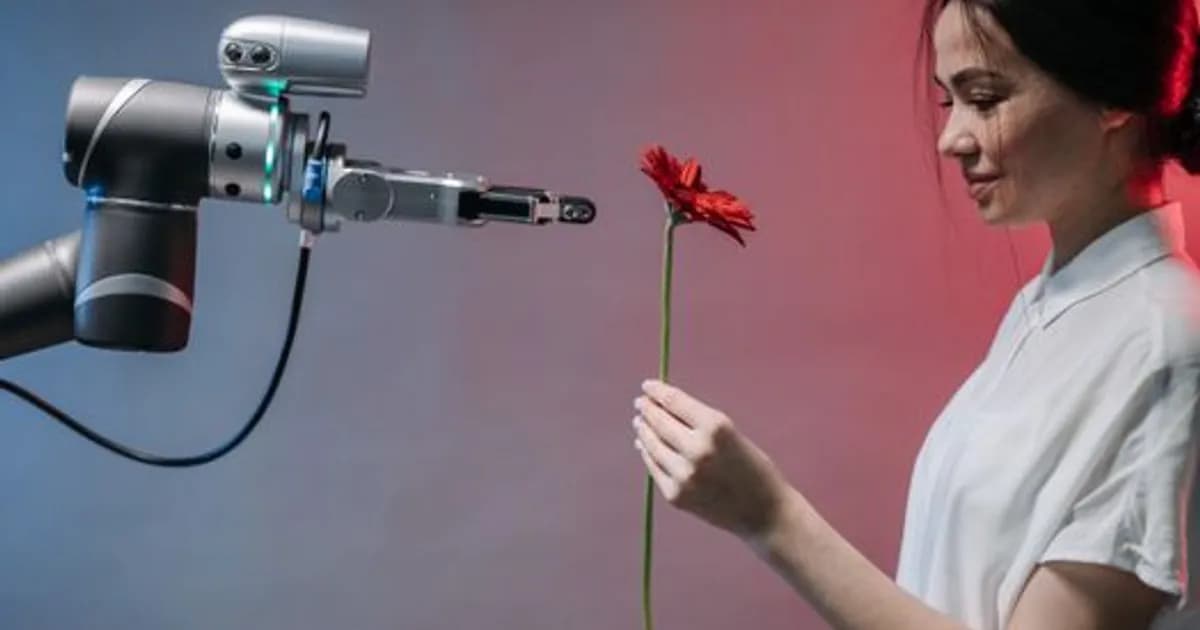
AI Emotional Intelligence in 2026: Tools That Read the Room
AI emotional intelligence is one of the more contested claims in the technology industry, and for good reason. The idea that software can detect how someone is feeling — and respond appropriately — sounds either like a powerful productivity tool or a surveillance risk, depending on your perspective. In 2026, both things are true simultaneously.
The practical capabilities of AI emotional intelligence tools have improved substantially. They're being deployed in customer service, HR, healthcare, and education. Understanding what they actually measure, where they work well, and where they fail is increasingly important for anyone making decisions about AI procurement or workplace deployment.
What Emotional AI Actually Measures
When vendors talk about AI emotional intelligence, they're usually referring to one or more of the following:
- Sentiment analysis — classifying text or speech as positive, negative, or neutral, and identifying specific emotion categories (frustration, satisfaction, etc.)
- Vocal prosody analysis — measuring pitch, tempo, rhythm, and energy in speech to infer emotional state
- Facial expression recognition — detecting and categorizing expressions from video using computer vision
- Physiological signal processing — reading heart rate variability, skin conductance, or other signals from wearable devices
Each of these has different accuracy profiles, use cases, and failure modes. The term "AI emotional intelligence" often bundles several of these into a single system.
What these tools don't measure is genuine emotion. They measure proxies — signals that correlate with emotional states under certain conditions, in certain populations, in certain contexts. That distinction matters enormously for evaluating AI EQ claims.
AI Emotion Detection in Customer Service
Customer service is the most mature deployment environment for AI emotional intelligence tools, and the results are measurable.
Live customer conversations — voice and chat — are analyzed in real time by AI systems that detect frustration, confusion, or escalation signals. The most common application: alerting a human supervisor when a call is likely to escalate, or routing the interaction to a more senior agent.
Several enterprise platforms now embed emotional AI in their customer service suites. Salesforce, Zendesk, and others have integrated sentiment and emotion monitoring into their dashboards, giving team leaders aggregate views of customer emotional states across hundreds of simultaneous interactions.
The documented benefits are real: companies using these systems report faster detection of problems that need human intervention, higher customer satisfaction scores in escalation scenarios, and reduced average handle time on complex cases.
The limitation is that emotional AI in customer service reads stress and frustration better than it reads nuance. A customer who is calmly but persistently dissatisfied may not trigger any alerts. A customer who is animated and emphatic because they're happy may trigger false positives. Calibrating the system to your specific customer base takes time.
HR and Hiring Applications
This is where AI emotional intelligence generates the most controversy.
Some HR platforms offer tools that claim to assess candidate emotional state, personality, or cultural fit during recorded video interviews. The AI analyzes facial expressions, vocal patterns, and word choice to produce scores that hiring managers can factor into decisions.
The Harvard Business Review has covered the scientific validity questions extensively: the correlation between these AI signals and actual job performance is, in most studies, weak. And because the training data for these systems often reflects historical hiring patterns, they risk encoding existing biases about which emotional presentations "look like" a good hire.
Several jurisdictions have moved to restrict this. New York City requires employers to conduct bias audits of AI hiring tools. Illinois requires written consent from candidates before AI video analysis. EU AI Act provisions classify AI used in hiring as high-risk, requiring transparency and human oversight.
The legitimate uses within HR are narrower: monitoring team communication patterns for aggregate wellbeing signals, analyzing customer-facing employees' call quality, and providing real-time coaching to sales and service representatives during live calls. These applications have better evidence bases and less problematic implications.
Healthcare and Mental Health Use Cases
Healthcare is where AI emotional intelligence tools may have the most meaningful near-term impact — and where the validation requirements are appropriately rigorous.
Crisis detection tools analyze text messages, voice calls, or app interactions for language patterns associated with acute mental health distress. When patterns match established indicators, the system alerts a clinician or crisis counselor for review. This is being deployed by crisis hotlines, telehealth platforms, and employee assistance programs.
In primary care settings, AI tools that analyze patient speech during appointments can flag signs consistent with depression, anxiety, or cognitive decline for clinician follow-up. These aren't diagnostic tools — they're triage aids that help clinicians prioritize.
Related: AI Mental Health Apps in 2026: Benefits, Risks, and More covers the consumer-facing version of these tools, which operate in a different regulatory context than clinical deployments.
Accuracy in healthcare applications is held to a higher standard, and rightly so. The best systems in this space have been developed with clinical data, validated in peer-reviewed research, and are positioned as decision support rather than decision replacement.
The Accuracy Problem in Emotional AI
Here's what the research consistently shows about AI emotional intelligence accuracy:
- Sentiment analysis (positive/negative tone) on clear text: reasonably reliable, better than 80% in most benchmarks
- Fine-grained emotion detection from text (distinguishing anger from frustration from disappointment): notably less reliable, often 50-65% accuracy in real-world conditions
- Facial expression recognition: highly sensitive to lighting, camera angle, cultural variation, and individual expression style
- Cross-cultural reliability: almost universally worse than within-group accuracy, with some emotional expressions having significantly different meanings across cultures
These accuracy numbers matter for deployment decisions. A system that's right 70% of the time on an emotionally neutral task is useful. A system that's right 70% of the time on a consequential judgment about a person's emotional state during a hiring interview is something else.
The MIT Media Lab's Affective Computing group, which pioneered much of this research area, has been consistently clear that emotional AI tools require significant contextual calibration to perform reliably — and that population-level accuracy statistics don't predict individual-level accuracy.
Ethical and Privacy Concerns
The privacy implications of AI emotional intelligence warrant direct attention.
When a system monitors facial expressions during a work video call, or analyzes vocal patterns in employee communications, or tracks sentiment in internal messaging, it creates data about employees that those employees may not fully understand is being collected.
The asymmetry of this data collection — employers and platforms have it, individuals often don't know exactly what's being captured or inferred — creates power dynamics worth taking seriously. Clear disclosure, data minimization, and strong access controls are baseline requirements for any responsible emotional AI deployment.
For users interacting with emotional AI as consumers, the important questions are: what signals are being measured, how is the data stored, who has access to the inferences, and how are those inferences used to make decisions that affect you?
AI Data Privacy 2026: What AI Collects and How to Stay Safe covers the broader framework for evaluating these questions across AI products generally.
How to Evaluate AI Emotional Intelligence Tools
If you're evaluating AI EQ tools for business deployment, here's a practical framework:
- Ask for validation data: request peer-reviewed studies or third-party audits showing accuracy on a population similar to your use case
- Test on your data: accuracy on benchmark datasets rarely translates directly to accuracy in your specific environment
- Assess bias: specifically evaluate performance across demographic groups — gender, age, ethnicity, language background
- Define the use case narrowly: emotional AI works better as a triage signal than as a definitive assessment
- Plan for human review: AI emotional intelligence should route decisions to humans, not replace human judgment in consequential situations
The tools that perform best in 2026 are those deployed with clear scope, human oversight built into the workflow, and regular performance audits. The ones that cause problems are those positioned as objective truth machines rather than imperfect signal detectors.
AI emotional intelligence in 2026 is genuinely useful in the right applications. Getting the applications right is still the harder part.
Comments
Loading comments...