
AI in Education: Personalized Learning in September 2026
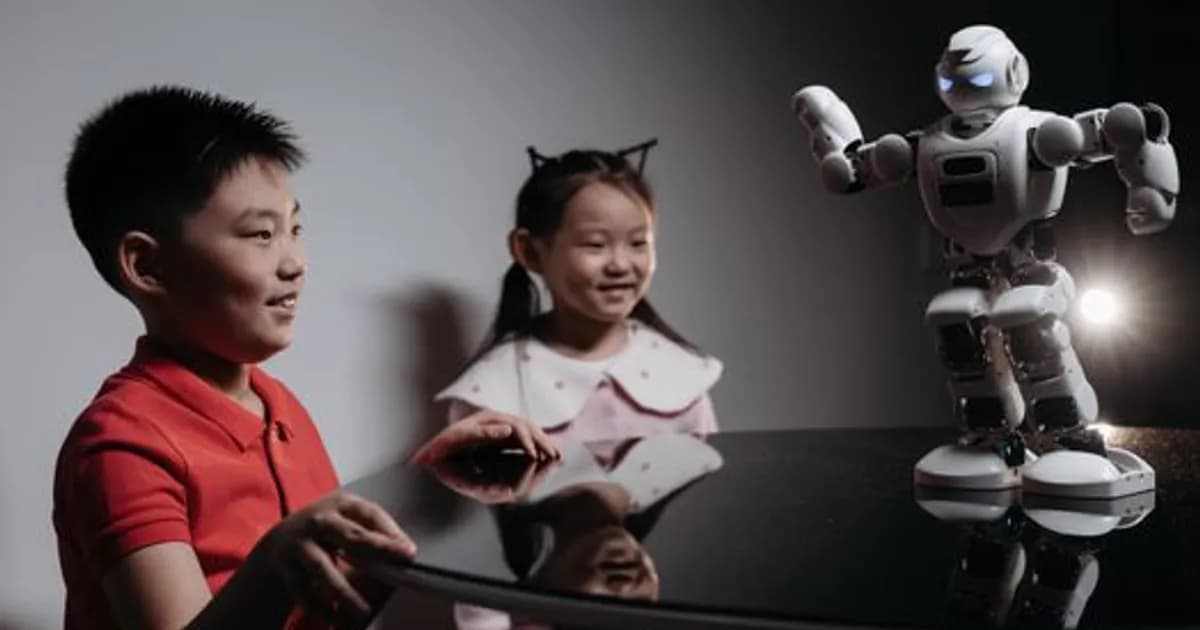
AI in Education: Personalized Learning in September 2026
AI personalized learning in September 2026 has moved from a collection of startup experiments to a feature present in the platforms that serve millions of students daily. The capability to adapt instructional content, pacing, and approach to individual student needs — once a goal that required expensive one-on-one tutoring — is now a design expectation for major educational technology platforms.
Whether that capability is being realized effectively, equitably, and at the scale the edtech industry claims is a more complicated question.
The Vision vs. the Reality of AI Personalization
The promise of AI-driven personalized learning has been stated consistently for years: every student gets instruction tailored to their current knowledge, learning pace, and areas of struggle, approximating the effectiveness of an expert human tutor at scale and accessible cost.
The 2026 reality is that AI personalization in education has made genuine progress toward this vision while falling meaningfully short of its more ambitious claims:
What's working: Adaptive practice and assessment — where AI serves students questions calibrated to their demonstrated knowledge level and adjusts based on responses — is the best-validated application of AI personalization. Systems that implement this well improve learning outcomes on measurable assessments, particularly in mathematics and reading fluency. The evidence base here is reasonably solid.
Where it's more complicated: The more ambitious vision of AI that personalizes the explanatory approach, not just the difficulty level — adapting how concepts are explained based on a model of the individual student's misconceptions and learning style — has proven harder than the original vision suggested. Most systems do it less effectively than claimed.
Where it's weakest: The full personalized learning vision includes understanding and responding to the affective dimensions of learning — student engagement, frustration, motivation, confidence. AI systems have limited ability to read these signals accurately, and most deployed systems address them poorly.
AI Tutoring: Expanding Access
The most significant practical development in AI education in 2026 is the expansion of AI tutoring access, particularly at the higher education and adult learning levels.
AI tutoring systems powered by frontier large language models can:
- Explain concepts in multiple ways, adapting explanations in response to questions and confusion signals
- Answer student questions about course material at any time
- Guide students through problem-solving processes rather than just providing answers
- Provide detailed feedback on written work
These systems have become standard features in major higher education platforms, supplementing — and for some students, largely replacing — traditional office hours and TA support. Student usage data consistently shows that AI tutoring is heavily used and valued, particularly for students who wouldn't otherwise seek help due to scheduling constraints or social anxiety about asking questions.
Access equity is a genuine benefit: AI tutoring provides tutoring-quality support to students who don't have the resources for private tutoring and who attend institutions without extensive TA support. The evidence suggests this is particularly beneficial for first-generation college students and students from lower-income backgrounds.
K-12 Deployments in 2026
K-12 AI deployment in 2026 is significant in scale — AI tools are present in most school districts in the US and across Europe — but highly variable in quality and implementation:
Mathematics
AI-powered adaptive math practice has the strongest evidence base and widest deployment. Products like Khan Academy's Khanmigo (AI tutoring assistant), Carnegie Learning's MATHia, and several newer entrants use AI to personalize practice and provide tutoring support. Controlled studies of the better-implemented systems show consistent positive effects on math achievement, particularly for students who are behind grade level.
Reading and Writing
AI in reading instruction has focused on fluency practice — AI systems that listen to students read aloud and provide real-time feedback on accuracy and pacing. This is technically feasible and showing promising results in early research.
AI writing tools in K-12 are more contentious. The obvious challenge: if a student uses an AI tool that writes their essay for them, what has the student learned? School districts are navigating policies ranging from prohibition to integration, and the pedagogical approaches for using AI as a writing tool (rather than a replacement for student writing) are still developing.
Science and Social Studies
AI applications in content-area subjects beyond math and literacy are less developed, though AI research tools and adaptive reading comprehension systems are increasingly present.
The Academic Integrity Challenge
The single biggest practical challenge AI has created in education — at all levels — is academic integrity. The ability of students to use AI to complete assignments that are supposed to demonstrate their own understanding has fundamentally disrupted assessment practices.
The response has evolved:
- AI detection tools (of limited reliability and contested fairness across student populations)
- Shift toward in-class, proctored, handwritten assessment for high-stakes evaluation
- Assignment redesign to require personalized, experience-based responses that AI can't convincingly fake
- Explicit integration of AI into assignments, asking students to engage critically with AI-generated content
No single solution has resolved the tension. The education sector is in a sustained period of renegotiating what assessment means when AI can complete most traditional assignments.
Teacher Roles and Professional Concerns
A concern that educators raised early — that AI would be used to reduce teaching staff rather than support teachers — remains live in 2026. The picture is mixed:
Where AI is genuinely supporting teachers:
- Reducing time on administrative tasks (grading routine assignments, generating differentiated materials)
- Providing data on individual student progress that helps teachers target attention
- Making it feasible to maintain individualized learning plans at class scale
Legitimate concerns:
- Some school districts have used AI tools to justify larger class sizes, on the theory that AI provides the individualization that smaller classes used to provide
- The deskilling concern — that teachers who rely heavily on AI curriculum and assessment tools develop weaker professional judgment — is raised by educators and researchers
- Compensation and workload: teacher workloads haven't decreased, but the nature of the work is shifting faster than professional development and compensation structures have adapted
What AI in Education Does Well
To summarize where AI in education is genuinely adding value:
- On-demand tutoring and explanation: Giving students access to patient, available explanation and question-answering, particularly outside school hours
- Adaptive practice: Calibrating difficulty and identifying specific skill gaps in systematic ways that human teachers struggle to maintain for 30 students simultaneously
- Administrative load reduction: Freeing teacher time from routine tasks toward interaction and instruction
- Accessibility: Providing support for students with learning differences (text-to-speech, alternative explanations, pacing flexibility)
- Expanding access: Giving students access to quality educational support resources regardless of family income or school resources
What It Still Can't Replace
AI in education cannot yet replicate:
- The motivational impact of a human teacher who knows a student personally
- Social learning — the deep learning that happens through discussion, debate, and collaboration with peers
- The mentorship dimension of education — guidance about who to become, not just what to know
- The ability to read subtle signals of student confusion, frustration, or disengagement and respond with human judgment
AI-assisted education in September 2026 is most effective when it's understood as a tool that handles routine individualization, provides on-demand support, and frees human teachers to focus on what they do uniquely well. Schools and districts that treat it as a teacher replacement are likely to see the evidence eventually catch up with that decision — negatively.
If you're interested in how AI is transforming professional development in education, our coverage of AI in workplace learning and training explores the parallel developments in corporate learning settings.
Comments
Loading comments...