
AI Continuous Health Monitoring in 2026: Beyond Fitness Trackers
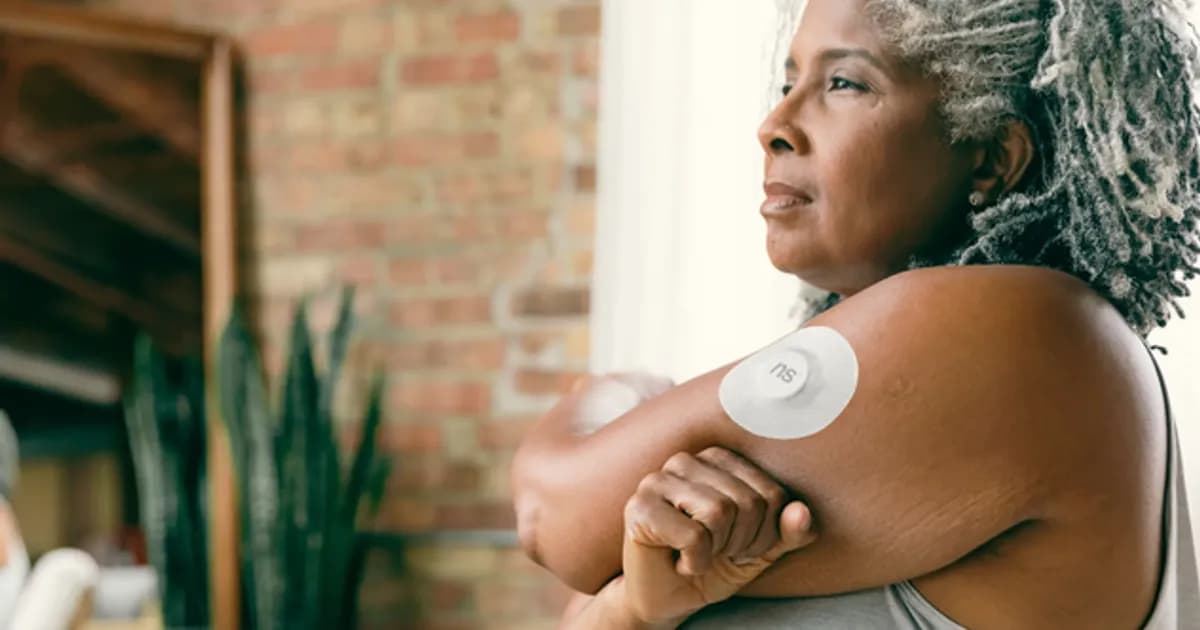
AI Continuous Health Monitoring in 2026: Beyond Fitness Trackers
Fitness trackers measure activity. The new generation of AI health monitoring systems is doing something fundamentally different: continuously modeling your physiology to detect changes that matter clinically before you feel them.
In 2026, the category of AI continuous health monitoring has matured enough that it's no longer fringe technology. Multiple platforms have FDA clearance for specific diagnostic claims. Hospitals are deploying AI monitoring to reduce alert fatigue in clinical settings. And consumer devices are achieving sensitivity levels that were previously limited to clinical-grade equipment.
What Makes This Different From a Smartwatch
A standard smartwatch tracks heart rate, steps, sleep stages, and maybe blood oxygen. The data is useful for awareness and general wellness, but it isn't clinical — meaning it isn't sensitive or specific enough to diagnose conditions or drive clinical decisions.
AI continuous health monitoring systems differ in several ways:
Continuous multi-signal analysis. Rather than spot-checking one signal at a time, these systems analyze multiple physiological signals simultaneously — combining heart rate variability, respiratory rate, skin temperature, electrodermal activity, and movement patterns. The AI model interprets patterns across these signals rather than thresholding individual readings.
Longitudinal baseline modeling. The system learns your normal. An unusual reading matters differently for someone whose baseline is different. AI models that track your individual patterns over weeks and months can detect deviations from your personal normal, not just deviations from population averages.
Predictive alerts, not just event detection. The most meaningful clinical advance is predicting deterioration before it becomes symptomatic. Sepsis detection systems deployed in hospitals can identify patients at risk hours before vital signs deteriorate visibly. Similar approaches are being adapted for outpatient use.
Clinical-Grade Consumer Devices in 2026
Several hardware platforms have achieved meaningful clinical validation:
Apple Watch Series 11 now includes an optical blood glucose monitoring sensor cleared by the FDA for use in people with Type 2 diabetes as a supplementary monitoring tool. It doesn't replace finger-stick or continuous glucose monitors for insulin dosing decisions, but it provides trend data between formal measurements. The AI system learns each user's glucose response patterns over time and generates personalized alerts.
Samsung Health Monitor received clearance for detection of atrial fibrillation episodes with a sensitivity and specificity that meets clinical thresholds. The system runs continuously, flags suspected episodes, and generates a report that users can share with cardiologists for interpretation.
Withings ScanWatch Ultra monitors respiratory rate during sleep with enough precision to flag patterns consistent with sleep apnea and Cheyne-Stokes breathing — both clinically significant findings. Users who receive an alert are directed to share results with a physician, with generated reports designed for clinical interpretation.
Oura Ring (5th generation) has focused on women's health, with AI models that track basal body temperature, heart rate variability, and skin temperature variation to provide cycle phase prediction, ovulation estimation, and early pregnancy temperature shift detection. The AI model personalizes to each user's patterns over several cycles.
Hospital and Clinical Applications
In clinical settings, AI continuous monitoring has moved from pilot programs to standard deployment at major health systems.
Remote Patient Monitoring (RPM) programs use consumer-grade wearables combined with AI analysis to manage chronic conditions — heart failure, COPD, diabetes — between clinical visits. The AI system flags patients whose readings suggest deterioration and routes alerts to care coordinators. Several large health systems report measurable reductions in emergency department visits and hospitalizations for enrolled patients.
ICU monitoring systems from companies like Philips, GE Healthcare, and newer entrants like Seer Medical deploy AI models that continuously analyze multi-parameter ICU data — ventilator parameters, vital signs, lab values, medication administration — and generate risk scores for sepsis, respiratory failure, and other deterioration events. Alert fatigue has been a significant problem in ICUs; well-validated AI triage of alarms reduces clinically irrelevant alerts and focuses nursing attention more effectively.
Post-surgical monitoring using continuous wearables allows earlier hospital discharge for patients recovering from certain procedures. The AI monitors vital signs, activity recovery, and wound-adjacent parameters, escalating to clinical staff when readings suggest complications. Reduced length of stay generates both cost savings and patient satisfaction improvements.
For a broader look at AI in healthcare, see AI in Healthcare 2026.
Privacy and Data Questions
Continuous physiological monitoring generates a category of data that is both highly sensitive and commercially valuable. The privacy questions are real:
- Health data generated by consumer devices may not be covered by HIPAA if the manufacturer isn't a HIPAA-covered entity
- Aggregated de-identified health data from large populations is valuable for pharmaceutical research and insurance risk modeling
- Insurance underwriting use of wearable data is prohibited in most US states but the regulatory framework is still developing
- Employers offering wellness program incentives tied to wearable use create concerns about coercive monitoring
The FDA has issued guidance on what constitutes a regulated medical device in the wearable space, but the boundary between wellness products and medical devices remains contested. The EU's approach under the Medical Device Regulation is stricter, requiring clinical validation for claims that would fall under the wellness exemption in the US.
Consumers using these devices for health information rather than fitness motivation should read privacy policies carefully. Some platforms offer explicit data isolation options; others benefit commercially from the data they collect.
What AI Can and Can't Tell You
AI health monitoring systems are getting very good at detecting patterns in physiological signals. They are not diagnosing you — and the distinction matters.
A system that flags a pattern consistent with atrial fibrillation is providing information that a cardiologist needs to evaluate. It is not confirming you have atrial fibrillation. False positives generate anxiety and unnecessary clinical workup. False negatives create false reassurance. Both are real risks in any screening system.
The best consumer platforms are explicit about this. Their reports are designed for clinical sharing, not self-diagnosis. Their alerts say "consult your doctor" rather than providing a diagnosis. When this framing is not maintained — when platforms make claims that imply diagnosis — they are overstepping both what the technology can do and what regulatory clearance allows.
The population-level implications are also worth understanding: continuous monitoring that reaches tens of millions of people will generate detection of conditions that would previously have remained undetected until symptomatic. Some of those detections will lead to treatment that improves outcomes. Some will lead to treatment of conditions that would never have caused harm — a phenomenon called overdiagnosis. Calibrating which signals are clinically actionable is an active area of research.
Where This Is Heading
The trajectory in AI continuous health monitoring is toward more sensors, better AI models, and tighter integration with healthcare delivery systems.
Non-invasive blood chemistry — continuous monitoring of metabolites beyond glucose — is the next significant frontier. Optical sensing technologies are advancing toward real-time lactate, ketone, and electrolyte monitoring without needles. Several companies are in clinical trials for these capabilities.
Integration with EHR systems is improving. Health systems that previously received wearable data as unstructured PDFs are developing structured data pipelines that feed device data into clinical records automatically, enabling longitudinal trend monitoring by care teams.
AI interpretation layers are getting more sophisticated. Rather than just flagging thresholds, next-generation models are designed to interpret patterns in the context of each patient's clinical history — a reading that looks concerning in isolation may be normal given a medication's known effects, or may confirm a concern that a clinician has been tracking.
The gap between what's being monitored and what healthcare delivery can respond to remains significant. Technology is moving faster than clinical workflow adaptation. The meaningful gains will come from coordinating the monitoring capability with care systems that can respond appropriately to what the monitoring finds.
Consumer health monitoring in 2026 is genuinely more capable than it was three years ago. The appropriate use of that capability — and the clinical and ethical questions it raises — will shape the next phase of development.
Comments
Loading comments...