
AI Drones September 2026: Autonomous Flight Comes of Age
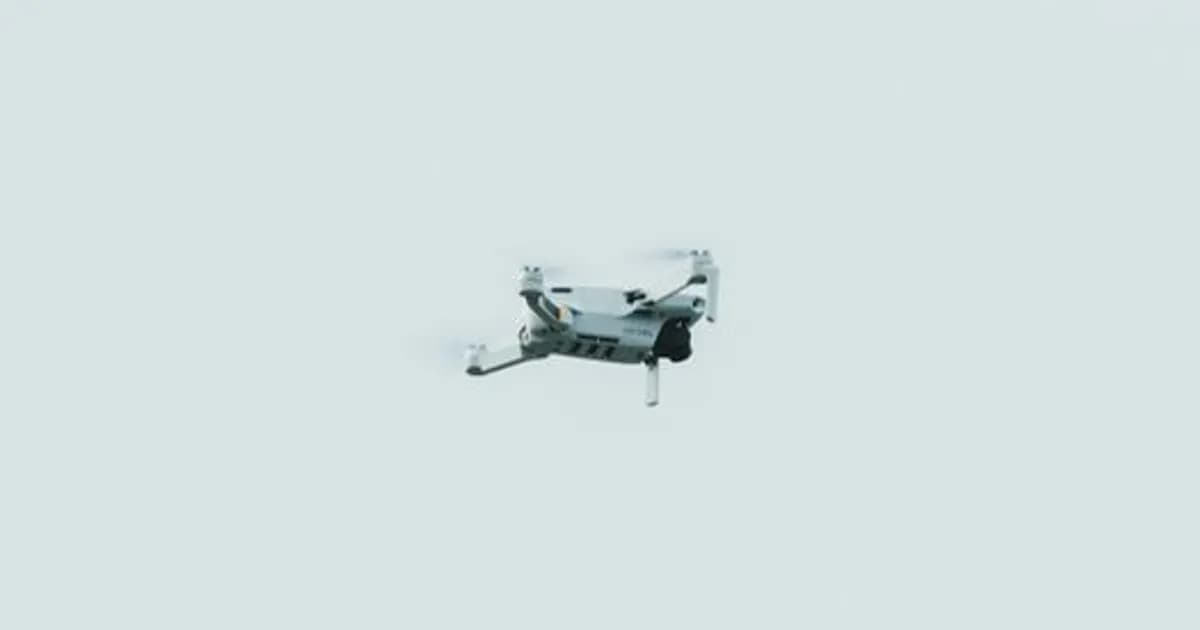
AI Drones September 2026: Autonomous Flight Across Industries
AI autonomous drones in September 2026 have moved from proof-of-concept to operational deployment at scale in several key industries. The combination of improved onboard AI, better sensor fusion, updated regulatory frameworks, and falling hardware costs has unlocked applications that were technically possible but not practically deployable two years ago.
The trajectory is one of expansion and normalization — drones are becoming infrastructure for tasks that previously required manned aircraft, ground vehicles, or simply weren't done at the required frequency and granularity.
Drone Delivery: Real Operations in 2026
Drone delivery has crossed from pilots to scaled operations in specific geographies and use cases:
Suburban residential delivery: Wing (Alphabet), Amazon Prime Air, Zipline, and several regional operators are running regular drone delivery in approved suburban areas of the US, Australia, and parts of Europe. Coverage is expanding incrementally as regulatory approvals and operational experience grow. Same-day delivery of small packages (under 2–4 kg) is available in covered areas.
Medical supply delivery: Zipline's healthcare logistics model — emergency delivery of blood, medications, vaccines, and medical supplies to rural health facilities — has expanded significantly. In Rwanda, Ghana, and now additional markets, Zipline operates logistics that weren't previously possible without costly helicopter infrastructure.
Food and convenience delivery: Hot food and convenience delivery by drone is operational in select suburban markets. The customer experience is genuinely novel — a drone dropping a delivery by cable outside your window in 15 minutes is still remarkable — but coverage is limited.
The technical progress that enabled this: Beyond-visual-line-of-sight (BVLOS) regulatory approval, AI-powered detect-and-avoid systems, improved battery energy density, and acoustic engineering that reduced noise complaints have all progressed enough to make suburban delivery operationally viable.
The main constraints remain: weight limits, weather sensitivity, urban airspace complexity, and the significant regulatory approval burden for new operational areas.
Infrastructure Inspection: High ROI, Widespread Adoption
Infrastructure inspection is the most economically mature drone application, and AI has made it substantially more valuable:
Power line inspection: AI-powered drones flying power transmission and distribution lines autonomously capture imagery and sensor data at regular intervals. AI analysis detects vegetation encroachment, conductor damage, insulator defects, and structural anomalies — all without the cost, scheduling burden, and safety risk of line workers or manned helicopters. Major utilities in North America, Europe, and Asia have deployed at scale.
Wind turbine inspection: Autonomous drones inspect wind turbine blades for erosion, cracks, and damage automatically on scheduled cycles. Computer vision models have been trained specifically on turbine blade defect patterns. The operational economics compare favorably to rope access inspection, especially at offshore wind installations.
Bridge and structure inspection: Computer vision-equipped drones inspecting bridges, buildings, and civil infrastructure are in operational use across transportation departments and engineering firms. AI-assisted defect detection flags concrete cracking, corrosion, and structural anomalies for engineer review.
Oil, gas, and pipeline: Methane detection sensors on autonomous drones provide environmental compliance monitoring and leak detection along pipelines at a fraction of the cost and frequency of manned inspection.
The common thread: AI provides the interpretation layer that converts raw imagery and sensor data into actionable findings, dramatically reducing the manual analysis time that previously made frequent drone inspection impractical even when the flying was cheap.
Agriculture and Environmental Monitoring
Precision agriculture was an early drone AI application and continues to mature:
Crop health monitoring: Multispectral drone imagery with AI analysis identifies plant health, water stress, nutrient deficiency, and pest or disease pressure at field-level resolution. Automated survey flights on scheduled cycles give farmers the equivalent of a detailed field walk over every acre at a fraction of the cost and time.
Targeted spraying: Variable-rate crop protection drone systems that apply pesticides, herbicides, or fertilizers with spatial precision — treating specific areas rather than whole fields — reduce input costs and environmental impact. These systems are commercially deployed and expanding.
Wildlife and conservation monitoring: Autonomous drone surveys for wildlife population monitoring, anti-poaching surveillance, and conservation area management have become standard tools for conservation organizations. AI analysis of imagery enables detection and counting of wildlife at scales previously requiring expensive manned aerial surveys.
Wildfire detection: Early-stage wildfire detection using thermal and AI image analysis from autonomous drone patrols has been piloted in high-risk regions. Detection before a fire escapes the initial site is enormously valuable; AI-powered drone patrols are one approach to the detection problem.
Security and Defense Applications
Autonomous drones in security and defense represent the largest and most rapidly evolving category — and the most ethically complex:
Border and perimeter security: Autonomous drone patrol systems are deployed at national borders, critical infrastructure perimeters, and military installations. These systems detect and track intrusions, providing persistent surveillance coverage that ground-based security cannot match cost-effectively.
Combat and conflict: Autonomous combat drones have become significant factors in military conflicts. The implications for international humanitarian law, accountability in armed conflict, and the escalation dynamics of armed conflict are profound and widely debated. The International Committee of the Red Cross has published extensively on the legal and humanitarian implications of autonomous weapons.
Counter-drone: The proliferation of autonomous drones has created a significant counter-drone market — detection, tracking, and neutralization systems deployed to protect critical infrastructure, airports, prisons, and military assets from unauthorized drone access.
Law enforcement: Police and security services increasingly deploy drones for surveillance, search and rescue, and crime scene documentation. The regulatory and civil liberties implications of persistent aerial surveillance vary significantly by jurisdiction.
The Regulatory Landscape
Regulatory frameworks for autonomous drone operations have developed substantially, though they remain varied across jurisdictions:
In the US, the FAA has established BVLOS operational approval pathways that have enabled scaled deployment by approved operators. The process remains time-consuming and location-specific, which constrains expansion pace.
The EU's U-Space regulatory framework provides a more systematic approach to integrating drone operations into European airspace, with common standards across member states.
Urban air traffic management — coordinating drone traffic in dense urban airspace at scale — remains an unsolved operational challenge that constrains autonomous delivery in cities.
What's Coming in the Next Year
Areas of near-term progress:
Urban delivery expansion: Continuing regulatory progress and operational data from suburban deployments will push toward denser suburban and eventually urban delivery coverage.
Swarm applications: Multi-drone coordinated operation for search and rescue, agricultural coverage, and event monitoring is advancing from research to operational deployment.
Indoor autonomous drones: Warehouse and factory inspection and logistics drones operating fully autonomously inside facilities are in active commercial deployment and expanding.
Longer range and endurance: Battery and hydrogen fuel cell progress is extending drone range and endurance, opening applications that require longer flight times.
For context on AI advances in robotics and autonomy more broadly, see our coverage of AI Scientific Discovery: September 2026 Breakthroughs.
Comments
Loading comments...