
Best AI Chatbots in 2026: Ranked for Every Use Case
Best AI Chatbots in 2026: Ranked for Every Use Case
The AI chatbot market has matured significantly. Where 2023 and 2024 were years of hype and rapid capability jumps, 2026 is about differentiation — each major chatbot has developed a genuine identity and set of strengths. Picking the right one now depends less on "which is smartest" and more on what you actually need it to do.
This guide breaks down the leading AI chatbots by use case, covering what each does best, where it falls short, and who it's for.
ChatGPT — Best All-Around AI Chatbot
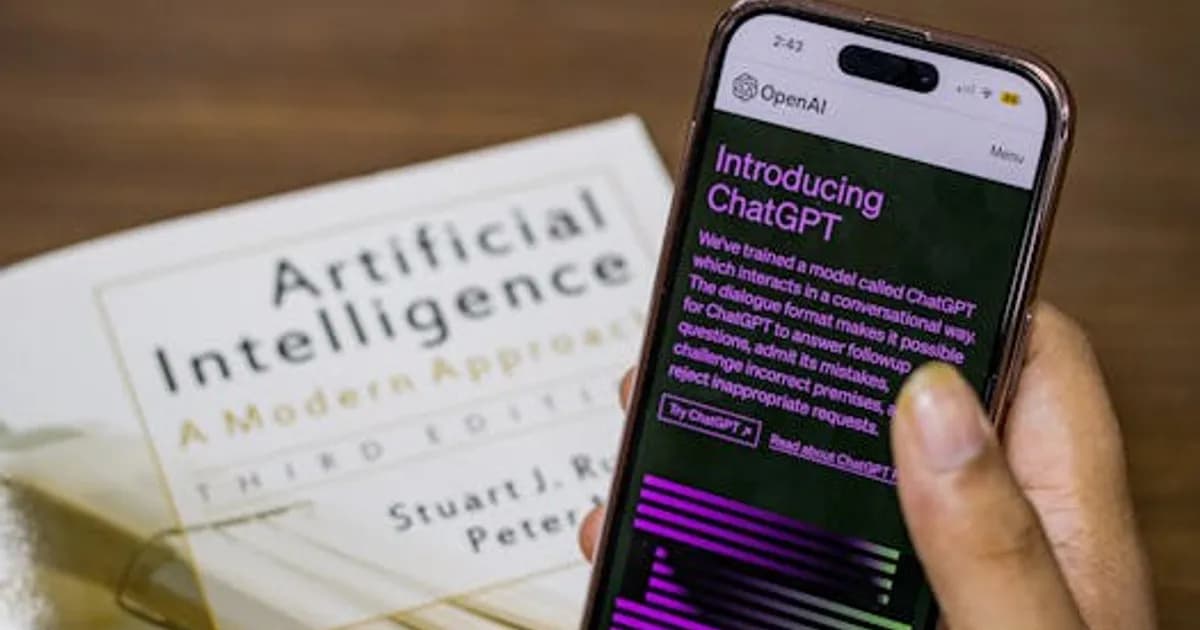
ChatGPT remains the most widely used AI chatbot in the world in 2026. The free tier provides access to GPT-4o with daily limits. The paid tier ($20/month) removes limits and adds features like custom GPTs, file analysis, image generation, voice mode, and memory that persists across sessions.
ChatGPT's key strength is breadth. It handles creative writing, coding, data analysis, research questions, and casual conversation with consistent quality. The plugin and GPT ecosystem means you can extend it for specific tasks — customer support training, legal research, cooking, language learning — without switching tools.
Where it falls short: ChatGPT has a slight tendency toward confident-sounding answers that aren't always accurate. For factual research, always verify important claims independently.
Best for: general use, creative projects, coding assistance, productivity, most people's first AI chatbot.
Claude — Best for Writing and Analysis
Anthropic's Claude is the preferred AI chatbot for long-form writing, document analysis, and nuanced reasoning in 2026. It handles very long context windows well — useful for analyzing entire contracts, research papers, or code repositories in a single conversation.
Claude's writing output tends to sound more natural and less stilted than ChatGPT's default output. It's a consistent choice among journalists, writers, lawyers, and analysts who work with large volumes of text.
The free tier gives access to Claude Sonnet. Claude Pro ($20/month) unlocks higher usage limits and early access to the most powerful model.
Claude is notably thoughtful about uncertainty — it flags when it doesn't know something rather than generating a plausible but incorrect answer. For work where accuracy matters more than fluency, that's a significant advantage.
Best for: writing, editing, document analysis, research, legal and policy work.
Google Gemini — Best for Google Workspace Users
Gemini is Google's flagship AI chatbot and its integration with Google's existing services is its defining feature. In Gmail, it can draft, summarize, and respond to emails. In Docs, it writes and edits. In Drive, it surfaces relevant files for a prompt. In Google Search, it now powers AI Overviews.
The standalone Gemini chatbot at gemini.google.com is free and includes real-time web access — a meaningful advantage over competitors that have a knowledge cutoff. Google Ultra ($20/month) provides access to Gemini Ultra, the most powerful model in the family.
Gemini's multimodal capabilities are particularly strong. It handles image, audio, and video inputs more fluidly than most competitors, which matters for use cases involving media analysis or content creation.
Best for: Google Workspace users, research requiring current information, multimodal tasks.
Perplexity — Best for Research
Perplexity positions itself as an AI-powered search engine rather than a pure chatbot, and that framing captures its real advantage. It answers questions using real-time web sources and cites every claim — which makes it far more useful for research, fact-checking, and due diligence than a standard chatbot.
The free plan is one of the most useful in the AI space. Pro ($20/month) adds more searches, file uploads, and access to multiple underlying models (GPT-4, Claude, Gemini) through a single interface.
Where Perplexity falls short: it's weaker than ChatGPT or Claude for creative tasks, code generation, or extended conversational work. It's a research tool first.
Best for: research, fact-checking, news summaries, finding sources, competitive intelligence.
Microsoft Copilot — Best for Microsoft 365 Users
Microsoft Copilot is deeply integrated into Word, Excel, PowerPoint, Teams, and Outlook. If your work happens inside Microsoft 365, Copilot has access to your documents, emails, and meeting history — which makes it significantly more contextually useful than a standalone chatbot.
In Teams, it summarizes meetings in real time and answers questions about what was discussed. In Excel, it writes formulas and analyzes datasets from natural language descriptions. In Word, it drafts, rewrites, and reformats documents based on instructions.
Microsoft 365 Copilot is priced for enterprise users at around $30 per user per month on top of an existing 365 subscription. For individual Microsoft 365 users, a limited version of Copilot is included.
Best for: enterprise users, Microsoft 365 power users, meeting productivity.
How to Choose the Right AI Chatbot
A few questions that quickly narrow the field:
Do you need real-time web information? → Perplexity or Gemini.
Is most of your work in Google or Microsoft products? → Gemini or Microsoft Copilot.
Do you write a lot and need natural-sounding output? → Claude.
Do you want the most versatile all-rounder? → ChatGPT.
Are you budget-limited? → All five have free tiers; Perplexity and Claude's free tiers are particularly strong.
It's also worth noting that most professionals in 2026 use more than one AI chatbot — a primary tool for daily tasks and a secondary one for specific workflows where it performs better. The $20/month for a paid plan is now a standard professional expense.
For a deeper comparison across more dimensions, see Best AI Assistants in 2026: Side-by-Side Comparison Guide.
Conclusion
There's no single best AI chatbot in 2026 — there's a best one for your workflow. ChatGPT leads for general use, Claude for writing-heavy work, Gemini for Google users, Perplexity for research, and Copilot for Microsoft environments.
Start with the free tier of the one that matches your primary use case. Within a week, you'll have a clear sense of whether it fits. From there, explore Prompt Engineering in 2026: Advanced Techniques That Work to get significantly more value from whichever AI you choose.
Comments
Loading comments...