
AI in Winemaking 2026: Precision Viticulture Arrives
AI in Winemaking 2026: Precision Viticulture Arrives
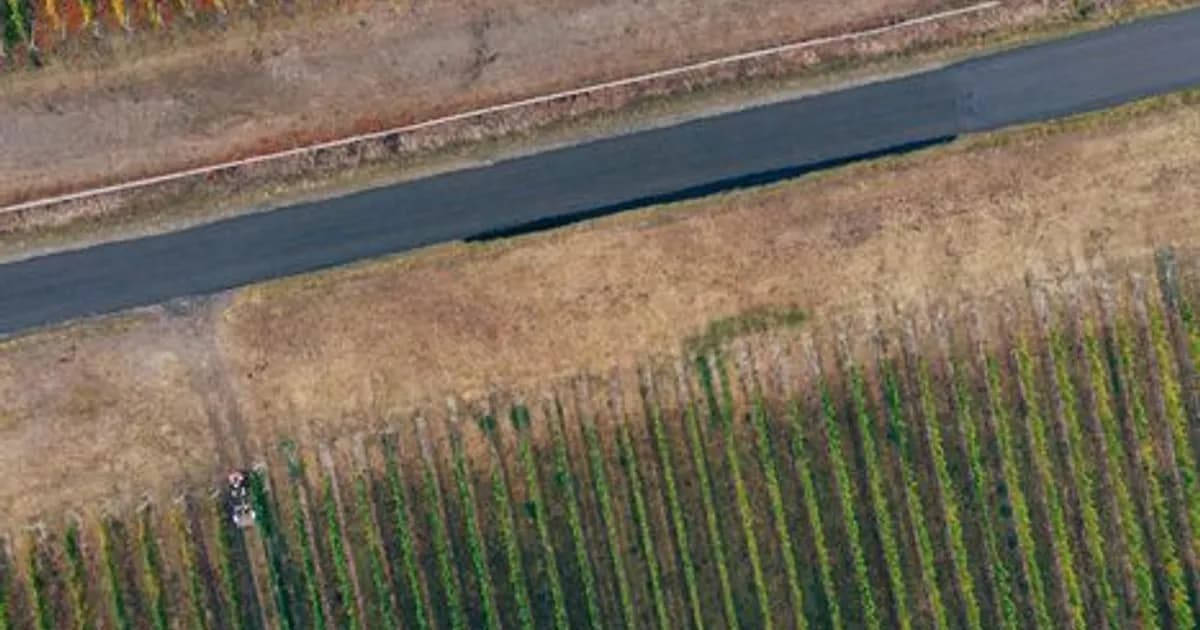
Winemaking has always been described as part art, part science, and AI in winemaking in 2026 is steadily shifting more decisions toward the science side without taking the art out of the final blend. Growers are using computer vision and predictive models to manage vines block by block instead of treating an entire vineyard as a single uniform unit, which is a meaningful change for an industry where small variations in sun exposure or soil moisture can noticeably change what ends up in the bottle.
This is precision viticulture, and it's no longer confined to large commercial operations with research budgets. The tools have gotten accessible enough that mid-sized wineries are adopting them too.
Treating Every Vineyard Block Differently
The core insight behind precision viticulture is that no vineyard is actually uniform. Soil composition, drainage, slope, and microclimate can vary significantly within the same plot, which means a single irrigation or pruning schedule applied evenly across a vineyard is almost always wrong for at least some of it.
AI-driven tools address this by mapping variation at a much finer grain than traditional vineyard management:
- Canopy management optimization using image-based leaf area estimation, helping growers decide where additional leaf removal or shoot thinning will actually improve fruit quality
- Yield prediction built from multispectral and thermal imagery, giving growers an earlier and more accurate read on harvest volume than manual sampling alone
- Pest and disease detection, using models trained on large vineyard image datasets to catch early signs of mildew, pests, or vine stress before it spreads
- Water and nutrient management, combining soil sensors with imagery to apply irrigation and fertilizer only where it's actually needed rather than uniformly across a block
Research groups like UC Davis's Center for Wine Economics have been central to developing this kind of block-level precision viticulture platform, aiming to give growers practical tools to measure and manage vineyard variation rather than treating it as background noise.
Why Smaller Wineries Are Catching Up
Precision viticulture used to be the domain of large operations that could afford dedicated agronomy staff and custom sensor networks. That's changed as the underlying tools — drone imagery, satellite data, and cloud-based analysis — have become commoditized enough that a mid-sized winery can subscribe to a service rather than build infrastructure from scratch.
This mirrors a broader trend covered in AI for Small Business in 2026: Affordable Tools That Work, where the gap between what large enterprises and small operators can access has narrowed considerably as AI tooling shifts from custom-built systems to affordable subscription services.
For family-run vineyards, the appeal isn't just about chasing the highest possible yield. It's about consistency — being able to apply the lessons learned in one good vintage to the next year's decisions with actual data behind them, rather than relying purely on a grower's memory of how a particular block performed.
From Vineyard to Cellar: AI in the Winemaking Process Itself
The technology doesn't stop at the vineyard gate. Once grapes are harvested, some wineries are experimenting with AI-assisted fermentation monitoring — tracking temperature, sugar conversion, and yeast activity in real time to flag fermentations that are drifting outside a desired range earlier than a winemaker doing periodic manual checks would catch it.
Blending decisions remain almost entirely a human judgment call, and that's unlikely to change soon — taste and aroma are still far harder to model reliably than measurable inputs like sugar content or canopy density. But the data gathered throughout the growing season increasingly informs those blending decisions, giving winemakers a documented record of how a given block performed rather than relying purely on tasting notes from memory.
Climate Pressure Is Accelerating Adoption
A big driver behind faster precision viticulture adoption is climate variability. Growing regions that historically had predictable weather patterns are now seeing more frequent heat spikes, unusual frost events, and shifting rainfall timing, all of which make uniform, calendar-based vineyard management less reliable than it used to be.
AI-driven monitoring gives growers a faster way to respond to these shifts within a single season rather than only adjusting practices after a difficult harvest has already happened. A heat stress signal detected early in a heatwave, for instance, can trigger targeted irrigation or shade interventions in the specific blocks that need it, rather than a blanket response across an entire vineyard.
A few practices distinguish wineries getting strong results from precision viticulture tools:
- Start with the highest-value or most problematic blocks rather than trying to instrument an entire vineyard at once
- Pair sensor and imagery data with a grower's existing field knowledge rather than treating the data as a replacement for it
- Track outcomes against specific interventions season over season, building an internal record rather than relying solely on vendor benchmarks
- Be selective about which decisions to data-drive — irrigation and pest management benefit enormously, but final blending decisions still rely on human taste
What This Means for Vineyard Labor
Precision viticulture changes the nature of vineyard work more than it reduces the amount of it. Skilled vineyard labor remains essential for pruning, harvesting, and the hands-on canopy work that AI tools inform but don't perform themselves. What's changed is how that labor gets directed — crews increasingly work from maps showing exactly which rows or blocks need attention, rather than applying uniform treatment across an entire vineyard regardless of actual need.
That targeting can mean less total labor in some cases, since unnecessary treatment of healthy blocks gets eliminated, but it can also mean more intensive, well-timed intervention in blocks that are struggling, which can offset those savings. Vineyard managers generally describe the net effect as more efficient rather than simply cheaper — the same labor budget gets applied where it actually matters most.
There's also a skills shift underway. Vineyard crews increasingly need at least basic familiarity with the tablets, apps, and sensor readouts that now guide daily work assignments, which has added a new training dimension to a job that was traditionally taught almost entirely through hands-on apprenticeship. Wineries that have invested in this training report smoother adoption than those that simply handed crews new tools without context for how to interpret them.
Conclusion
AI in winemaking in 2026 has given growers a much finer-grained view of their vineyards, turning what used to be intuition-driven, vineyard-wide decisions into targeted, block-level management backed by real data. The technology has matured enough that it's no longer limited to large commercial operations, and climate pressure is pushing even traditionally cautious, multi-generational wineries toward faster adoption. If your operation is still managing irrigation and pest control on a single uniform schedule, precision viticulture tools are worth a serious look before the next growing season.
Comments
Loading comments...