
AI Wind Turbine Maintenance 2026: Fewer Costly Failures
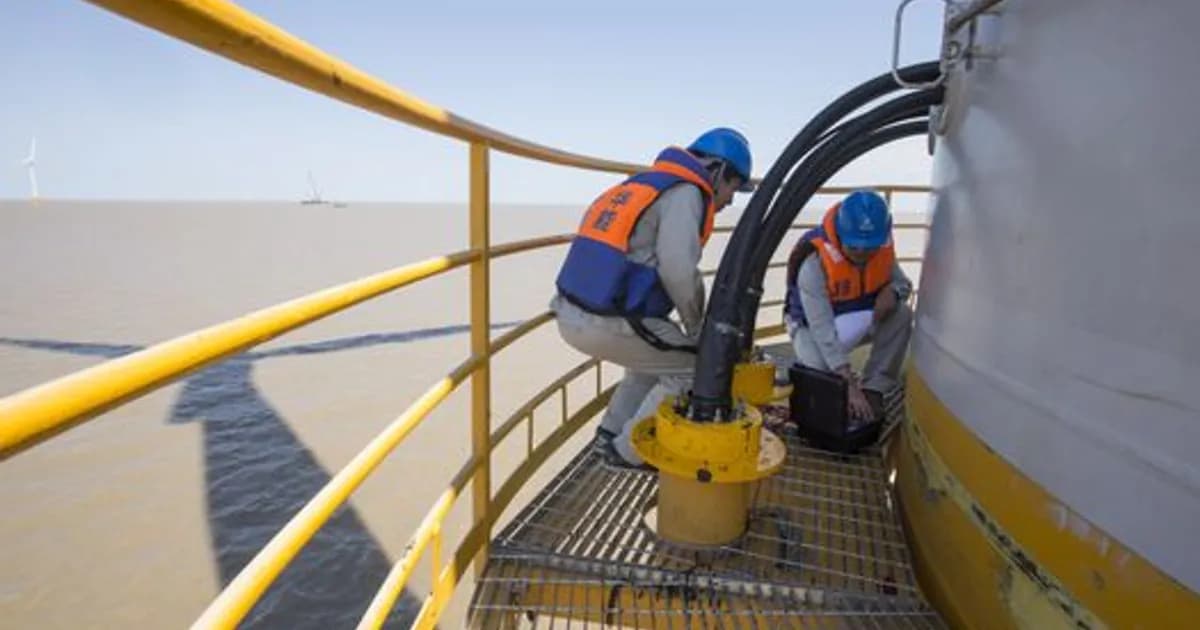
AI Wind Turbine Maintenance 2026: Fewer Costly Failures
AI wind turbine maintenance has become close to standard practice at large wind farm operators in 2026, as the industry has grown enough to make unplanned downtime a genuinely costly problem rather than a manageable inconvenience. A single major gearbox or blade failure can take a turbine offline for weeks while specialized repair crews and parts get scheduled, and at the scale modern wind farms operate, that lost generation adds up to real money fast.
The core idea is straightforward: turbines generate a constant stream of sensor data already, and AI models trained on that data can catch the early vibration, temperature, and performance signatures that precede a major component failure, often weeks before the kind of catastrophic breakdown that used to be the first real warning sign operators got.
What Wind Turbine Sensors Are Already Capturing
Modern wind turbines come instrumented with vibration sensors, temperature sensors, and performance monitoring systems as standard equipment, originally installed mainly for basic operational monitoring and safety shutoffs rather than predictive analysis. That existing sensor infrastructure is what makes AI-driven predictive maintenance relatively cheap to add — most of the hardware investment was already made, and operators are layering analytics on top of data they were collecting anyway. Key signals being analyzed for early warning signs include:
- Gearbox vibration patterns — subtle frequency shifts that precede bearing wear long before it becomes audible or causes a noticeable performance drop
- Blade strain and acoustic monitoring — detecting micro-cracks and structural fatigue before they progress to a blade failure that can damage the entire turbine
- Generator temperature trends — gradual thermal pattern shifts indicating insulation degradation or developing electrical faults
- Power output anomalies — performance dips relative to wind conditions that can indicate a developing mechanical issue even before any single sensor crosses an alarm threshold
The power output piece is particularly valuable because it catches issues that don't show up clearly in any single sensor stream but become visible when a model correlates output against expected performance for given wind conditions.
The Cost of Getting Caught Off Guard
A failed gearbox is one of the most expensive single-component failures a wind turbine can suffer, both because gearboxes are costly and because replacing one typically requires a heavy-lift crane that needs to be scheduled and transported to often remote turbine sites — a process that can take weeks even after the failure is identified. Offshore turbines face an even steeper penalty, since the logistics of getting repair vessels and crews out to a failed unit add both cost and weather-dependent delay on top of the base repair complexity.
Predictive maintenance changes that calculus by giving operators weeks of lead time to schedule the crane, order parts, and plan the repair during a maintenance window rather than scrambling reactively after a failure takes the turbine offline unexpectedly. That planning lead time is often worth more in avoided costs than the actual component repair itself, since unplanned offshore repairs in particular can cost multiples of what the same repair costs when scheduled in advance.
Blade Monitoring Is the Newer Frontier
Gearbox and generator predictive maintenance is relatively mature at this point, but blade health monitoring has advanced more recently as acoustic and strain-sensing technology has improved. Blades are the turbine component most exposed to weather-driven fatigue and lightning strike damage, and a blade failure — especially a piece separating mid-rotation — carries both a serious cost and a safety risk that operators take very seriously.
AI models analyzing acoustic emissions and strain gauge data can now flag developing micro-cracks and delamination in blade material before they're visible during routine ground-level visual inspections, which have always been a limited tool given how much of a blade's surface area is difficult to inspect closely without specialized equipment like drones or climbing technicians. That earlier detection has become especially valuable for older wind farms approaching the back half of their blades' expected service life, where fatigue-related failures become statistically more likely.
Where the Industry Still Struggles
Smaller and older wind farms, particularly those built before sensor-rich turbine designs became standard, face real barriers to adopting AI-driven predictive maintenance, since retrofitting older turbines with the sensor density needed for effective analysis is a meaningful expense that doesn't always pencil out against a turbine's remaining useful life. That's left predictive maintenance adoption skewed toward newer, larger wind farms, while a long tail of older installations continues relying on scheduled inspection cycles closer to the old standard.
Data quality and model generalization also remain genuine challenges. A model trained on one turbine manufacturer's sensor data and failure history doesn't always transfer cleanly to a different turbine model or a wind farm in a very different climate, which has kept much of the most sophisticated predictive maintenance work concentrated among large operators with enough scale and engineering staff to build or customize models for their specific fleet.
Insurance and Financing Are Starting to Notice
Wind farm operators typically carry equipment insurance and financing arrangements that account for expected maintenance costs and downtime risk over a project's lifetime, and insurers have started factoring predictive maintenance adoption into how they price coverage for newer wind farms. A farm with a documented track record of catching failures early and avoiding major unplanned outages presents a more favorable risk profile, and some insurers now offer modestly better terms to operators who can show a mature predictive maintenance program is in place.
That financial recognition has created an additional incentive for adoption beyond the direct operational savings, particularly for project developers seeking financing for new wind farms where lenders increasingly expect to see a credible maintenance and reliability strategy as part of the overall project plan. It's a smaller factor than the direct downtime savings, but it adds up across a wind farm's full operating lifetime, especially for offshore projects where both insurance costs and the financial stakes of an unplanned failure are higher than onshore installations typically face.
The Bottom Line
AI wind turbine maintenance in 2026 is delivering real, well-documented reductions in unplanned downtime and repair costs for operators able to deploy it, particularly at large and newer wind farms with the sensor infrastructure to support it. Smaller and older installations still lag, and blade health monitoring remains a less mature frontier than gearbox and generator analysis, but the overall trajectory across the industry is clearly toward predictive rather than reactive maintenance as the default approach.
For related coverage of AI applied to energy infrastructure, see AI and Renewable Energy in 2026: Solving the Power Crisis and AI Infrastructure Inspection 2026: Catching Failures Early. The U.S. Department of Energy's Wind Energy Technologies Office (https://www.energy.gov/eere/wind/wind-energy-technologies-office) publishes ongoing research on turbine reliability and maintenance practices.
Comments
Loading comments...