
AI for Smart Utilities 2026: Water and Energy Management
AI for Smart Utilities 2026: Water and Energy Management
AI for smart utilities has moved from demonstration projects to full-scale operational deployment. Water utilities, electric grid operators, and gas distribution companies are running AI systems that manage demand forecasting, grid stability, leak detection, and infrastructure maintenance — at a level of precision and speed that human operators and traditional software couldn't achieve.
The pressure driving this adoption is real: aging infrastructure, accelerating climate impacts on supply and demand patterns, and regulatory requirements for efficiency and reliability are pushing utilities to find every efficiency gain available. AI is delivering measurable results on all three fronts.
The Energy Grid Challenge
Electric grids were designed for a simpler world — centralized generation, predictable demand patterns, one-way power flow. The 2026 grid is fundamentally different. Distributed solar generation, millions of electric vehicles charging at irregular times, industrial loads that fluctuate with AI data center demand, and a higher proportion of renewable generation that varies with weather have made grid management orders of magnitude more complex.
AI grid management systems address this complexity in real time. The key applications:
Load forecasting: AI systems forecast electricity demand with significantly higher accuracy than traditional statistical models, particularly for short time horizons (1–6 hours ahead). By incorporating weather data, economic activity signals, historical patterns, and real-time consumption data, AI forecasting reduces the reserve capacity utilities need to hold — a direct cost reduction.
Renewable integration: The unpredictability of solar and wind generation is the central challenge of the energy transition. AI manages the real-time balancing act — increasing grid storage dispatch as clouds reduce solar output, pre-positioning reserves ahead of predicted wind drop-offs, and coordinating flexible demand to absorb surplus generation rather than curtailing it.
Grid stability monitoring: Voltage and frequency deviations that can cascade into outages are detected and responded to much faster with AI monitoring. The AI doesn't just detect problems — it models how disturbances will propagate and suggests or automatically executes responses to contain them.
Demand response orchestration: AI systems coordinate voluntary load reduction from commercial and industrial customers during peak periods, managing the complex task of dispatching flexibility across thousands of individual customer sites to maximize grid stability while minimizing disruption to operations.
The International Energy Agency at iea.org tracks global deployment of AI in power systems — their data indicates that AI grid management is now standard practice in advanced economies and rapidly spreading in emerging markets.
Predictive Maintenance for Energy Infrastructure
Power outages caused by equipment failures cost utilities and their customers billions annually. AI predictive maintenance is changing the failure prevention math.
Transformers, substations, transmission lines, and generation equipment are now monitored with networks of sensors that feed continuous data to AI analysis systems. These systems detect the signatures of developing failures — small deviations in temperature, vibration, oil chemistry, electrical characteristics — weeks or months before a failure would be detectable through conventional inspection.
The economics are compelling. A transformer replacement costs significantly less as a planned maintenance activity than as an emergency after-failure replacement, which also involves outage costs and potential cascading damage. AI predictive maintenance programs typically show ROI within 12–18 months of deployment at meaningful scale.
For generation assets — wind turbines, solar inverters, gas turbines — AI monitoring enables operators to schedule maintenance during low-output periods rather than losing generation capacity during high-value hours.
AI in Water Utilities: Leak Detection and Treatment
Water infrastructure faces its own crisis: aging pipes, increasing drought pressure on supply, and the energy intensity of water treatment and distribution. AI is contributing in several distinct ways.
Leak detection is where AI has delivered the most dramatic impact. Water utilities in developed countries lose 15–30% of their treated water to pipe leaks — an enormous waste of treated, pressurized water that represents both wasted water and wasted energy. Traditional leak detection relies on acoustic monitoring and pressure testing during scheduled maintenance rounds.
AI leak detection uses continuous pressure and flow sensor data to identify anomalies that indicate leaks before they become visible at the surface. Machine learning models trained on historical leak signatures can pinpoint probable leak locations to within a few pipe segments, dramatically reducing the excavation required for repair. Utilities with mature AI leak detection programs have reduced non-revenue water loss by 20–40%.
Water quality monitoring and treatment optimization: Water treatment plants adjust chemical dosing, filtration settings, and process parameters based on input water quality. AI systems that continuously monitor sensor data from intake sources can predict how input quality will change (due to seasonal patterns, upstream events, or weather) and adjust treatment parameters proactively — maintaining output quality more consistently and at lower chemical cost.
Demand forecasting for water: Similar to electricity, AI forecasting of water demand allows utilities to optimize pumping schedules (running pumps during off-peak electricity hours), manage reservoir levels more precisely, and detect anomalous demand patterns that might indicate commercial leaks or unauthorized uses.
Hydraulic model optimization: Water distribution networks involve complex hydraulic dynamics. AI systems running continuous hydraulic simulations can identify optimal valve settings and pump configurations to minimize energy use while maintaining pressure throughout the distribution system.
Building-Level and Industrial Energy Management
AI energy management isn't limited to utility-scale applications. Commercial buildings, data centers, and industrial facilities are deploying AI to manage their own energy consumption.
Commercial building AI manages HVAC, lighting, and other loads in response to occupancy patterns, weather, and electricity pricing signals. Sophisticated systems learn building thermal dynamics and pre-condition spaces to reduce peak demand while maintaining comfort — shifting load to cheaper and lower-carbon hours without manual programming.
Data center energy management is a particularly large opportunity given the explosive growth in AI computing demand. AI systems manage cooling infrastructure, server workload placement, and power distribution to minimize energy use per unit of compute. Several major cloud providers report significant reductions in power usage effectiveness (PUE) attributable to AI energy management.
Industrial process optimization: Manufacturing facilities with significant energy-intensive processes — aluminum smelting, cement production, chemical processes — use AI to optimize process parameters for energy efficiency without sacrificing throughput. The energy savings in these settings are often large in absolute terms because the underlying processes are so energy-intensive.
For context on how AI is helping address the broader energy needs of AI infrastructure itself, AI Energy Consumption in 2026: Data Centers Under Pressure covers the demand side. AI and Renewable Energy in 2026: Solving the Power Crisis covers the supply-side story in more depth.
The Role of Smart Meters and IoT
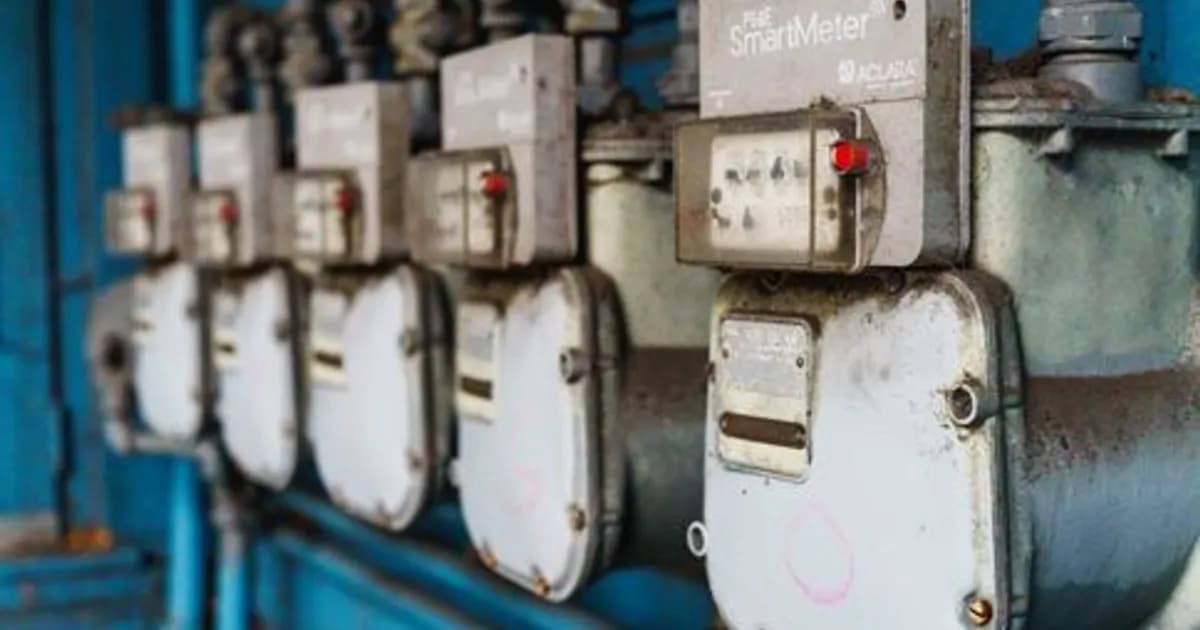
AI utility management depends on data. The deployment of smart meters for electricity and, increasingly, for water and gas has created the real-time data infrastructure that makes AI applications possible.
Smart meters provide granular consumption data — typically in 15-minute or hourly intervals — that enables AI systems to identify unusual patterns, verify demand response participation, and give customers meaningful visibility into their own usage. The AI analysis that utilities apply to smart meter data includes:
- Identifying customers with likely equipment problems (HVAC systems running inefficiently, water heaters failing, large appliances approaching failure)
- Detecting potential meter tampering or energy theft
- Segmenting customers by consumption pattern for targeted efficiency programs
- Validating the impact of efficiency program participation
The bi-directional communication enabled by smart meter infrastructure also allows utilities to send pricing signals and demand response requests to customer equipment — the mechanism through which demand flexibility programs operate.
Challenges and Limitations
The path to AI-managed utilities is not without obstacles.
Cybersecurity: Grid infrastructure is a prime target for cyberattacks, and AI systems that can take automated actions on grid operations are high-value targets. The integration of AI into operational technology networks requires security architectures that balance the real-time connectivity AI needs with the isolation that protects critical infrastructure.
Legacy integration: Most utility infrastructure was built over decades with equipment and control systems from many different eras. Integrating modern AI platforms with legacy SCADA systems and older sensor networks is technically complex and expensive.
Regulatory frameworks: Utility regulation is jurisdictionally complex, and AI operational systems often require regulatory approval before deployment in safety-critical applications. The regulatory capacity to evaluate AI systems is growing but still lags the technology.
Workforce transition: AI changes what utility operators do. The workforce implication — retraining operators to work with AI systems rather than replacing AI systems with operators — requires investment and change management that many utilities are still working through.
What's Coming Next
The near-term frontier in utility AI is tighter integration between electric vehicles, home batteries, and grid management. As the fleet of grid-connected distributed energy resources grows, the AI systems coordinating them become more powerful — but also more complex to manage fairly across millions of individual asset owners.
Longer term, AI may transform utility business models from commodity supply to intelligent energy services — managing customer energy portfolios, providing grid services, and optimizing the full energy system rather than just the utility-owned portion.
The Bottom Line
AI for smart utilities in 2026 is delivering on the infrastructure promises of previous decades. Grid management, predictive maintenance, water loss reduction, and energy optimization are all seeing AI-driven improvements that translate directly to lower costs, fewer outages, and better resource stewardship.
For utilities, AI is no longer optional — the efficiency and reliability gap between AI-enabled operations and conventional approaches is too large to ignore. For customers and ratepayers, the benefit is a more reliable, lower-cost, and more sustainable utility service.
The transition to AI-managed utilities is happening utility by utility, system by system. The pace of deployment will determine how quickly the benefits reach customers at scale.
Comments
Loading comments...