
AI Package Theft Prevention in 2026: Smarter Doorbells
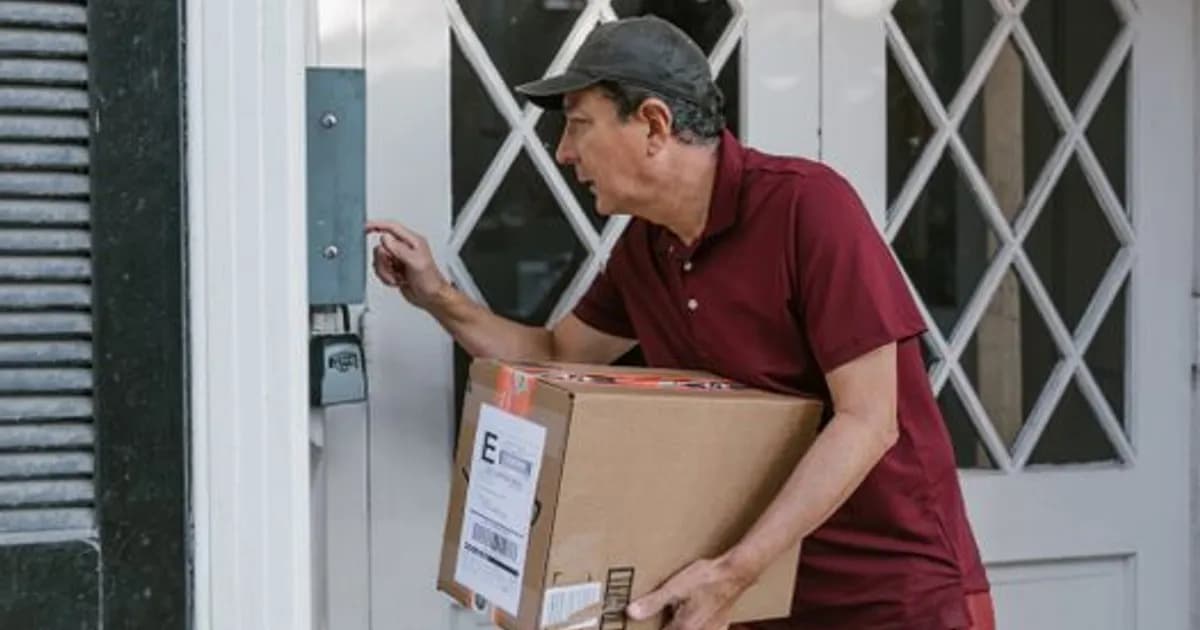
AI Package Theft Prevention in 2026: Beyond the Basic Doorbell Alert
Porch piracy is one of those problems that scales with convenience. The more people order online, the more boxes sit unattended on doorsteps, and the more opportunity there is for someone to walk off with them. AI package theft prevention has become the default answer to that problem in 2026, replacing the blunt motion-sensor doorbells of a few years ago with cameras that actually understand what they're looking at.
The shift matters because the old approach never really worked. A doorbell that fires an alert every time a car drives by or a leaf blows across the lawn trains owners to ignore notifications altogether — which defeats the purpose. The new generation of devices is built around computer vision models that can tell the difference between a delivery driver, a neighbor, and someone who shouldn't be on your porch at all.
Why Motion Alerts Were Never Enough
Traditional doorbell cameras rely on passive infrared sensors or simple pixel-change detection. Anything that moves in the frame — a passing car, a dog, a shifting shadow at dusk — can trigger a push notification.
The practical result was alert fatigue. Homeowners with older systems commonly report dozens of notifications a day, the vast majority irrelevant. Once people start swiping away alerts without looking, the system stops functioning as a deterrent or an early-warning tool.
These early systems also couldn't answer the question that actually matters: was a package taken, or just delivered? A motion alert can't tell you that. It just tells you something moved.
How Computer Vision Changes Package Theft Detection
AI package theft prevention systems work differently because they're not just detecting motion — they're classifying objects and actions. A modern security camera running an on-device vision model can typically identify:
- Whether a person is carrying a package toward the door or away from it
- Delivery-specific visual cues, like a uniform, a handheld scanner, or a branded vehicle in the driveway
- The presence of a package on the porch before and after an interaction
- Loitering behavior, such as someone pacing near a door without approaching it directly
This is the core capability that separates package theft detection AI from older systems: it reasons about sequences of events, not single frames. A typical delivery shows a person approaching, briefly stopping at the door, performing a scan or knock gesture, placing a box, and leaving within seconds. A theft attempt looks different — someone approaching from an angle that avoids the camera, lingering, picking up an existing box, and leaving without ever having rung the bell.
Some systems go a step further with person re-identification, recognizing that the person who dropped off a package at 2:14 p.m. is a different individual from the one who approached the same spot at 4:50 p.m. That distinction is what lets a camera flag "package removed by someone other than the original carrier" instead of just "motion detected near front door."
On-Device Processing: Privacy and Speed
A meaningful technical shift behind these capabilities is where the analysis actually happens. Early smart cameras shipped raw video to the cloud for processing, which introduced lag and meant a constant stream of home footage sitting on a vendor's servers.
In 2026, running inference on-device is the norm for premium security hardware. Dedicated AI chips in the doorbell or hub itself handle object detection and classification locally, sending only relevant clips or metadata to the cloud — or in some cases, nothing at all unless the owner explicitly requests cloud backup.
This matters for two practical reasons:
- Speed. A theft in progress takes seconds. Round-tripping video to a cloud server and back introduces a delay that can be the difference between a useful real-time alert and an after-the-fact notification.
- Privacy. Continuous video of your front porch is sensitive data, especially once facial recognition or person re-identification is layered on top. Keeping that processing local reduces the amount of footage that ever leaves the home. For a broader look at why this architecture has become standard across smart home devices, see Edge AI in 2026: How Local AI Processing Boosts Privacy.
Real-Time Deterrence, Not Just Alerts
Detection alone doesn't stop a theft already in motion. The more useful systems in 2026 pair detection with active deterrence, triggered automatically when the AI flags suspicious behavior rather than a routine delivery:
- Adaptive lighting — porch and floodlights that snap on and track movement when the system flags loitering near a package
- Audio warnings — a recorded or AI-generated voice announcement (often customizable) that addresses the person directly, which research on deterrence has long suggested is more effective than a silent alarm
- Live two-way audio — letting an owner speak through the doorbell in real time once an alert fires
- Neighbor and community alerts — some platforms can flag nearby households or a building's shared security network when a known theft pattern is detected on one porch, giving a few extra seconds of warning down the block
None of this guarantees a theft won't happen. But shifting from a passive log of motion events to an active response loop — light, sound, notification, all within a second or two of the AI's classification — has measurably changed how these incidents play out, turning what used to be a thirty-second window of opportunity into something far riskier for an opportunistic thief.
Smart Locks, Lockboxes, and Delivery Integration
Detection is only half the picture. The other half is reducing the window during which a package sits exposed at all. AI-enabled delivery integration has expanded considerably:
- Smart lockboxes that a courier can open with a one-time code generated at the moment of delivery, verified against the carrier's tracking data
- In-garage or in-home delivery services that pair a smart lock with a verified delivery window, letting a carrier place a package inside rather than on the porch
- Dynamic delivery instructions that route differently based on AI-flagged theft risk in a given area or time window
- Carrier apps that cross-reference doorbell footage timestamps with scan data to confirm a delivery actually occurred where it was logged
For households that already run a broader camera setup, package-specific detection is often just one feature inside a larger platform. If you're comparing systems, it's worth reading AI Home Security Cameras in 2026: What Actually Works for how package alerts fit alongside intrusion detection and general monitoring.
The Privacy Trade-Offs Worth Understanding
Always-on cameras with behavior and facial recognition raise real questions, and AI package theft prevention is not exempt from them. A few things worth knowing before installing one:
- Facial recognition is regulated unevenly. Some jurisdictions restrict how residential cameras can store or share facial data, particularly footage that captures people who aren't the homeowner — including neighbors and passersby.
- Retention policies vary by vendor. Ask how long clips are stored, whether they're used to train models, and whether you can delete footage on demand.
- Shared platforms increase exposure. Neighborhood-alert features are useful but mean your footage may be visible to, or triggered by, people outside your household — read the sharing defaults carefully before enabling them.
The Federal Trade Commission has published consumer guidance on smart home device security and data practices that's a reasonable starting point for understanding what to ask a vendor before buying (ftc.gov). For a deeper dive into what these devices actually collect and how to limit it, see AI Data Privacy 2026: What AI Collects and How to Stay Safe.
Not every household needs the full suite of deterrence features. A few practical guidelines for choosing a system that fits your risk:
- If you live somewhere with frequent deliveries and limited porch visibility from the street, prioritize package-specific detection over general motion alerts.
- If privacy is a top concern, favor on-device processing and check whether facial recognition can be disabled while keeping package classification active.
- If you're in a building or complex, look at whether neighbor-alert features are opt-in and how footage sharing is scoped.
- Pair camera-based detection with a lockbox or in-garage delivery option where your carrier supports it — detection helps you respond, but a secured drop-off prevents the problem outright.
Getting Started
AI package theft prevention in 2026 isn't a single gadget so much as a layered approach: a camera that actually understands what it's seeing, processing that happens close to home for speed and privacy, deterrence that activates automatically, and delivery integrations that reduce how long a package is exposed in the first place. None of these pieces is exotic anymore — they're built into mainstream doorbell hardware at a range of price points.
If porch theft has been a recurring headache, the practical next step is straightforward: audit what your current doorbell can actually distinguish (delivery vs. stranger, drop-off vs. pickup), check whether it processes video on-device, and decide whether a smart lockbox or in-garage delivery option would remove the risk entirely rather than just alerting you to it after the fact.
Comments
Loading comments...