
AI in Museums 2026: How Cultural Heritage Is Being Preserved
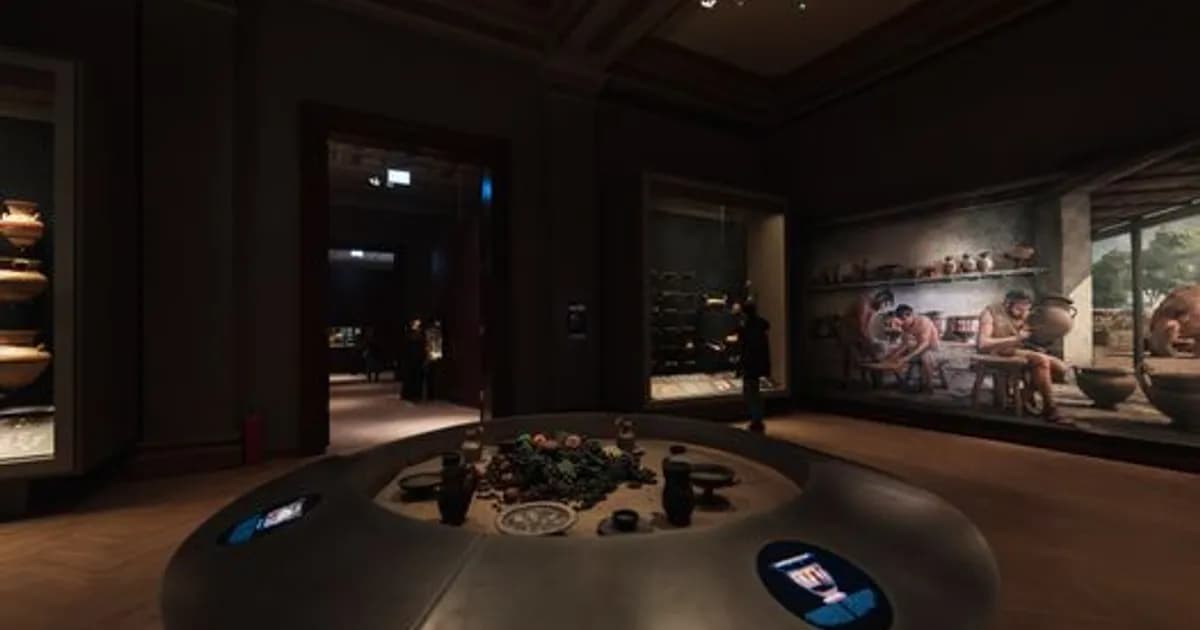
AI in Museums 2026: How Cultural Heritage Is Being Preserved
Museums face a paradox: they hold irreplaceable artifacts of human civilization, and they're in a slow institutional crisis. Collections far exceed exhibition space. Physical preservation is costly. Accessibility remains limited for people who can't travel to see artifacts in person. And engaging younger audiences increasingly requires digital experiences that museums haven't always been equipped to provide.
AI is helping address all of these challenges simultaneously, while also creating new possibilities for what museums can do with the collections they've spent centuries accumulating.
Digital Preservation at Scale
The most urgent application of AI in cultural heritage is preservation before objects are lost. Many collections include fragile documents, degraded photographs, damaged artworks, and artifacts that are deteriorating faster than they can be manually cataloged and conserved.
AI tools for high-resolution scanning and image processing are enabling digital preservation at speeds that weren't previously possible. The Internet Archive, national libraries, and major museums have accelerated digitization programs using AI to:
- Enhance degraded images: Machine learning models can reconstruct missing or damaged portions of historical photographs and documents based on contextual information
- Transcribe handwritten documents: OCR (optical character recognition) has improved dramatically for historical scripts, making millions of archival documents searchable for the first time
- Catalog at scale: AI can classify and tag items across large collections faster than human catalogers, making collections accessible without requiring each item to be individually processed by a specialist
The Google Arts & Culture project has partnered with hundreds of museums to digitize collections, and increasingly AI analysis of those collections is revealing connections — between artworks, artists, periods, and influences — that weren't previously visible.
Artifact Analysis and Authentication
AI is changing what it's possible to know about artifacts. Computer vision and spectroscopic analysis, guided by AI, can reveal information invisible to the naked eye:
Underdrawings and revisions: Infrared reflectography analysis has long been used to see beneath the surface of paintings. AI now processes these images to identify underdrawings, pentimenti (where artists changed their minds), and evidence of later restoration work — providing insights into artistic process that weren't visible before.
Authentication: AI trained on documented works by specific artists can identify stylistic characteristics — brushstroke patterns, pigment application, compositional tendencies — and compare them against disputed works. This doesn't replace human art historical expertise, but provides additional quantitative evidence for authentication decisions.
Dating and provenance: AI analysis of pigment composition, canvas preparation, and other technical characteristics can help establish when and where works were created, supporting provenance research.
The Rijksmuseum's Operation Night Watch project — a comprehensive multispectral analysis of Rembrandt's most famous painting — exemplifies how AI-assisted imaging is making it possible to understand historical artworks in unprecedented detail.
Restoring What Was Lost
Some of the most striking applications of AI in cultural heritage involve reconstructing things that are partially or entirely destroyed.
Fragment reconstruction: AI has been used to virtually reconstruct damaged ancient artifacts by analyzing thousands of fragments and finding how they fit together — a puzzle-solving problem that scales badly for humans but suits AI well. Projects restoring ancient Greek pottery and Roman mosaics have demonstrated the approach.
Missing works: For famous works of art known only from copies or descriptions, AI tools trained on an artist's surviving work can generate hypothetical reconstructions. These aren't presented as authentic originals, but as scholarly tools for understanding what may have been lost.
Damaged manuscripts: AI trained on legible portions of manuscripts can infer likely content in damaged or illegible sections, providing scholars with hypotheses to test through other historical evidence.
The reconstruction of the ancient city of Pompeii through AI-assisted analysis of archaeological data offers perhaps the most ambitious example — creating a navigable digital environment based on accumulated research.
Interactive and Personalized Visitor Experiences
Museums have always grappled with how to make collections accessible to diverse audiences — different ages, interests, knowledge levels, and languages. AI is enabling personalization at a scale that static exhibition design can't achieve.
AI-powered audio guides: Traditional audio guides offer the same content to everyone. AI-powered alternatives adapt — adjusting depth and complexity based on visitor age or stated interest, answering follow-up questions, and connecting items in the collection to the visitor's location and browsing history.
Conversational interfaces: Several major museums have deployed AI chatbots that visitors can ask questions about the collection, receive personalized recommendations, and learn about connections between items across different galleries.
Language accessibility: Real-time AI translation of exhibition content is making collections accessible to visitors who don't speak the museum's primary language without requiring expensive multilingual label sets.
Augmented reality: AI-powered AR experiences can overlay historical context onto physical objects, show how artifacts looked when new, or reconstruct their original settings. The British Museum and the Smithsonian have both deployed AR experiences that significantly enrich visitor engagement.
Digital Access and Democratization
One of the most significant impacts of AI in cultural heritage is geographic. The world's greatest collections are concentrated in a small number of cities — primarily in Europe and North America. AI-enabled digital access is making these collections available to people who can't afford to travel to see them.
High-quality digital reproductions, AI-enhanced search and discovery tools, and interactive digital exhibitions are increasingly accessible to anyone with an internet connection. Projects like the Europeana digital library — aggregating collections from European cultural institutions — use AI to make millions of items searchable across languages and collection types.
This democratization has limits: the experience of seeing an original artwork or artifact in person remains irreplaceable. But for scholarly research, education, and general cultural access, digital availability represents a genuine expansion of access to human cultural heritage.
Challenges and Ethical Questions
AI in cultural heritage isn't without complications:
Training data: AI tools for recognizing artistic styles or authenticating works are often trained on existing databases — which may reflect historical collection biases, typically over-representing Western European art.
Colonial context: Many museum collections include objects acquired through colonial exploitation. AI tools that create value from these collections don't resolve the underlying repatriation questions, and some argue they could complicate them.
Synthetic reconstruction ethics: When AI generates hypothetical reconstructions of lost works, how clearly should these be distinguished from surviving originals? The risk of synthetic versions being mistaken for authentic works is real.
Privacy in living cultural heritage: AI tools being applied to collections of photographs, personal documents, and other materials involving recent history raise questions about the privacy of people depicted or described.
The cultural heritage sector is working through these questions, with professional organizations like the International Council of Museums developing guidelines for AI use that address both opportunity and risk.
The Opportunity Ahead
The scale of what AI makes possible in cultural heritage is genuinely exciting. Collections that have been inaccessible for centuries — because they were too fragile, too large, too complex, or too remote — can now be digitized, analyzed, and made available. Damaged works can be understood in ways their creators couldn't have imagined. And global audiences can engage with cultural heritage that geographic accident had previously put beyond their reach.
The organizations making the most of this are those investing in digital infrastructure, data quality, and the partnerships between AI technologists and subject matter experts that make these applications actually useful. Neither AI without humanistic expertise nor humanistic expertise without AI will unlock what's now possible.
Comments
Loading comments...