
AI Landmine Detection 2026: Clearing Hidden Danger Faster
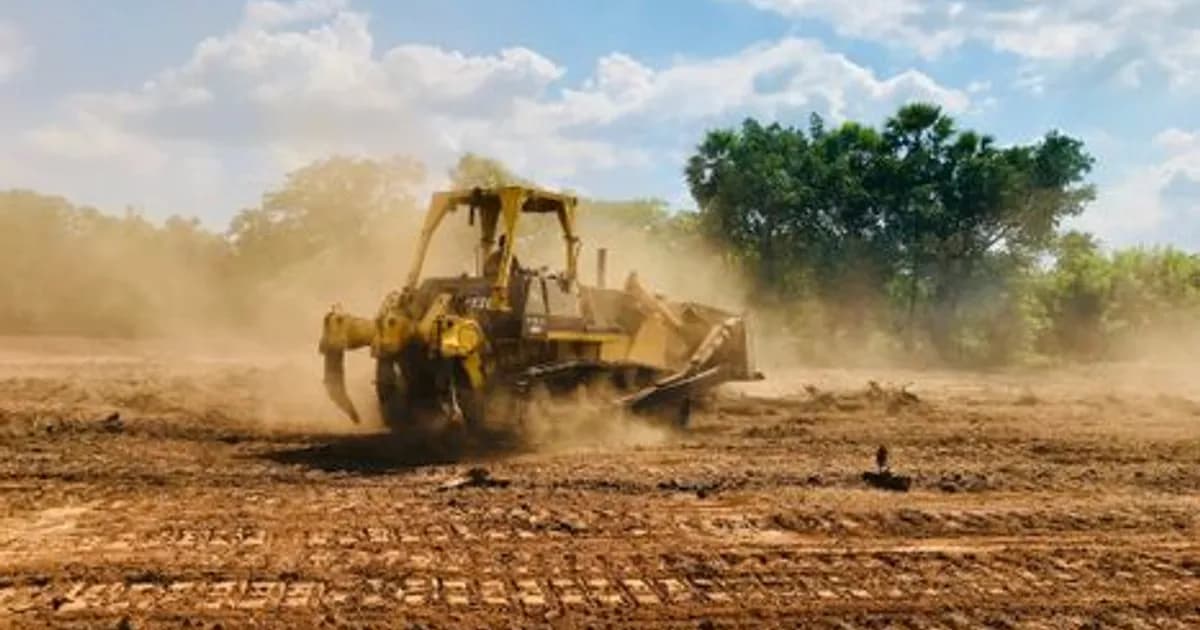
AI Landmine Detection 2026: Clearing Hidden Danger Faster
AI landmine detection is changing how humanitarian demining organizations approach one of the slowest, most dangerous categories of disaster recovery work. Tens of millions of landmines and pieces of unexploded ordnance remain buried in conflict-affected regions around the world, and traditional clearance — a deminer with a metal detector, advancing centimeter by centimeter — has always been painstaking by necessity, since the cost of a mistake is catastrophic.
What's changed in 2026 is the combination of drone-mounted sensors and AI image analysis that can survey contaminated land far faster than ground teams alone, narrowing down exactly where deminers need to focus their slowest, most careful manual work.
How AI Landmine Detection Speeds Up Survey Work
Modern demining operations increasingly combine several AI-assisted survey techniques before any ground team moves in:
- Drone-based thermal and multispectral imaging — identifying soil disturbance patterns and vegetation stress consistent with buried ordnance across large areas in a fraction of the time ground survey would take
- Ground-penetrating radar analysis — using AI to interpret radar return signatures and distinguish likely ordnance from harmless buried metal scrap, which has historically generated enormous numbers of false positives
- Historical conflict mapping — cross-referencing satellite imagery from the conflict period itself against current terrain to identify likely minefield boundaries and emplacement patterns
- Robotic ground survey platforms — remotely operated vehicles equipped with sensor arrays that can safely traverse suspected contaminated areas without putting a human deminer at risk during the initial survey pass
The false-positive reduction matters enormously in practice. Conventional metal detectors flag virtually every piece of buried metal, including harmless agricultural debris and shrapnel, and deminers have historically had to treat every single signal as a potential mine until proven otherwise — a process that consumes the vast majority of clearance time on signals that turn out to be nothing.
Why Survey Speed Changes the Entire Timeline
Humanitarian demining organizations typically spend more time surveying and mapping suspected contaminated land than they do on the actual physical clearance of confirmed ordnance. AI-assisted aerial survey can dramatically compress that mapping phase, letting organizations redirect scarce trained deminer hours toward areas with the highest confirmed likelihood of buried ordnance rather than spreading manual search efforts evenly across land that may turn out to be clean.
According to the UN Mine Action Service, faster, more accurate survey methods are a priority area for the broader humanitarian demining community, since survey speed directly determines how quickly contaminated land can be returned to safe agricultural and residential use.
Returning Land to Communities Faster
For communities living near contaminated land, the practical impact of faster clearance isn't abstract — it's farmland that can be planted again, roads that can be safely traveled, and children who no longer need to be warned away from fields their families once used freely. Organizations like the HALO Trust have increasingly incorporated AI-assisted survey tools into field operations specifically because faster, more confident area reduction means land gets released back to communities months or years sooner than manual survey alone would allow.
This kind of life-saving speed improvement parallels other domains where AI is helping disaster response and recovery teams move faster with limited staff, compressing timelines that used to be constrained almost entirely by available human labor.
Robotics Reducing Risk to Deminers
Even with better survey data narrowing down search areas, the final confirmation and clearance of suspected ordnance still requires extremely careful, often manual work. Remotely operated robotic platforms are increasingly handling the riskiest part of that process — approaching and probing a suspected device — keeping human deminers at a safer distance during the highest-risk moments of clearance operations.
Where Adoption Still Lags
Despite clear benefits, AI-assisted demining adoption varies enormously by region and funding level. Many of the world's most heavily contaminated areas are in countries with limited infrastructure and funding for the drones, sensors, and technical training that AI-assisted survey requires, meaning the organizations best positioned to benefit from these tools are often not operating where the need is greatest. Closing that gap is as much a funding and logistics challenge as a technology one.
Training Local Deminers on New Tools
Sustainable demining capacity depends on training local personnel rather than relying indefinitely on international experts flying in specialized equipment. Organizations introducing AI-assisted survey tools have had to invest meaningfully in training local deminers not just to operate drones and sensors, but to critically interpret AI-generated risk maps rather than treating them as infallible. A few specific training priorities have emerged as these tools spread:
- Sensor calibration for local soil and terrain conditions — since detection accuracy varies meaningfully across different soil compositions and moisture levels
- Interpreting confidence scores — helping field teams understand when a system's flagged area warrants extra caution versus standard procedure
- Maintaining equipment in field conditions — drones and sensors often operate in remote areas with limited access to technical support or replacement parts
Programs that have invested heavily in this kind of local training have generally seen better long-term outcomes than those relying primarily on short-term international technical teams, since local capacity persists after any single funded project ends.
Data Sharing Across Demining Organizations
Different demining organizations have historically operated with fairly siloed data, each building institutional knowledge about local conditions without much cross-organizational sharing. Efforts to build shared, anonymized training datasets across multiple organizations and conflict regions have started gaining traction, driven by the recognition that detection models improve substantially with more diverse training data than any single organization's clearance history alone provides.
This kind of collaboration faces real practical obstacles, including data sensitivity around active conflict zones and differing technical standards across organizations, but the demining community has generally been more willing to collaborate on this front than many other sectors, given the shared humanitarian mission involved.
No amount of technological improvement removes the need for direct engagement with the communities living alongside contaminated land. Local residents often hold practical knowledge about where mines were laid or where unusual incidents have occurred that doesn't show up in any satellite image or historical conflict map, and demining organizations consistently emphasize that community liaison work remains one of the most valuable, and least automatable, parts of the entire clearance process.
AI-assisted survey tools work best when paired with that local knowledge rather than treated as a substitute for it, with community reports often providing the initial lead that prompts a targeted aerial survey of a specific area in the first place.
Looking Forward
As more demining organizations build out shared training datasets from confirmed clearance operations, detection models should keep improving at distinguishing genuine ordnance signatures from the enormous variety of buried debris found in different soil types and conflict contexts worldwide. The technology's ceiling is high, but realizing it broadly will depend heavily on continued international funding for humanitarian demining programs overall.
If you work with or support humanitarian demining organizations, advocating for continued funding of both clearance operations and the technology that's making survey work faster is a meaningful way to help close the gap between contaminated land and the communities waiting to safely use it again.
Comments
Loading comments...