
AI and Human Collaboration: Getting the Balance Right
AI and Human Collaboration: Getting the Balance Right
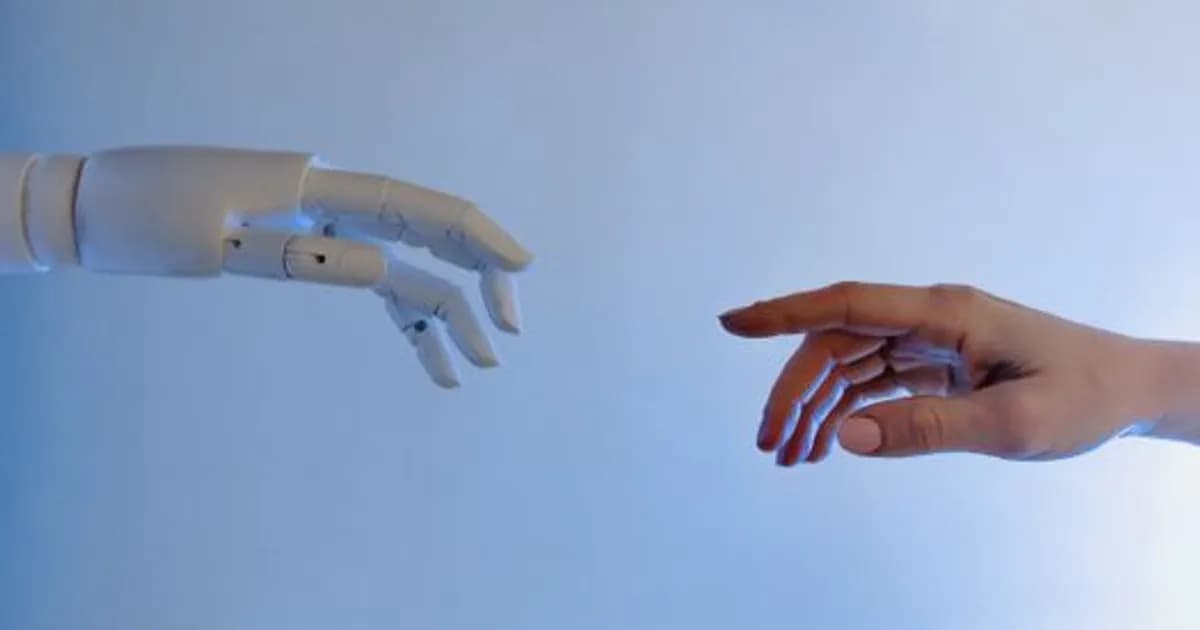
Most conversations about AI at work land on two poles: AI replacing humans or humans fearing AI. The more useful question is how AI and humans work best together — which tasks benefit from AI assistance, where human judgment is irreplaceable, and how to structure the handoffs so both sides contribute what they're actually good at.
The teams doing this well aren't using AI maximally. They're using it selectively, where the combination of human and machine produces better outcomes than either would alone.
Where AI Genuinely Helps
AI earns its place in collaborative workflows when it handles specific kinds of tasks well:
High-volume, repetitive processing. Reading and tagging hundreds of customer messages, generating first drafts from structured inputs, summarizing meeting transcripts, classifying support tickets. Humans could do these tasks but would spend most of their time on routine instances rather than edge cases.
Research and synthesis. Pulling together information from multiple sources, surfacing relevant context, drafting summaries of long documents. AI can do this faster than most people; the human role is to evaluate the output, not produce the raw synthesis.
Draft generation. First drafts of emails, reports, code, proposals. AI reduces the friction of starting, and human revision adds judgment, specificity, and voice. The combination is faster than either approach alone.
Consistency checking. Verifying that outputs conform to rules — checking code against a style guide, ensuring a document meets format requirements, flagging inconsistencies in a large dataset. AI is good at applying rules uniformly; humans are better at knowing when the rules should be broken.
Where Humans Need to Stay in the Loop
The flip side matters as much. Human judgment is essential when:
Stakes are high and errors are hard to reverse. Medical diagnoses, legal decisions, financial recommendations, personnel decisions. AI can assist with research and draft reasoning, but a human needs to own and verify the conclusion.
Context goes beyond the available information. Relationship history, organizational dynamics, unspoken constraints, the difference between what someone said and what they meant. AI operates on what's in the context window; humans carry broader situational awareness.
The right answer isn't known. In genuinely novel situations, AI tends to produce plausible-sounding responses that reflect its training data. Human judgment is needed to recognize when you're in territory where confident AI output is actually a red flag.
Accountability matters. When a decision needs to be owned and explained to others, a human needs to be that owner. AI can support the reasoning but shouldn't be the responsible party.
Ethical judgment is required. Decisions that involve values, fairness, and tradeoffs between competing legitimate interests. These aren't classification problems with correct answers — they require human reasoning and accountability.
The Design of Good Human-AI Workflows
The difference between human-AI collaboration that works and collaboration that backfires often comes down to workflow design, not capability. A few patterns that hold up:
Separate generation from evaluation. Have AI generate; have a human evaluate. These are different modes of engagement, and mixing them in the same step leads to rubber-stamping AI output without actually checking it.
Make AI uncertainty visible. When AI produces a response with low confidence or where the inputs were ambiguous, surface that uncertainty rather than hiding it. Confident-sounding AI output that's actually uncertain is where collaboration breaks down.
Set explicit checkpoints for human review. In agentic workflows especially, define the steps where a human must approve before the system proceeds. Not every step needs review, but the consequential ones do.
Track outcomes, not just outputs. Did the AI-assisted process produce better results than the previous process? Measuring output quality (was the draft good?) without measuring outcomes (did the project succeed?) gives you an incomplete picture.
Automation Bias and How to Fight It
The biggest practical risk in human-AI collaboration isn't AI being wrong — it's humans accepting AI output without adequate scrutiny. This is called automation bias: the tendency to under-weight human judgment when a machine provides an answer.
Automation bias increases when:
- The AI is usually right (so people stop checking)
- The AI output is presented with high confidence
- The reviewer is under time pressure
- The reviewer lacks domain expertise to recognize errors
Countermeasures include designing review processes that require active engagement rather than passive approval, training reviewers to specifically look for AI failure modes, and periodically auditing samples of AI outputs that passed review without changes.
See AI Workflow Automation in 2026: Top Platforms Compared for context on how automated workflows handle the human-in-the-loop requirement in practice.
Adjusting to AI as a Collaborator
Working effectively with AI requires developing some new habits:
Be specific about what you need. Vague prompts produce vague outputs. The more precisely you can define the task, the more useful the AI output will be — and the easier it is to recognize when it's fallen short.
Evaluate outputs critically, not optimistically. AI produces fluent, confident text even when it's wrong. Read with the same skepticism you'd apply to a junior colleague's first draft.
Use AI for your weak spots. People tend to use AI for tasks they already do well. The bigger gains often come from using AI to cover capability gaps — research when you're short on time, editing when writing is a weakness, data organization when detail work is tedious.
Iterate. A single AI response is rarely the end of the workflow. Good human-AI collaboration often looks like a conversation: AI produces something, the human evaluates and redirects, AI refines, the human finalizes.
Building AI-Collaborative Teams
At the team level, a few organizational practices help:
- Shared standards for AI-assisted output. Everyone on the team should know what "good enough to share" looks like after AI generation, and apply the same evaluation bar.
- Skill development continues. Relying on AI for tasks you want to get better at slows your own development. Be intentional about which tasks you delegate to AI and which you keep doing yourself.
- Transparency about what's AI-assisted. Internal transparency — colleagues knowing which work involved AI assistance — enables better calibration and honest feedback on output quality.
For practical tools that support team-level AI collaboration, see Best AI Productivity Apps in 2026.
The Mindset That Makes It Work
The teams that use AI most effectively don't think about it as a replacement for human work. They think of it as infrastructure that amplifies what humans can do — faster research, lower-friction drafting, more consistent processing of routine tasks.
That mindset keeps humans genuinely engaged rather than passively supervising. The human contribution doesn't disappear; it shifts toward the parts of the work that actually require judgment, creativity, and accountability — which turns out to be more interesting than the parts AI is handling.
That's not an accident. It's what good collaboration design looks like.
Comments
Loading comments...