
AI Hardware in July 2026: New Chips and GPU Market Shifts
AI Hardware in July 2026: New Chips and GPU Market Shifts
The AI hardware market is in one of its most interesting periods in years. NVIDIA remains dominant, but competition has intensified at every tier of the market—from hyperscale custom silicon to the on-device AI chips powering smartphones and laptops. July 2026 brings several developments worth following.
NVIDIA: Blackwell Ultra and Next-Generation Roadmap
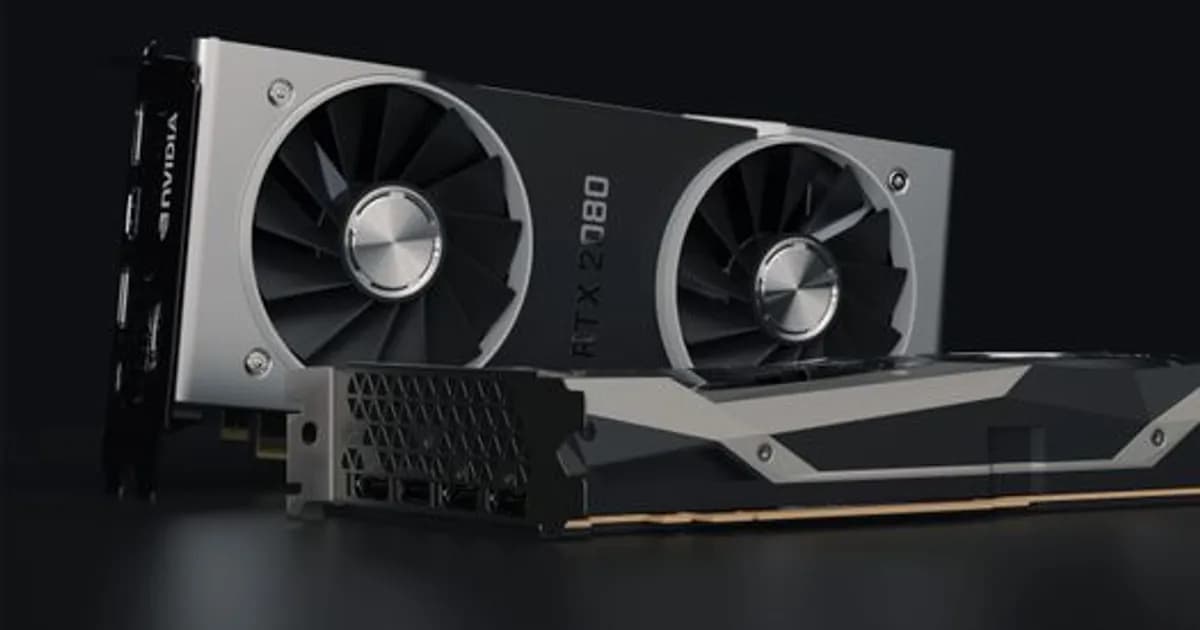
NVIDIA's Blackwell architecture continues to be the foundation of most major AI training clusters. July brought confirmation of Blackwell Ultra specifications—the high-memory variant of Blackwell that addresses the growing context window requirements of frontier AI models.
The Blackwell Ultra doubles the HBM3e memory capacity of the standard B100, which is critical for training and running models that require large amounts of in-flight data. This matters both for the model labs training the biggest frontier models and for enterprises deploying large-context models in production.
NVIDIA also provided new details on its Rubin architecture, the next-generation platform scheduled for 2027. Rubin is expected to use a new interconnect fabric that significantly improves multi-GPU scaling efficiency—the key bottleneck in training extremely large models across thousands of chips simultaneously.
For a broader look at the GPU competition, see AI Chip Wars 2026: NVIDIA, AMD, and Intel Battle for Dominance.
AMD Instinct MI400: Challenging NVIDIA at the High End
AMD's Instinct MI400 series has entered limited production, and the first benchmark results from large AI labs are starting to emerge. The MI400 delivers competitive performance with Blackwell on specific workloads—particularly inference and fine-tuning tasks—at price points that have attracted attention from hyperscalers looking to diversify their supply chains.
The software ecosystem remains AMD's main challenge. ROCm, AMD's GPU computing platform, has improved substantially in 2025-2026 but still lags CUDA in developer tool maturity and third-party library support. Teams switching from NVIDIA typically absorb meaningful engineering overhead to port their software stack.
For organizations willing to invest in that transition, the business case is improving as AMD's hardware performance improves and supply constraints on NVIDIA products continue to create pricing pressure.
Custom Silicon: Google TPU v6 and AWS Trainium 3
The major cloud providers have continued investing in their own AI chips to reduce dependence on NVIDIA and improve unit economics.
Google's TPU v6 (Trillium) has been in production at Google for the past year and is now more broadly available through Google Cloud. TPUs have historically been most efficient for specific model architectures—particularly transformers trained with certain configurations—and the v6 continues that pattern while extending the range of workloads where they're competitive.
AWS Trainium 3 entered limited availability in July for select customers. Amazon's custom training chip has improved significantly from previous generations, with better software tooling that reduces the porting effort for models originally developed on NVIDIA GPUs. The pricing advantage for high-volume training workloads on Trainium has attracted serious attention from AI startups watching their cloud bills grow.
AI Chip Startups: Cerebras, Groq, and SambaNova
The specialized inference chip segment has seen notable developments this month:
Cerebras has expanded availability of its wafer-scale inference service, which continues to offer dramatically lower latency than GPU-based inference for certain model sizes. The use case is narrower than GPUs but the performance advantage for real-time applications is real.
Groq has continued growing its cloud inference service, focusing on speed-sensitive applications where sub-100ms response time matters. Groq's LanguageProcessingUnit architecture produces lower latency than GPU inference at comparable model sizes.
SambaNova has targeted enterprise deployments with a focus on private, on-premises AI infrastructure—a positioning that's finding traction with organizations in regulated industries that can't use cloud-based inference.
On-Device AI: Qualcomm, Apple Silicon, and Intel
The on-device AI story is moving fast. Qualcomm's Snapdragon X Elite continues to dominate the Windows AI PC segment, with real-world AI task performance that exceeds what was possible on any consumer device just two years ago.
Apple Silicon's Neural Engine in the M4 and A18 Pro chips delivers best-in-class on-device AI performance for Apple's ecosystem. The combination of hardware capability and Apple Intelligence software integration has made newer iPhones and Macs meaningfully more capable for AI-assisted tasks without requiring cloud connectivity.
Intel's Lunar Lake and Arrow Lake processors have improved Intel's competitive position in the AI PC segment, though they still trail Qualcomm and Apple in ML benchmark performance.
For more on this segment, see AI On-Device Chips in 2026: Snapdragon vs Apple Silicon.
Supply Chain: Improvement from the 2025 Crunch
The severe GPU supply constraints that characterized 2024-2025 have improved, though the market hasn't fully normalized. NVIDIA H100 and B100 lead times have shortened from their peak, and spot market pricing has moderated.
The supply improvement reflects several factors: TSMC's expanded advanced packaging capacity, better demand forecasting by major buyers, and the entry of AMD and custom silicon alternatives providing genuine alternatives for some workloads.
Hyperscaler demand remains high enough that supply is still tight relative to their expansion ambitions. But the situation for mid-market enterprises has improved substantially—organizations that wanted to deploy AI infrastructure a year ago and couldn't find the hardware are now generally able to do so.
The Inference Chip Race Heats Up
A key trend in July 2026 is the sharpening focus on inference efficiency as opposed to training performance. As AI applications move from research to production deployment, the economics of inference—running models to serve real user requests—become more important than the economics of training.
Inference workloads look different from training workloads: lower batch sizes, higher latency sensitivity, and different memory access patterns. Chips optimized for inference rather than training are gaining ground as AI deployment scales.
This shift is why startups like Groq and Cerebras have found commercial traction despite much smaller resources than NVIDIA: they've built chips and architectures specifically optimized for the inference use case.
What This Means for AI Buyers
The practical takeaway from July's AI hardware developments:
- NVIDIA remains the safe default for most AI workloads, but the competition from AMD, custom silicon, and specialized inference chips means the cost premium has narrowed
- Cloud inference is getting faster and cheaper as new inference-optimized chips come online
- On-device AI is genuinely capable for a growing range of tasks, reducing cloud dependency for consumer applications
- Supply chain diversification is happening at the hyperscaler level, which will eventually translate to better availability and pricing for the broader market
Comments
Loading comments...