
AI EV Battery Recycling 2026: Solving the Waste Problem
AI EV Battery Recycling 2026: Solving the Waste Problem
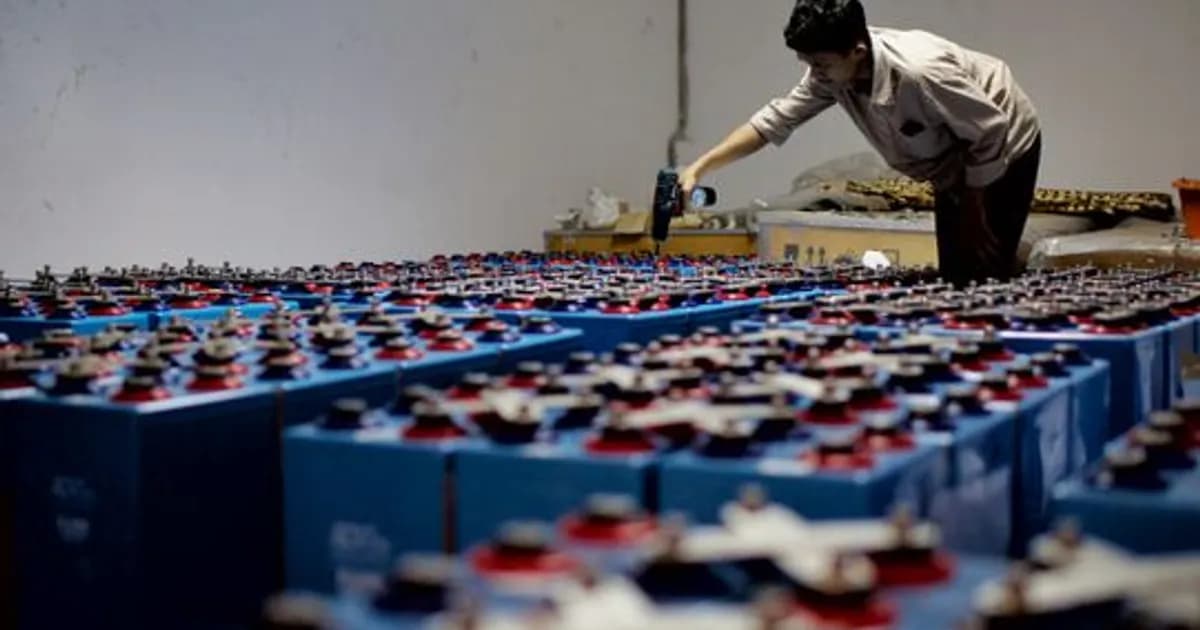
AI EV battery recycling has become a necessary piece of infrastructure in 2026, as the first large wave of electric vehicles sold a decade or more ago starts reaching end of life and recyclers face a volume of used battery packs that manual sorting and disassembly simply can't process fast enough. Each pack contains a mix of cell chemistries, varying states of degradation, and genuine safety hazards from damaged or unstable cells — a combination that makes recycling both economically valuable and operationally tricky to do at scale.
The lithium, cobalt, and nickel locked inside these batteries are valuable enough that recovering them efficiently matters both economically and for reducing reliance on newly mined material, which is itself a significant environmental and geopolitical concern given how concentrated global supply of these materials currently is.
Why Sorting Batteries Is Harder Than It Sounds
A pallet of used EV battery packs arriving at a recycling facility isn't a uniform input. Packs come from different manufacturers, use different cell chemistries — lithium iron phosphate, nickel manganese cobalt, and others — and arrive in wildly different states of health, from packs retired simply because the vehicle was in an accident to packs that have genuinely degraded after a decade of charge cycles. Treating them all the same wastes recoverable value and, in some cases, creates real safety risk.
AI-assisted sorting systems use a combination of computer vision to identify pack and cell types from visual and labeling data, plus electrical testing to assess remaining state of health, to route each battery toward the right next step — full recycling for severely degraded packs, refurbishment for packs with meaningful capacity remaining, or careful manual handling for packs flagged as physically damaged and potentially unstable.
The Safety Problem AI Helps Manage
Damaged or improperly handled lithium-ion batteries carry a real fire and thermal runaway risk, and that risk has made battery recycling facilities understandably cautious about how they handle incoming material. A punctured or internally shorted cell can ignite with little warning, and recycling facility fires tied to battery handling have happened often enough to be a recognized industry hazard rather than a hypothetical concern.
AI-assisted visual and thermal inspection at intake can flag packs showing signs of physical damage, swelling, or abnormal thermal signatures before they're moved into general processing streams, routing higher-risk units to specialized handling procedures rather than mixing them in with routine processing. That earlier risk flagging has become a meaningful part of how recycling facilities have improved safety records as battery volumes have scaled up faster than manual inspection capacity ever could keep pace with.
Maximizing What Gets Recovered
The economic case for AI EV battery recycling ultimately comes down to recovery rates — how much of the lithium, cobalt, nickel, and other valuable material in a given pack actually gets extracted in usable form rather than lost in the recycling process. AI-optimized sorting that correctly routes batteries to the most appropriate processing method, rather than a one-size-fits-all approach, measurably improves recovery rates because different cell chemistries and degradation states respond better to different extraction processes.
Some recyclers have also started using AI to optimize the chemical and thermal processing parameters within the recycling process itself, similar to how AI-driven optimization has improved other industrial extraction processes, squeezing modest additional recovery gains out of processes that were already reasonably mature but had room for fine-tuning.
The Second-Life Battery Opportunity
Not every retired EV battery pack needs full recycling. Packs that have degraded below the threshold useful for vehicle propulsion — typically once capacity falls below roughly 70-80% of original — often still have plenty of useful capacity left for less demanding applications like stationary grid storage or backup power systems. Correctly identifying which packs are good second-life candidates versus which genuinely need full material recovery is exactly the kind of state-of-health assessment AI-assisted testing handles well.
This second-life sorting matters economically because repurposing a battery pack for grid storage captures significantly more value than recycling it for raw materials alone, while still eventually feeding that pack into the recycling stream once its second-life service ends. Getting that sorting decision right the first time avoids both the waste of recycling a pack with years of useful life left and the risk of deploying a genuinely degraded pack into a second-life application where it might fail prematurely.
Where the Bottlenecks Remain
Even with better sorting and processing optimization, the EV battery recycling industry faces a capacity problem that AI alone doesn't solve: there simply aren't enough recycling facilities built yet to handle the wave of retired batteries expected over the next decade as EV adoption from the past ten years reaches end-of-life in volume. AI improves throughput and recovery rates at existing facilities, but building enough physical recycling capacity remains a capital investment problem that efficiency gains can only partially offset.
Industry analysts generally expect this capacity gap to narrow as more dedicated recycling facilities come online, several of them specifically designed around AI-assisted sorting and processing from the start rather than retrofitting older general-purpose recycling infrastructure built for other materials.
Regulation Is Pushing Adoption Faster
Several jurisdictions, including the European Union under its battery regulation framework, now mandate minimum material recovery rates for end-of-life EV batteries, with requirements that step up over the coming years. Those mandates have turned recovery-rate optimization from a nice-to-have efficiency improvement into a compliance necessity, since recyclers falling short of mandated recovery thresholds face real regulatory and financial consequences.
That regulatory pressure has accelerated AI EV battery recycling adoption faster than pure cost economics alone might have driven it, since recyclers now need to demonstrate consistent, auditable recovery performance rather than simply doing their reasonable best with manual sorting. AI-assisted sorting and processing optimization gives recyclers both better recovery numbers and a more documentable, consistent process to show regulators, which has become its own distinct value beyond the direct cost savings from improved material yield.
The Bottom Line
AI EV battery recycling in 2026 is helping the industry handle a genuinely difficult sorting and safety problem more efficiently, improving material recovery rates and identifying second-life opportunities that capture more value than recycling alone would. It hasn't solved the underlying physical capacity shortage facing the industry as battery retirement volumes scale up, but it's making the facilities that do exist meaningfully more effective.
For related coverage of AI in sustainability and materials recovery, see AI and Renewable Energy in 2026: Solving the Power Crisis and AI for Carbon Credit Verification in 2026: How It Works. The International Energy Agency (https://www.iea.org) publishes ongoing analysis of global battery supply chains and recycling capacity trends.
Comments
Loading comments...