
AI Emotion Recognition in 2026: Who's Reading Your Face?
AI Emotion Recognition in 2026: Who's Reading Your Face?
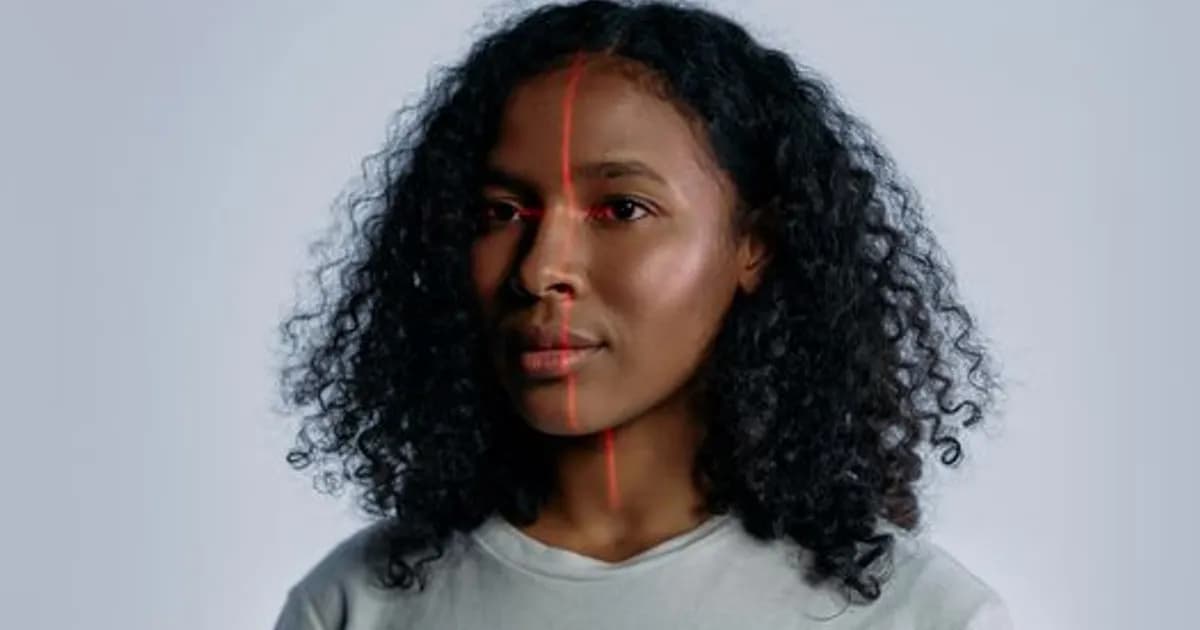
AI emotion recognition — sometimes called affective computing — has spread quietly into call centers, cars, classrooms, and retail stores in 2026, analyzing voice tone, facial expressions, and even typing patterns to guess what someone is feeling in the moment. Customer service platforms use it to flag frustrated callers for supervisor escalation. Car manufacturers use it to detect drowsy or distracted drivers. Retailers have experimented with it to gauge shopper reactions to displays and pricing. The pitch is consistent across every use case: understand emotional state in real time, and you can respond better, sell better, or keep people safer.
The problem is that the underlying science is far shakier than the marketing suggests, and the privacy implications of constantly analyzing people's faces and voices for emotional content are substantial, even when the technology works exactly as intended.
Where Emotion AI Is Actually Deployed
The most mature commercial use case is in call centers, where voice-analysis models listen to live customer calls and flag rising frustration or anger based on vocal pitch, pace, and word choice, prompting a supervisor to step in or a script change to de-escalate. Several major customer service software platforms now sell this as a standard feature, and adoption has grown steadily as contact centers look for ways to reduce escalations and improve resolution rates.
In vehicles, driver-monitoring systems use in-cabin cameras to track eye movement, blink rate, and facial muscle patterns associated with drowsiness or distraction, increasingly required by safety regulations in markets like the EU. Some systems extend this to broader emotional state detection, flagging signs of stress or anger that could affect driving behavior, though this application is less mature and less consistently deployed than basic drowsiness detection.
Retail and advertising have been the most controversial adopters. Digital billboards and in-store cameras have been tested to gauge emotional reactions to ads and product displays, and some hiring platforms have used emotion analysis during video interviews to score candidates — a use case that's drawn significant pushback and, in some jurisdictions, outright bans.
The Accuracy Problem Nobody Talks About Enough
Here's the uncomfortable scientific reality: the premise that facial expressions reliably map to specific internal feelings across all people and cultures is contested among psychologists, not settled fact. Foundational research this technology was originally built on — the idea that anger, happiness, fear, and other internal states have universal, machine-readable facial signatures — has faced serious challenges from more recent psychology research showing facial expression varies significantly across individuals, cultures, and contexts.
In practice, this means these systems are often pattern-matching against a simplified and contested model of how feeling actually translates to facial movement, not a settled biological fact. Independent audits of commercial detection tools have repeatedly found inconsistent results, accuracy that degrades significantly for darker-skinned faces in several tested systems, and outputs that shift dramatically based on lighting and camera angle rather than anything related to a person's actual state of mind. A system can be confidently wrong in ways that are hard for an end user to catch, especially when the output is a single, authoritative-looking score.
Why the Bias Problem Compounds the Accuracy Problem
These models are trained on labeled datasets where humans annotated facial expressions and assigned mood labels — and human annotators bring their own cultural assumptions about what a given expression means. Several studies have found that the same neutral or ambiguous facial expression gets labeled more negatively when the face belongs to a Black person compared to a white person, a bias that gets baked directly into the resulting model. Deployed in hiring, education, or customer service contexts, this isn't a hypothetical harm — it's a system that may systematically misread some people's internal state more often than others, with real consequences attached to that misreading. This pattern closely mirrors documented bias problems in AI hiring and resume screening, where the same dynamic of biased training data produces biased real-world outcomes.
Where Regulators Have Drawn Lines
The EU's AI Act explicitly classifies emotion recognition in workplaces and educational institutions as a high-risk or outright prohibited use case in several contexts, reflecting genuine concern from EU regulators about the technology's reliability and potential for misuse. Several US states have introduced or passed legislation restricting emotion-detection technology in hiring and biometric contexts specifically. Illinois' Biometric Information Privacy Act, while not written with emotion AI specifically in mind, has already been used as a legal basis for lawsuits against companies deploying facial analysis tools without proper consent.
Civil liberties groups, including the ACLU, have argued that emotion recognition deserves more scrutiny than ordinary facial recognition because it claims to infer something far more intimate and unverifiable — not just who someone is, but what they're feeling — based on technology whose underlying scientific premise remains genuinely disputed.
How Companies Are Responding to the Backlash
Facing growing scrutiny, several major vendors have quietly scaled back the boldest claims in their marketing. Microsoft removed broad mood-detection features from its Azure Face API in recent years, citing concerns about reliability and the lack of scientific consensus underpinning the feature. Other vendors have shifted language from claiming to detect what someone "feels" toward softer claims about detecting "engagement" or "attention," a framing that's arguably more defensible since it relies on more observable signals like eye contact and gaze duration rather than an inferred internal state. That linguistic retreat is itself telling — it suggests vendors are aware the stronger claims don't hold up well under outside examination, even as similar underlying technology keeps shipping under a rebranded name.
What's Genuinely Useful vs. What's Overreach
Not every application of this technology deserves the same level of concern. A few distinctions worth making:
- Drowsiness and distraction detection in vehicles rests on more measurable physical signals (blink rate, head position) and has a clearer safety justification than broader "emotional state" claims.
- Call center frustration flagging is a narrower, lower-stakes application than claims about reading complex emotional states, though it still deserves scrutiny around consent and disclosure.
- Hiring and interview scoring based on emotional expression analysis is the application drawing the most justified criticism, given weak science and high stakes for the person being evaluated.
- Retail and advertising emotion tracking of unaware bystanders raises consent questions similar to those in home security camera facial recognition, where people being analyzed never agreed to it.
The Bottom Line
AI emotion recognition sells a tempting promise — read how someone really feels, instantly and objectively — that the underlying science doesn't yet reliably support. Some narrow applications, particularly around physical drowsiness and distraction signals, rest on firmer ground than the more sweeping claims made elsewhere. But as this technology spreads into hiring, education, and everyday public spaces, the gap between what these systems claim to measure and what they can actually verify is exactly the kind of gap that deserves real regulatory attention before the technology becomes any more embedded in decisions that affect people's lives.
Comments
Loading comments...