
AI in Emergency Response 2026: How AI Is Saving Lives Faster
AI in Emergency Response 2026: How AI Is Saving Lives Faster
When a wildfire ignites or a hurricane makes landfall, seconds and accurate information are the difference between containment and catastrophe. AI in emergency response has moved well past pilot programs in 2026—it's now embedded in dispatch systems, prediction models, and field operations across dozens of countries, including most major US cities and much of Western Europe.
The results are measurable. Response times are down. Evacuation routes are better optimized. And early warning systems are catching disasters before they escalate in ways that weren't possible five years ago.
Where AI Is Making the Biggest Difference
AI's impact on emergency response isn't uniform. It's clearest in three areas where data is dense, decisions are time-critical, and the cost of delay is high:
Natural disaster prediction: Machine learning models trained on satellite imagery, weather data, and historical event data now give emergency managers 12–24 hours more advance warning on floods and wildfires compared to traditional models.
Resource allocation and logistics: AI systems can analyze road network data, population density, and real-time traffic to recommend optimal positioning for fire stations, ambulances, and emergency supply depots before an event occurs.
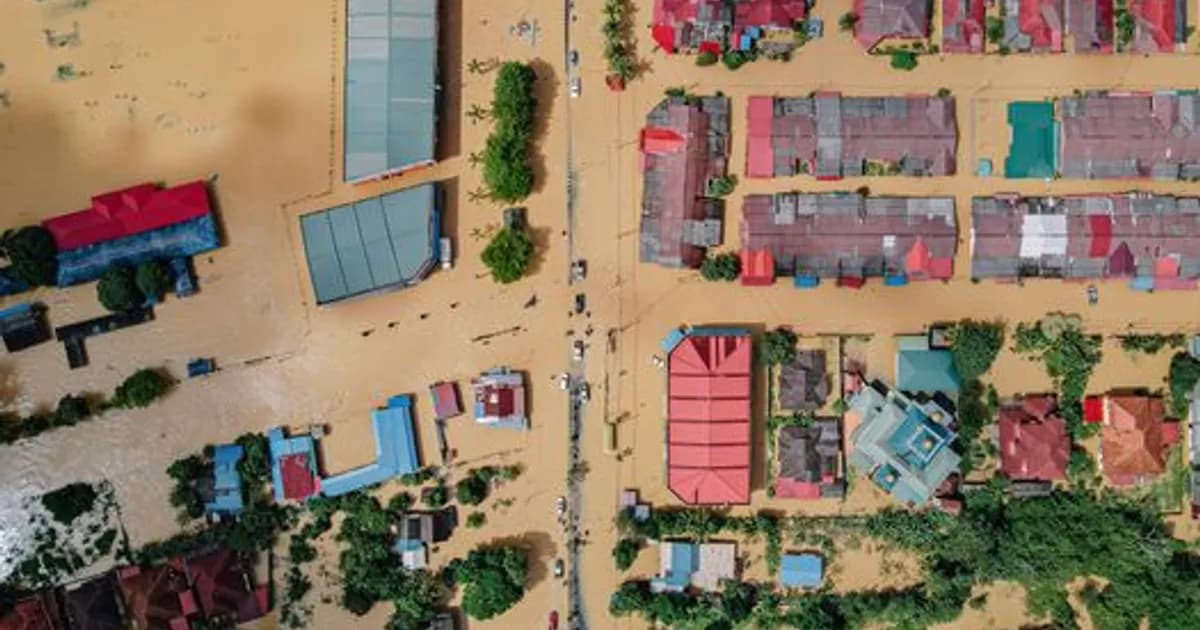
Post-event damage assessment: After hurricanes, floods, or earthquakes, AI tools can analyze aerial and satellite imagery within hours to produce damage maps, letting response teams prioritize which areas need immediate help.
AI-Powered 911 Systems and Dispatch
The 911 dispatch center is one of the less visible but most impactful applications of AI in emergency response. Call centers handling thousands of calls during a major event can be overwhelmed, and traditional dispatch relies entirely on human operators processing information manually.
In 2026, AI-assisted dispatch systems now handle:
- Real-time transcription and classification of incoming calls to prioritize severity
- Automatic unit recommendations based on incident type, location, and resource availability
- Pattern detection to identify duplicate calls about the same incident
- Natural language interfaces for callers who struggle to communicate clearly under stress
The Next Generation 911 program in the US has been integrating AI dispatch tools across major metropolitan areas, with early deployments showing 15–20% reductions in dispatch decision time on complex multi-unit incidents.
Satellite and Drone AI for Search and Rescue
Search and rescue operations after natural disasters involve enormous geographic areas and limited personnel. AI-equipped drones and satellite systems have changed the calculus dramatically.
Drones running computer vision models can scan a square kilometer of debris field in the time it takes a human team to cover a fraction of that area on foot. They flag heat signatures, detect movement, and identify structural collapse patterns that indicate where survivors are most likely to be found.
Satellite AI tools, particularly those from Maxar Technologies and Planet Labs, now provide emergency managers with near-real-time imagery analysis during active disasters. Change detection algorithms automatically identify which areas look different from baseline—highlighting newly flooded zones, collapsed structures, and blocked roads without requiring manual image review.
Wildfire and Flood Prediction Models
Wildfire prediction is one of the clearest success stories for AI in emergency management. Companies like Technosylva and OroraTech have built AI models that integrate wind data, fuel moisture measurements, terrain mapping, and historical fire behavior to predict fire spread with accuracy that traditional models couldn't approach.
The US Forest Service and CAL FIRE have both integrated AI prediction tools into their operational workflows, using model outputs to position crews and equipment ahead of predicted fire spread rather than reacting after the fact.
Flood prediction has a similar story. Google's flood forecasting system, deployed across dozens of countries, uses AI to predict flood inundation levels 48–72 hours in advance with enough granularity to issue block-by-block alerts. FEMA has partnered with several AI weather modeling companies to incorporate these predictions into the National Flood Insurance Program's risk assessments.
The Challenges AI Hasn't Solved Yet
The limitations of AI in emergency response are real and worth taking seriously.
Data quality is foundational. AI models are only as good as the sensor data, satellite imagery, and historical records they're trained on. Rural areas, developing countries, and regions without good baseline data get less benefit from predictive AI systems.
Connectivity fails in disasters. AI systems that require cloud connectivity struggle exactly when you need them most—when infrastructure is damaged. Edge AI solutions are improving but haven't fully solved this problem.
Trust and accountability gaps. First responders and emergency managers sometimes resist AI recommendations when they don't understand how the system reached a conclusion. Explainability is an active area of research, but it's not yet solved at the operational level.
Equity concerns: If AI-assisted dispatch or evacuation routing systematically prioritizes some neighborhoods over others due to biased training data, it can deepen existing inequalities in how emergency services are delivered.
What's Next for Emergency AI
Several developments in 2026 point toward where emergency AI is heading:
- Multimodal situation awareness: Combining satellite imagery, social media signal analysis, weather data, and sensor networks into unified dashboards that give incident commanders a real-time picture of a developing event
- Predictive pre-positioning: Moving emergency equipment and personnel ahead of predicted events—not just responding faster, but being in the right place before a disaster strikes
- Autonomous incident reporting: AI systems that automatically generate situation reports, resource requests, and public alerts from real-time data feeds, reducing the administrative burden on human responders
AI emergency response technology is also becoming more accessible to smaller municipalities and developing nations. Open-source flood modeling tools and freely available satellite data are making it possible to build basic early warning systems without large technology contracts.
The Human Element Remains Central
AI doesn't replace emergency responders—it gives them better information faster. The decisions that matter most in a crisis—whether to order an evacuation, where to send a search team first, how to allocate scarce medical resources—still require human judgment, community knowledge, and accountability.
The most effective implementations treat AI as a decision support layer, not an autonomous command system. When a flood model predicts inundation, a trained emergency manager still decides how to communicate the warning and whether conditions on the ground warrant changing the recommendation.
For communities and governments looking to improve disaster preparedness, the clearest first step is better data infrastructure. AI tools can only optimize what they can measure—and the biggest gaps in emergency AI capability often trace back to gaps in the underlying data, not the algorithms themselves.
Comments
Loading comments...