
AI Chip Demand in 2026: TSMC, NVIDIA, and the Supply Race
AI Chip Demand in 2026: TSMC, NVIDIA, and the Supply Race
The semiconductor supply chain is under more pressure in 2026 than at any point since the pandemic-era chip shortage. The difference this time is the driver: it's not consumer electronics or automotive demand pulling supply tight—it's AI training and inference workloads, and the scale of demand shows no sign of easing.
Understanding the AI chip supply picture matters beyond the semiconductor industry. It shapes which AI products get built, when they launch, and what they cost. Here's the state of the supply race in mid-2026.
NVIDIA: Still Dominant, Still Supply-Constrained
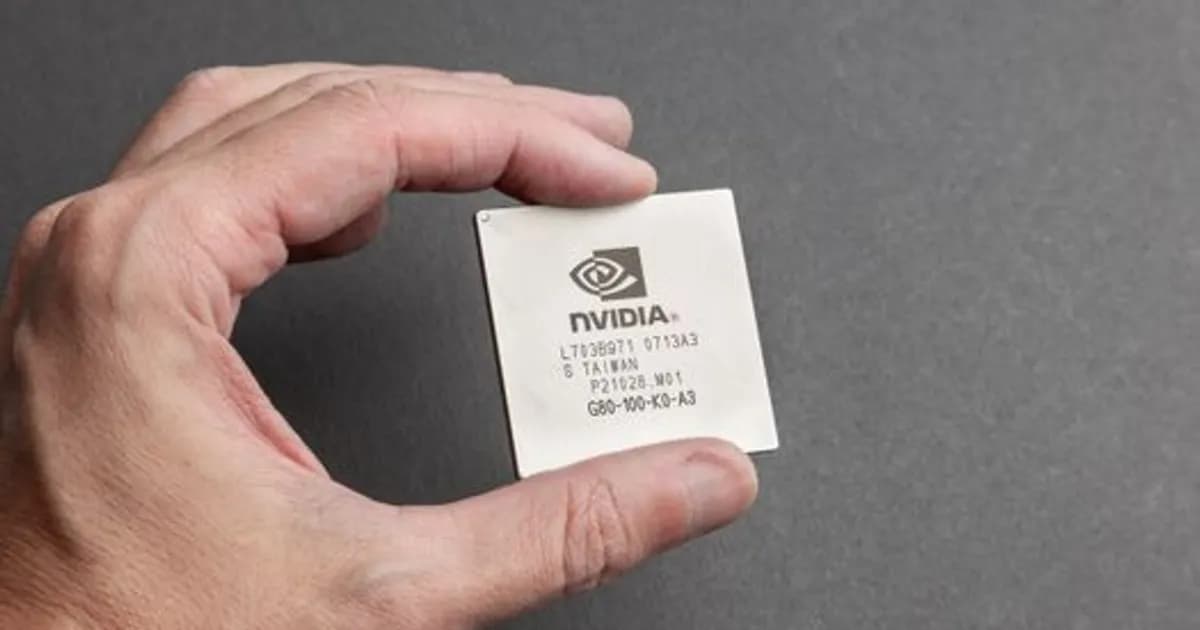
NVIDIA's Blackwell GPU architecture, introduced in 2024, remains the backbone of most large AI training clusters in 2026. The H200 and B200 GPUs power data centers for OpenAI, Google, Microsoft, Amazon, Meta, and hundreds of smaller AI companies.
The demand problem is straightforward: NVIDIA can't make them fast enough. TSMC manufactures NVIDIA's most advanced GPUs using 3nm and 4nm processes, and TSMC's capacity for those nodes is split across NVIDIA, Apple, AMD, Qualcomm, and dozens of other customers. Even with TSMC running fabs at near-maximum utilization, lead times for H200 clusters remain measured in months.
NVIDIA's response has been to expand the Blackwell lineup with configurations optimized for inference workloads (as opposed to training), which reduces the per-token compute cost for companies running large models at scale. The full breakdown of NVIDIA's Blackwell GPU performance in 2026 covers the technical benchmarks.
TSMC: The Bottleneck Behind Every AI Chip
Every major AI chip—NVIDIA GPUs, Google's TPUs, Amazon's Trainium, Microsoft's Maia—is manufactured at TSMC. The Taiwanese company controls the leading edge of chip fabrication, and its 3nm and 2nm nodes are where the most capable AI chips are made.
TSMC's Arizona fabs, opened as part of the US government's semiconductor reshoring push, are ramping production in 2026. But Arizona remains a small fraction of TSMC's global capacity—the bulk of advanced manufacturing still happens in Taiwan. Geopolitical risk around Taiwan remains a persistent concern for companies building long-term AI infrastructure.
TSMC has announced capacity expansion plans targeting 2027 and 2028, but the lag between demand and new fab capacity is built into the physics of semiconductor manufacturing: a new fab takes three to four years from planning to volume production.
Key developments in TSMC's 2026 roadmap:
- 2nm node (N2) entering volume production in H2 2026, expected to power next-generation AI chips from NVIDIA and Apple
- CoWoS advanced packaging capacity expanding to meet high-bandwidth memory demand for AI accelerators
- SoIC 3D stacking enabling higher memory bandwidth in compact form factors for inference chips
AMD: Gaining Ground on AI Workloads
AMD's MI300X GPU has become a credible alternative to NVIDIA's H100 for certain AI inference workloads, particularly for large language model serving. Several cloud providers now offer MI300X instances, and the cost-per-token economics are competitive for inference at scale.
AMD's challenge is ecosystem maturity. NVIDIA's CUDA software ecosystem has a decade-long head start, and most AI training code is optimized for CUDA. AMD's ROCm platform has improved significantly in 2026, but developer tools and libraries still lag. The gap is narrowing but remains real.
AMD is also a TSMC customer, so its chips face the same supply constraints as NVIDIA's at the manufacturing level.
Alternatives: Google TPUs, Amazon Trainium, and Microsoft Maia
The hyperscalers—Google, Amazon, and Microsoft—have each developed custom AI chips to reduce their dependence on NVIDIA and control their own supply chains.
Google TPU v5 is deployed internally for Gemini model training and inference, and offered to Google Cloud customers via Google Cloud. Google's vertical integration (design, training, inference, deployment) gives it cost advantages that NVIDIA-dependent competitors can't match.
Amazon Trainium 2 is Amazon's training chip, deployed in AWS clusters for customers who want to train models without purchasing NVIDIA hardware. AWS also offers Inferentia chips for lower-cost inference.
Microsoft Maia 100 is used in Microsoft's Azure AI infrastructure to reduce the cost of running OpenAI models. Microsoft has been less public about Maia's capabilities, but internal reports suggest meaningful cost savings on inference workloads.
None of these alternatives displace NVIDIA for general-purpose AI workloads. They're optimized for specific use cases and tied to specific cloud platforms. For companies that need flexibility, NVIDIA remains the default.
Startups Challenging NVIDIA's Dominance
A wave of AI chip startups is working to offer competitive alternatives. Several have attracted significant funding:
- Cerebras — Wafer-scale chips with enormous on-chip memory for large model inference
- Groq — Inference-optimized chips with very low latency, used by AI API providers
- d-Matrix — In-memory computing chips targeting power-efficient inference
- Tenstorrent — Founded by former AMD chip architects, targeting the open-source AI chip ecosystem
These startups are making real progress on inference—the process of running trained models to generate outputs. Training at the frontier scale remains a near-NVIDIA monopoly, but the inference market is more competitive.
What This Means for AI Product Development
The chip supply crunch has real effects on the AI products being built:
Smaller companies are squeezed. Access to large GPU clusters is expensive. Well-capitalized labs like OpenAI, Anthropic, and Google can lock in supply through multi-year agreements. Startups with less capital are working with smaller compute budgets or using inference APIs instead of building their own training infrastructure.
Inference efficiency matters more. As training compute becomes more expensive to access, labs are investing heavily in making models more efficient at inference—serving more users per GPU hour. This has driven techniques like speculative decoding, model quantization, and smaller distilled models.
Geography is becoming a factor. US export controls on advanced AI chips to China have created a bifurcated global AI chip market. Chinese AI companies are scaling on domestically produced alternatives (primarily Huawei's Ascend chips), while Western companies maintain preferential access to the highest-performance NVIDIA and TSMC products.
The Outlook for the Rest of 2026
Supply is expected to improve in H2 2026 as TSMC's N2 node ramps production and CoWoS packaging capacity expands. But demand is also growing: every major AI model release drives new compute demand, both for training the next generation and for serving the growing user base.
The AI energy consumption story is closely tied to the chip supply story—more GPUs mean more power, and power infrastructure is becoming its own bottleneck.
The fundamental dynamic in 2026 is that AI demand is growing faster than the semiconductor industry can expand capacity. That gap will narrow over the next two to three years as new fabs come online, but for now, access to AI compute is a meaningful competitive advantage—and the companies that locked in supply earliest are building with that advantage.
Comments
Loading comments...